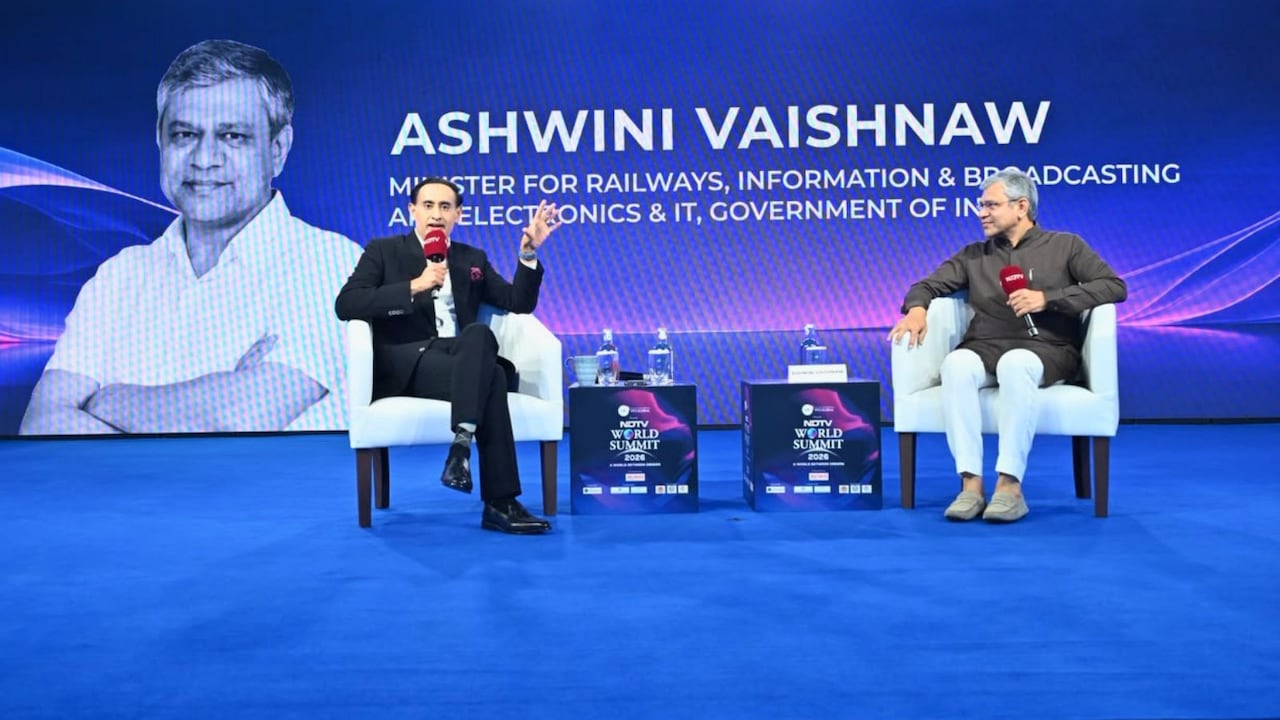
Every few months, a policy panel or tech conference produces the exact same headline. A minister steps up to a microphone, fields a question about domestic hardware champions, and offers an optimistic timeline for when India will finally birth its own Apple or Samsung. The business press eats it up. LinkedIn erupts with patriotic chest-thumping. Everyone starts counting down the years until a Bengaluru-headquartered conglomerate launches a smartphone that makes Cupertino sweat.
This entire narrative is a masterclass in misdirection.
Asking when India will build its own Apple is like asking when a modern software giant will start smelting its own steel. It reflects a fundamental misunderstanding of how global technology value chains actually work today, how Apple and Samsung accumulated their monopolies, and where the real profit pools of the next twenty years are hiding. By anchoring national ambition to a twenty-year-old consumer hardware playbook, policymakers and founders are preparing to fight the last war—and worse, they are ignoring the massive, defensible empires India is already positioned to dominate.
The Trap of Historical Amnesia
To understand why an "Indian Apple" is a mirage, you have to look at the specific historical accidents that created the original. Apple did not become a three-trillion-dollar behemoth merely because Steve Jobs had good taste in industrial design. Apple emerged from a half-century of Cold War Pentagon spending in Silicon Valley, followed by the ruthless offshoring of low-margin assembly to Shenzhen during China’s rapid integration into the World Trade Organization.
Samsung’s origin story is even less replicable in a modern democracy. The South Korean chaebol model relied on decades of state-directed capital allocation, suppressed domestic consumption, and authoritarian industrial policy under Park Chung Hee. The government essentially picked winners, funneled cheap credit to them, and insulated them from foreign competition while they climbed the value ladder from textiles to memory chips to smartphones.
India in the mid-2020s shares zero DNA with 1970s South Korea or 1990s China. India is a noisy, consumption-driven democracy entering the global electronics race at a moment when the smartphone market has already matured into a stagnant replacement cycle. Global smartphone shipments have largely plateaued. Hardware margins—outside of Apple’s tightly guarded ecosystem—are razor-thin. Ask HTC, LG, Sony, or BlackBerry how fun it is to compete in branded consumer handsets.
I have sat in boardrooms where ambitious Indian hardware founders burned through tens of millions of venture dollars trying to build "premium domestic devices." Every single time, the story ends the same way. They import the system-on-chip from Qualcomm or MediaTek, buy the display panels from BOE or Samsung Display, license the operating system from Google, and pay a contract manufacturer to snap the pieces together in Noida or Chennai. Then they slap a domestic brand name on the back and call it innovation. That is not building an Apple. That is running a marketing agency with terrible inventory risk.
Assembly Is Not Ownership
The lazy consensus in New Delhi celebrates the fact that Apple now assembles a massive percentage of its global iPhones inside India, driven by Production Linked Incentive (PLI) schemes and supply chain diversification away from China. Do not confuse the location of the screwdriver with the ownership of the intellectual property.
In the electronics manufacturing value chain, final assembly—often referred to as EMS (Electronics Manufacturing Services)—captures the lowest slice of profit. Think of the classic Smiling Curve, a concept popularized by Acer founder Stan Shih in the early 1990s. If you plot value-added across the lifecycle of a product, the curve forms a U-shape.
- Left side (High Value): Fundamental R&D, semiconductor architecture, core intellectual property, and proprietary operating systems.
- Bottom of the curve (Low Value): Component manufacturing and final assembly.
- Right side (High Value): Brand equity, distribution networks, cloud services, and aftermarket ecosystem lock-in.
Right now, India is aggressively subsidizing the bottom of the curve. There is nothing wrong with that as a jobs program. Bringing Foxconn, Pegatron, and Tata Electronics facilities to Tamil Nadu and Karnataka employs hundreds of thousands of people, builds industrial muscle memory, and pulls component suppliers closer to Indian shores.
The delusion sets in when commentators pretend that doing contract assembly for Apple naturally evolves into becoming Apple. Foxconn has been assembling iPhones in Zhengzhou for nearly two decades. It employs over a million workers and generates hundreds of billions in revenue. Yet Foxconn has never managed to launch a consumer brand that rivals Apple, because the capabilities required to run a hyper-efficient factory are the exact opposite of the capabilities required to own a consumer ecosystem.
Why Branded Smartphones Are a Sucker’s Game
Suppose an Indian conglomerate decided tomorrow to invest $20 billion into building a true domestic rival to the iPhone or Galaxy S series. What happens next?
First, they hit the Android commoditization wall. Unless this hypothetical Indian giant plans to build a brand-new mobile operating system from scratch—and convince millions of global developers to write apps for it—they are forced to use Android. The moment you use Android, Google owns the customer relationship, the app store tax, and the primary data layer. You are reduced to differentiating on camera bumps and charging speeds. Even Samsung, despite shipping more phones than almost anyone on earth, has spent fifteen years trying and failing to escape Google's gravitational pull with Tizen and Bixby.
Second, they face the silicon bottleneck. Apple’s true moat is no longer the iPhone chassis; it is Apple Silicon. By designing its own M-series and A-series chips using Arm architecture and fabricating them on TSMC’s leading-edge nodes, Apple controls the tight integration between hardware and software that no Android OEM can match. Building an elite silicon design team takes decades and billions in sunk R&D before a single wafer leaves a foundry.
Third, there is the bill of materials reality. Even if an Indian brand designs the phone locally, over 70 percent of the value of the components—the precision camera sensors from Sony, the RF filters from Skyworks, the NAND flash from SK Hynix—must still be imported. Calling a device "Indian" when its heart, brain, and eyes are forged in Japan, Taiwan, and South Korea is pure accounting theater.
Dismantling the Wrong Questions
When people search for timelines on India’s tech hardware future, they usually ask variations of the same flawed questions. Let us tear down the assumptions baked into them.
"When will India make its own semiconductors from scratch?"
This question treats chipmaking as a single monolithic activity. It is not. India already possesses roughly 20 percent of the world’s semiconductor design engineers. Every major fabless chip company—Nvidia, AMD, Qualcomm, Intel—relies heavily on engineering centers in Bengaluru and Hyderabad to design and verify their most complex architectures.
What India lacks is high-volume wafer fabrication (fabs). While the government is pouring billions into subsidizing mature-node fabs (28nm and above) for automotive and industrial use, chasing leading-edge 2nm logic fabs right now would be financial suicide. A single leading-edge fab costs upwards of $20 billion, requires uninterrupted ultra-pure water and power, and depreciates within five years. India does not need to bankrupt itself chasing TSMC’s foundry business when it can dominate fabless chip design and OSAT (Outsourced Semiconductor Assembly and Test)—the exact segments where returns on invested capital are far healthier.
"Can government tariffs and PLI schemes force an Indian champion into existence?"
Protectionism breeds laziness, not global champions. In the 1970s and 80s, India tried insulating domestic manufacturers behind towering tariff walls. The result was the Hindustan Ambassador—a car based on a 1950s British Morris Oxford that remained virtually unchanged for decades because Indian consumers had no other choice.
If you artificially restrict foreign smartphones or penalize imports to prop up an inferior domestic brand, Indian consumers simply pay higher prices for worse technology. True champions are forged in hyper-competitive export markets, not coddled inside protected domestic greenhouses. Look at Taiwan’s MediaTek or TSMC—neither survived by selling exclusively to Taiwanese consumers. They built world-beating engineering capabilities and sold to the entire planet.
"Why didn't Micromax, Lava, or Karbonn become India's Samsung?"
In the early 2010s, Indian brands like Micromax briefly captured massive domestic market share during the feature-phone-to-smartphone transition. Then 4G arrived, Xiaomi and BBK Electronics (Oppo, Vivo, Realme) entered the market, and those Indian brands evaporated almost overnight.
Why? Because Micromax and its peers were white-label importers. They flew to Shenzhen, picked generic reference designs from Chinese Original Design Manufacturers (ODMs), slapped their logo on the box, and spent heavily on Bollywood endorsements. They invested almost nothing in proprietary R&D, supply chain integration, or software engineering. When Chinese giants brought vertically integrated supply chains and aggressive unit economics directly to India, the domestic brands had zero structural defense. That is the cautionary tale every policymaker should frame on their wall.
Where India’s Real Monopoly Lies
If chasing the next Apple is a dead end, where should Indian capital, talent, and policy actually focus? Look at the tectonic shifts reshaping global technology right now. The smartphone era is ending. The next era belongs to AI infrastructure, industrial deep-tech, defense electronics, and Digital Public Infrastructure (DPI).
Consider what India has already built that neither Apple nor Samsung could ever replicate: India Stack. Through Aadhaar, UPI, and ONDC, India built open-source, population-scale digital rails that process billions of real-time transactions at near-zero marginal cost. While Silicon Valley obsessed over walled gardens that extract 30 percent rent from developers, India engineered interoperable public protocols that democratized payments and identity for over a billion people. Exporting this architectural blueprint to the Global South is infinitely more impactful than exporting another slab of glass and aluminum.
Now look at B2B deep-tech and industrial hardware. Nobody writes breathless headlines about a Pune-based company manufacturing precision CNC machine tools, specialized power semiconductors for electric vehicles, or radar subsystems for aerospace. Yet these are high-margin, high-switching-cost businesses where Indian engineering talent thrives.
Take the defense and space sectors. When ISRO landed Chandrayaan-3 on the lunar south pole for a fraction of what Hollywood spends on a space blockbuster, it proved that Indian engineers excel at frugal, high-reliability systems engineering. Opening up space and defense procurement to private Indian startups—companies building synthetic aperture radar satellites, autonomous drones, and indigenous jet engine components—creates genuine, defensible intellectual property. A commercial satellite operator in Europe or a defense ministry in Southeast Asia will gladly buy Indian aerospace hardware if it outperforms Western competitors at half the price.
The Uncomfortable Truth About This Strategy
Admitting that India should abandon the "Indian Apple" fantasy comes with a painful political downside. B2B industrial components, fabless chip IP, and open-source digital protocols do not make for flashy unboxing videos on YouTube. You cannot hold a gallium-nitride power inverter up at a political rally and expect the crowd to cheer the way they would for a shiny new flagship phone.
Furthermore, shifting from assembly subsidies to deep-tech R&D requires patience that election cycles rarely reward. An EMS factory can be built in eighteen months and immediately generate impressive employment numbers. Cultivating a world-class semiconductor IP ecosystem or precision robotics industry takes ten to fifteen years of sustained, unglamorous investment in university research labs, specialized vocational training, and patient venture capital. Indian private conglomerates—historically risk-averse and overly reliant on regulated domestic sectors like telecom, energy, and infrastructure—have routinely underinvested in true R&D compared to their American, Chinese, or Korean counterparts.
Stop Playing Someone Else's Game
The obsession with matching Apple or Samsung is a symptom of post-colonial mimicry—the belief that national arrival requires owning exact replicas of the status symbols created by Western and East Asian powers.
History never rewards latecomers who copy the incumbent’s exact business model twenty years too late. When Japan rose after World War II, it did not try to out-Detroit General Motors with massive gas-guzzling V8 sedans; it pioneered lean manufacturing and compact, fuel-efficient reliability. When Taiwan entered semiconductors, it did not try to out-Intel Intel in microprocessor design; Morris Chang invented the pure-play foundry model that turned Intel’s greatest strength into a legacy liability.
India does not need an Apple. Apple already exists, and its best growth years are in the rearview mirror. Let Cupertino worry about squeezing another three percent battery life out of a mature form factor while fighting antitrust regulators across three continents.
Indian founders and policymakers should stop staring at the devices in their pockets and start building the invisible infrastructure—the silicon architectures, the autonomous systems, the open digital rails, and the precision industrial hardware—that the rest of the world will have no choice but to run on.