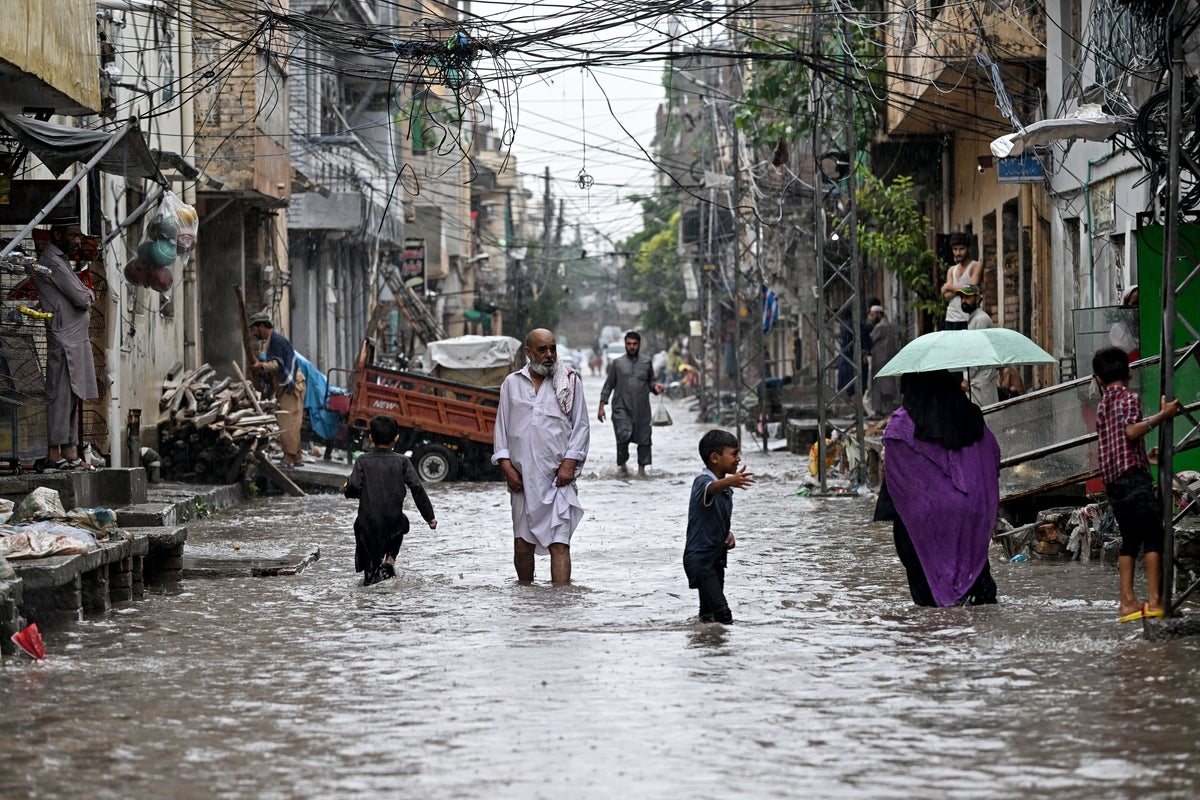
The alarmists are back, hyperventilating over a "super" El Niño. They point to twelve major Asian cities, map out some rainfall anomalies, and declare we are entering uncharted territory. They want you to believe that if your city floods or dries up, it is the fault of some mysterious temperature oscillation in the Pacific Ocean.
It is a convenient fiction. It absolves the urban planners, the corrupt contractors, and the shortsighted politicians who have spent decades building concrete coffins on floodplains and draining aquifers to feed vanity projects. For an alternative view, check out: this related article.
Let’s be blunt: attributing urban collapse to a meteorological phenomenon is a lazy way to avoid the reality that these cities are broken by design.
The Myth of Unpredictability
The recent narrative suggests that because this El Niño is "unprecedented"—hitting 3.6C above normal—we are flying blind. This is journalistic theater. We are not in "uncharted territory" because of the weather; we are in the exact destination we paved for ourselves. Related coverage on this trend has been published by TIME.
Take Jakarta or Mumbai. These cities don't struggle because the ocean got a little warmer. They struggle because they have systematically destroyed the natural drainage that kept them habitable for centuries. When you replace mangrove forests with luxury high-rises and fill in wetlands to accommodate sprawl, you aren't a victim of climate change. You are an engineer of your own disaster.
Researchers from Bristol and Cardiff recently touted data showing that some cities turn to dust while others turn into swimming pools during El Niño events. They present this as a revelation. It isn't. It is a predictable binary outcome of poor infrastructure. A city that cannot handle a baseline monsoon will naturally face catastrophe when that baseline shifts by a few percentage points. The fact that an "unprecedented" event might amplify the disaster is irrelevant to the resident whose home is already built on a sinking, porous foundation.
The Dangerous Comfort of Externalizing Blame
"But what about the overlapping climate influences?" the experts ask, citing the Indian Ocean Dipole or the Pacific Decadal Oscillation. They love this technical clutter. It makes the problem sound sophisticated. It turns urban failure into a branch of celestial mechanics.
By fixating on the predictability of rainfall, we ignore the predictability of human failure.
Imagine a scenario where we actually treated these cities like assets rather than dumping grounds for population growth. If you are a city planner in a region prone to these oscillations, your failure to implement non-porous surface mitigation, water recycling, and managed retreat is not an "act of God." It is professional negligence.
I have seen companies blow millions on "resilience studies" that essentially amount to a colorful map showing which neighborhoods will drown first. They present these to governments, everyone nods, and then the developers keep pouring concrete. The El Niño isn't the threat; the administrative apathy is.
Addressing the Real Question
People keep asking how to "prepare" for the coming super El Niño. They want tips on how to adapt.
The honest answer is that you can’t adapt your way out of a burning house by rearranging the furniture. If you live in a city that relies on outdated, colonial-era drainage and lacks a robust water-security policy, the "super" status of this El Niño is just a rounding error in your inevitable decline.
If you want to survive, stop looking at weather reports and start looking at municipal zoning records. Ask why your city is still granting permits for new developments in high-risk zones. Ask why water prices are kept artificially low to appease voters while the groundwater is being sucked dry to keep the city afloat—literally.
The obsession with El Niño is a distraction. It is the perfect bogeyman for governments that have failed to modernize their cities in fifty years. It’s easier to blame the Pacific than to admit your city is a logistical failure that’s running out of time.
The Cold Reality
The researchers are right about one thing: the impacts may be prolonged. But they treat this as a scientific curiosity. For the average person, it is a call to exit.
When a system is built to fail, it doesn't matter how hard the rain falls. The outcome is fixed the moment the concrete is poured. If you are waiting for a government, a climate treaty, or a meteorological miracle to save your neighborhood from the "unprecedented" impact, you have already lost.
Stop checking the Pacific temperature anomalies. Check your local property risk assessment, your city's drainage investment history, and your exit strategy. The weather isn't changing the world; it’s just revealing how flimsy your world really is.
The infrastructure is already dead. You’re just waiting for the rain to prove it.