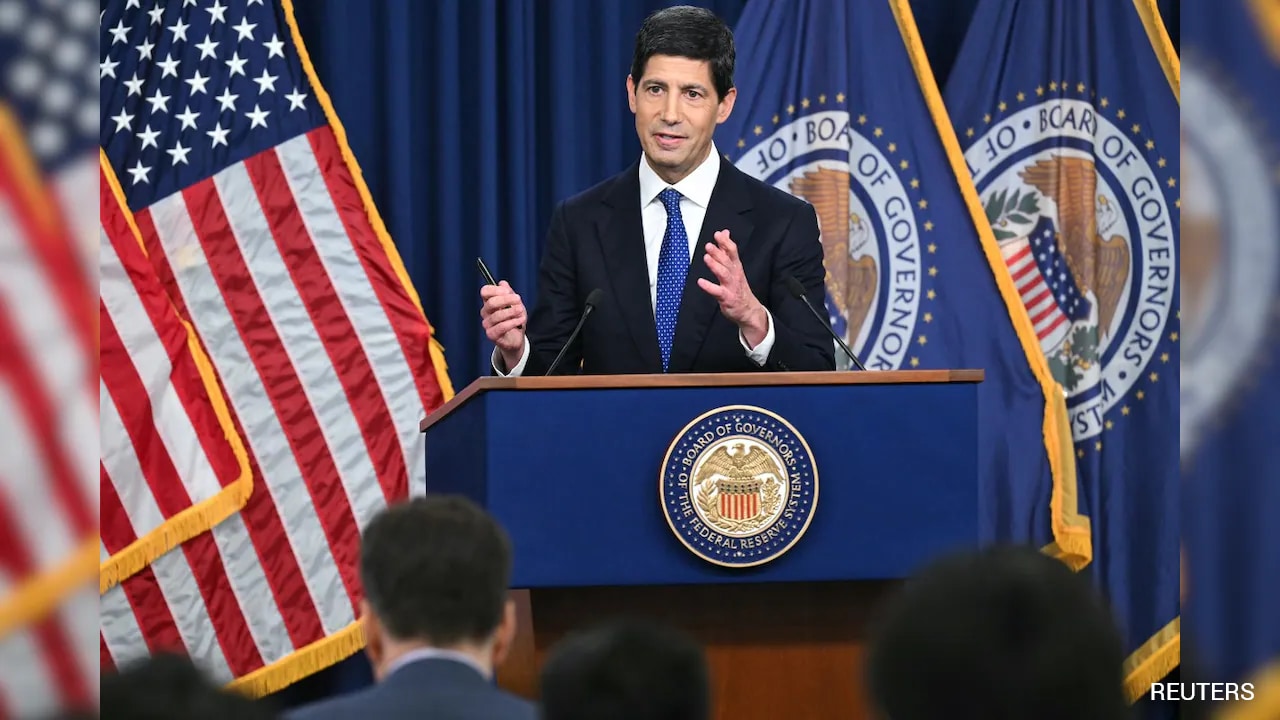
Every financial pundit on television treats a Federal Reserve rate hike like a funeral march. They roll out the same tired charts about mortgage costs, corporate debt distress, and slowing economic momentum. They tell you that higher borrowing costs act as a heavy boot on the throat of the market, designed to crush inflation into submission through sheer pain. They are selling you a fairy tale.
The mainstream narrative relies on a textbook model of monetary policy that died the day central banks crossed paths with modern fiscal reality. The consensus says that rates go up, money becomes scarce, demand drops, and inflation dies. It sounds neat. It fits into a tidy PowerPoint slide. And it completely misses how modern capital markets actually function. You might also find this similar story interesting: Monetary Friction and Interest Rate Dynamics After a Fed Hike.
The Myth of Universal Pain
Let us look at what actually happens when capital is no longer free. For over a decade, a generation of executives operated in an artificial greenhouse. Zero percent interest rates allowed corporations with zero pricing power, negative cash flows, and zero viable business models to limp along on endless debt rollovers. They were corporate zombies, walking dead entities sustained entirely by cheap credit.
When the central bank hikes rates, the financial media weeps for these companies. They call it a crisis. I call it a long-overdue garbage collection. As highlighted in latest articles by Investopedia, the results are widespread.
Imagine a scenario where a company has zero debt and sits on two billion dollars in cash reserves. When borrowing costs climb, that company does not suffer; its interest income skyrockets, allowing it to fund internal research and acquire weakened rivals while its competitors scramble for survival. Rate hikes do not destroy economic value universally. They redistribute it from the reckless to the prudent.
The Fiscal Dominance Paradox
Here is the dirty secret the headlines ignore. The federal government is running multitrillion-dollar deficits financed by issuing short-term debt at high yields. When the central bank raises rates, it does not just make borrowing expensive for a software startup; it forces the national treasury to pay five percent interest on tens of trillions of dollars of sovereign debt.
Where does that money go? It flows directly into the bank accounts of money market funds, institutional investors, and retail savers. It is an enormous cash injection into the private sector.
The central bank is trying to drain liquidity with one hand while the fiscal authority is spraying cash liquidity into the economy with the other. You cannot tighten monetary policy when the government is running a fiscal blowout of historic proportions. Analysts who model rate hikes purely through traditional lending channels completely ignore this massive fiscal offset.
The Death of Financial Engineering
I have sat in boardrooms where founders blew millions on vanity metrics because money was practically free. They hired headcounts they did not need, bought software subscriptions they never opened, and burned cash like it was going out of style because the cost of capital was zero. When the era of cheap credit ended, the weeping was deafening.
Look at what happened six months after the pivot. The survivors stopped playing financial engineering games and started building actual businesses. High rates force discipline. They separate operators from gamblers.
In a zero-interest rate regime, cash was trash. Treasuries yielded nothing, bank deposits paid zero, and conservative balance sheets were punished for being prudent. Companies were forced to speculate in risky ventures because holding cash meant watching purchasing power evaporate to inflation. Rate hikes completely flip this dynamic. Companies with pristine balance sheets and massive cash reserves suddenly find themselves generating hundreds of millions of dollars in risk-free interest income.
Dismantling the Housing Panic
Let us address the perpetual anxiety over consumer housing. The media loves to run segments about the frozen real estate market, claiming high mortgage rates have locked people in place. True, transaction volumes drop. But look at the composition of homeownership.
The vast majority of American homeowners locked in ultra-low fixed-rate mortgages during the pandemic era. They are sitting on thirty-year debt at three percent while earning five percent on their high-yield savings accounts. They are not distressed; they are comfortable.
The traditional transmission mechanism of monetary policy—breaking the consumer over the back of housing debt—is fundamentally blunted when household balance sheets are structurally insulated in ways previous generations never experienced. Treating today's housing market like the pre-2008 era of adjustable-rate mortgages is intellectual laziness.
The New Rules of Engagement
If you are running a business or managing a portfolio based on the assumption that policymakers will eventually ride to the rescue with rate cuts back to zero, you are walking into a buzzsaw. The structural regime has changed. We are living through an inflationary commodities-and-labor supercycle driven by deglobalization, energy transition costs, and chronic fiscal deficits.
In this environment, central bank rate hikes are not a magical dial that turns down inflation. They are a tax on inefficiency and a subsidy for balance sheet strength.
Stop listening to macroeconomic strategists who analyze the economy through aggregate spreadsheets while ignoring microeconomic incentives. When borrowing costs rise, capital does not disappear; it migrates. It moves away from speculative moonshots that rely on perpetual rounds of financing and toward cash-generating operations that return capital to owners. This is not a contraction. It is a reallocation of economic power.
The next time you read a breathless headline about the latest rate hike spelling doom for the economy, look at who is complaining. It is never the cash-rich operator or the disciplined producer. It is always the credit-addicted corporation crying because the free money tap has finally been turned off. Stop mourning the end of cheap credit. Start positioning yourself for a market that actually rewards reality.