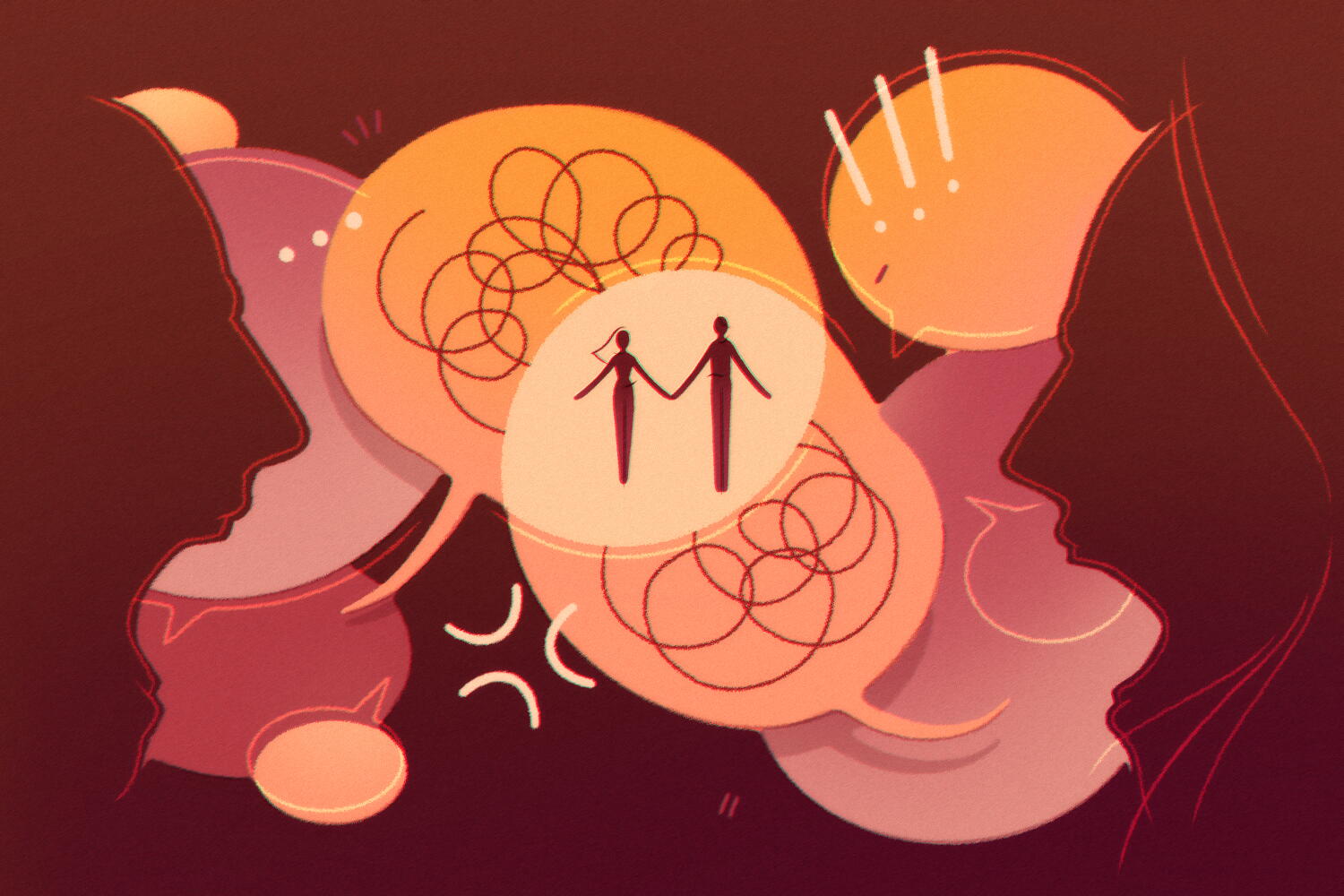
Every pop psychology blog and relationship coach on the internet is peddling the exact same dangerous fiction. They tell you that avoiding conflict is the silent killer of intimacy. They preach the gospel of clearing the air, fighting fair, and leaning into the friction because tension supposedly means you care.
It is absolute garbage.
I have watched couples spend decades weaponizing communication frameworks, turning their living rooms into amateur arbitration courts, all under the guise of being authentic. They follow the stale advice of modern self-help gurus who claim that stuffing your annoyance causes emotional ulcers. They pull the pin on every petty grievance, hurl "I statements" across the kitchen island, and pat themselves on the back for being emotionally honest.
Then they wonder why they are miserable, exhausted, and heading for divorce court.
Avoiding conflict is not destroying your relationship. Your obsession with confronting every minor irritation is destroying it.
The Myth of the Healthy Fight
Look at the standard playbook. You are told to bring up issues immediately, maintain soft startup tones, and avoid the four horsemen of the apocalypse like contempt and stonewalling. John Gottman’s research gets dragged out of context every single day to convince people that how you argue predicts whether you will stay together.
Here is what the gurus conveniently leave out. Gottman’s longitudinal studies did not prove that fighting makes relationships strong. They proved that unmanaged, hostile contempt destroys them. The presence of conflict does not build a bond; it tests a bond. Every time you pick a fight, you spend emotional capital. Most people are bankrupting their accounts over petty grievances that time would have naturally dissolved.
Think about the sheer arrogance required to believe that every stray thought, minor annoyance, or fleeting disappointment demands a summit meeting. When you feel the urge to address every little friction, you are not being communicative. You are being impatient. You lack the psychological fortitude to tolerate minor discomfort, so you force your partner to carry the weight of your emotional regulation.
I have seen high-performing executives bring corporate negotiation tactics home to their spouses, treating a misloaded dishwasher like a hostile takeover. They demand a debrief. They unpack the underlying needs. They analyze the dynamic. And slowly, systematically, they strip all the mystery, grace, and ease out of living with another human being.
The High Cost of Radical Transparency
We have fetishized transparency to a toxic degree. The cultural consensus dictates that keeping secrets or biting your tongue is a form of lying.
Total nonsense.
Emotional hygiene requires filtering. You do not share every intrusive thought with your coworkers, and you have no business dumping every raw, unprocessed annoyance onto your partner. Radical honesty without a buffer is just cruelty disguised as authenticity.
When you rush to address every conflict, you rob your partner of the chance to evolve independently. People need room to be flawed, inconsistent, and annoying without being put on trial. If every quirk or bad mood triggers an immediate sit-down, your home stops being a sanctuary. It becomes a courtroom.
Consider the alternative. What if the secret to a long-term partnership is not learning how to fight better, but learning how to ignore more?
Psychologists call it selective attention. I call it growing up. Most of the things that irritate you today will not matter in six months. If you test this hypothesis, you will realize that roughly eighty percent of the arguments you want to start resolve themselves if you simply stay quiet, go for a walk, and wait for your nervous system to cool down.
The desire to fight is almost always a selfish impulse. It is an itch you want to scratch because the silence feels heavy. But love is often found in the heavy silence. It is found in the willingness to absorb a minor annoyance, swallow the witty retort, and let it die quietly in your own chest.
Why People Also Ask the Wrong Questions
People type into search engines looking for a manual on how to win an argument with their spouse, or how to express anger without causing collateral damage. They want a script. They want a 5-step framework to make sure their partner hears their side.
The premise of every single one of those questions is flawed. You are trying to optimize a broken behavior.
You should not be asking how to fight fair. You should be asking why you feel an urgent, compulsive need to correct every perceived imbalance in real time.
Usually, it stems from a profound lack of internal security. If you are terrified that your partner’s momentary distraction means they do not love you, you will pick a fight to force them to reassure you. If you need control, you will manufacture friction so you can manage the resolution. You use conflict as a thermometer to check if the relationship is still alive, oblivious to the fact that you are the one holding the blowtorch.
When you master the art of strategic omission, everything changes. You stop reacting to the surface behavior and start looking at your own internal turbulence. Did your partner actually commit a grievous offense, or did you just have a bad day at the office and want someone nearby to pay the toll?
The Discipline of Silence
Let us look at the mechanics of what happens when you stop fighting.
First, you drastically reduce the volume of noise in your life. Relationships do not break down from a lack of talking; they break down from an excess of bad-faith communication. When you stop nitpicking, your partner's nervous system stops bracing for impact. The baseline tension in the house drops.
Second, you force yourself to develop actual emotional resilience. Instead of outsourcing your comfort to your partner by demanding they fix your bad mood through a conversation, you sit with the discomfort. You process it alone. You realize that you can feel annoyed, unappreciated, or stressed without making it anyone else's emergency.
Admitting the downside of this approach is simple: it requires immense restraint. It means you forfeit the immediate, cheap dopamine hit of being right. You give up the satisfaction of delivering a well-crafted rebuttal. You have to tolerate the injustice of letting your partner fold the towels the "wrong" way or leave their shoes by the door without filing a formal complaint.
That is the price of admission for a mature, quiet love.
The Architecture of Real Intimacy
Intimacy is not forged in the crucible of a screaming match or a tense late-night airing of grievances. Those are symptoms of a fracture. True intimacy is built in the spaces where nothing needs to be said at all.
It is the shared glance across a crowded room when a ridiculous relative says something absurd. It is the comfortable quiet of two people reading on a couch, neither demanding validation nor auditing the other's emotional output. It is the profound relief of knowing that you are loved not because you successfully negotiated your boundaries, but because your partner offers you the grace to be imperfect, lazy, and occasionally impossible to live with.
Stop looking for ways to optimize your arguments. Stop reading the tactical guides on how to express your rage constructively.
Put down the weapons. Close the courtroom.
Shut your mouth, let the petty grievances die in the dark, and see how much stronger your relationship stands when you finally stop trying to fix what was never actually broken.