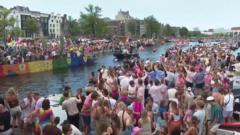
Every August, the canals of Amsterdam fill with glitter, thumping bass lines, and corporate sponsorship banners. Millions line the water, waving rainbow flags, drinking warm beer, and patting themselves on the back for living in such a tolerant, progressive utopia. The media calls it a triumph of visibility. The lazy consensus says this annual floating spectacle is the ultimate proof that the fight for equality has been won.
It is a comforting illusion. It is also completely backwards.
I have spent years watching corporate boardrooms treat human rights like a four-week seasonal marketing campaign. When the canal parade ends and the last plastic cup is swept from the cobblestones, the glitter gets washed down the drain, and queer people go back to facing housing discrimination, rising healthcare hurdles, and institutional burnout. Visibility without structural power is just a parade. And Amsterdam is throwing the world's most expensive distraction.
The Corporate Co-Optation Trap
Let us look at the mechanics of modern visibility.
When a multinational bank slaps a rainbow logo on its PR deck for thirty days, people call it progress. I call it cheap reputation laundering. The lazy consensus assumes that corporate participation equals corporate accountability. It does not.
Financial institutions fund pride floats while quietly maintaining lending practices and asset portfolios that actively harm marginalized communities. They buy a spot on a canal boat to capture youth market share, hit their environmental, social, and governance metrics, and shield themselves from genuine criticism.
Imagine a scenario where every company sponsoring a Pride boat was legally required to audit its internal wage equity, prove zero-tolerance healthcare gaps for trans employees, and divest from entities operating in nations where homosexuality is criminalized. The canal would look a lot emptier. And that tells you everything you need to know about how skin-deep this validation actually is.
Visibility was never the destination. Visibility was a tactical weapon used to survive when society wanted queer people invisible. Treating visibility as the finish line is a category error.
The Myth of Permanent Tolerance
Tolerance is a passive state. Acceptance requires active effort.
Amsterdam loves to market itself as the historical capital of European liberalism. People assume that because same-sex marriage was legalized here decades ago, cultural immunity is guaranteed. History disagrees with that lazy assumption. Rights do not drift upward on a tide of permanent progress; they erode the moment people stop defending the boring, unglamorous mechanics of civil protection.
Behind the postcard imagery of crowded canal banks lies a quiet crisis of social attrition. Hate incidents in major European urban centers are rising, not falling. Housing costs are pricing young queer creatives out of the very neighborhoods that built these subcultures. Yet, city officials point to the single weekend of the canal parade as proof that everything is fine.
Tolerance without teeth is just politeness masking indifference. When society is polite to your face while voting for policies that hollow out your safety net, you do not have rights. You have an audience.
Shifting From Spectacle to Substance
If we want to fix what Pride has become, we have to change the questions we ask.
The mainstream media constantly asks: "How can we make the parade bigger, louder, and more inclusive?"
That is the wrong question. It assumes scale equals success.
The question we should be asking is: "How do we dismantle the commercialized filter and return resources to the grassroots organizers who actually keep vulnerable people alive?"
Real change does not happen on a rented barge covered in corporate logos. It happens in community health clinics, legal defense funds, housing cooperatives, and direct-action networks that operate long after the tourists pack their bags and head home.
Stop buying the merchandise. Stop celebrating the empty endorsements of companies that change their logos back to black on September first. Demand operational transparency from the institutions that claim to champion equality.
The music on the canals will stop eventually. The real work starts the moment the speakers are unplugged.