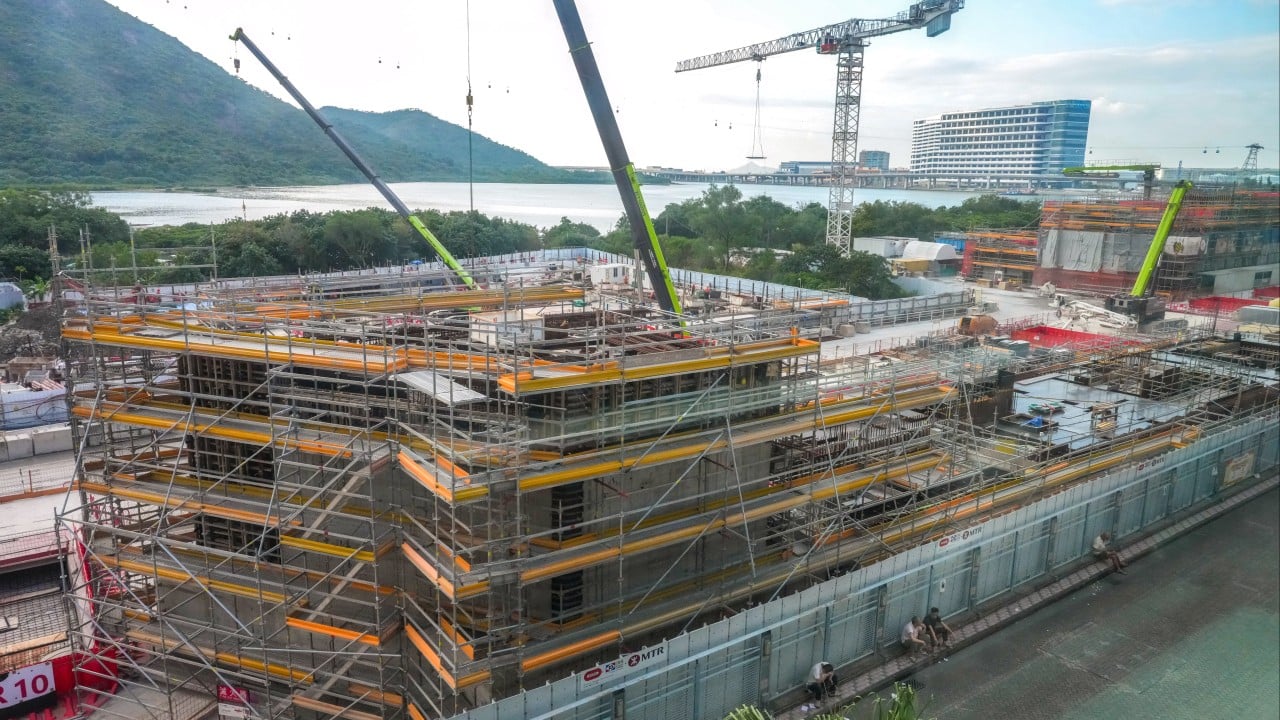
Everyone is applauding the MTR Corporation for slamming the brakes on unauthorized station work after structural column concerns surfaced. Press releases are flying. Regulators are nodding. Commuters are breathing a collective sigh of relief, convinced that corporate oversight just saved the day.
They are completely wrong.
A stop-work order in heavy civil engineering is never a victory for safety. It is an autopsy of a broken governance model. By the time a transit authority discovers unauthorized structural alterations to load-bearing columns at an active railway station, the failure has already occurred. Celebrating the halt is like praising a homeowner for calling the fire department after the roof has already caved in.
I have spent two decades walking deep-bore tunnels, auditing subterranean station boxes, and reviewing structural concrete pours across Asia. I have watched billion-dollar infrastructure budgets evaporate because project owners mistook paperwork compliance for physical reality. When a contractor takes a jackhammer or a core drill to a station column without signed-off engineering drawings, you are not looking at a rogue subcontractor having a bad day. You are looking at an entire delivery system that incentivizes speed over structural integrity.
The Myth of the Rogue Contractor
Mainstream coverage loves a simple villain. The standard narrative paints the rail operator as the vigilant guardian and the contractor as the reckless corner-cutter who bypassed protocol. That narrative is lazy, comforting, and entirely detached from how modern megaprojects actually function.
Contractors do not wake up one morning and decide to alter structural columns on a whim. Concrete coring, steel reinforcement cutting, and load-path modifications require specialized heavy equipment, mobilization permits, shift scheduling, and site access clearances. In an operating transit environment, getting a crew and machinery into a restricted station zone involves multiple layers of gatekeepers.
Let us define the exact mechanics at play here. A load-bearing column in an underground or elevated station is not an isolated pillar; it is a critical node in a continuous vertical and lateral load path. These elements transfer massive dead loads from concourses and commercial over-station developments—alongside dynamic live loads from braking trains and crowd surges—down into deep bored piles or diaphragm walls. When unauthorized work occurs on or immediately adjacent to these columns, it introduces uncalculated eccentric loading, shear stress concentrations, or compromised concrete cover that exposes reinforcing rebar to accelerated carbonation and chloride attack.
How does that happen without immediate detection? Because the industry relies on self-certification. Under standard design-and-build or multi-tier subcontracting frameworks, the party pouring the concrete or cutting the slab is often the same party inspecting it, submitting forms to a resident site staff overwhelmed by thousands of daily Request for Inspection (RFI) slips.
- Paper trails replace physical audits. Resident engineers spend eighty percent of their shifts buried in digital document control systems rather than standing on the rebar cage.
- Schedule pressure breeds silent shortcuts. Liquidated damages for missing a station handover milestone can easily exceed hundreds of thousands of dollars per day. Subcontractors three tiers down the chain absorb that financial terror and react by moving dirt and breaking concrete before the structural engineer stamps the revision.
- Fragmented accountability. When five layers of sub-tier contractors sit between the rail operator and the guy holding the rotary hammer, responsibility dissolves into finger-pointing the second a crack appears.
Why Halting Work Actually Increases Structural Risk
The public assumes that stopping construction freezes the danger in time. In geotechnical and structural engineering, hitting pause on a compromised structure can be just as dangerous as pushing forward blindly.
Imagine a scenario where a contractor has already excavated soil adjacent to a station column base or partially cored through a structural transfer beam to route mechanical, electrical, and plumbing (MEP) conduits. You cannot simply throw up yellow caution tape, lock the site gates, and let lawyers argue for six months while concrete cures and ground water pressures fluctuate.
Unfinished structural interventions leave elements in a temporary, vulnerable state. Without immediate installation of temporary shoring, steel jacketing, or non-shrink structural grout, an altered column experiences uneven stress redistribution. Neighboring columns quietly pick up the slack, pushed closer to their ultimate limit state while train vibrations continue humming through the adjacent track bed twenty hours a day.
Furthermore, a reactive halt triggers a massive financial and operational hangover. Every day a station worksite sits frozen, preliminary costs—crane rentals, dewatering pumps, ventilation systems, site security, and idle engineering teams—burn cash at an alarming rate. Who pays for that downtime? Even when contracts strictly penalize the contractor for unauthorized work, prolonged disputes inevitably bleed into commercial claims, delaying adjacent rail upgrades and starving preventive maintenance budgets elsewhere on the network.
Dismantling the Public's Wrong Questions
Whenever a transit authority announces a suspension over structural defects, public discourse immediately fixates on two predictable, deeply flawed questions.
Are the trains still safe to ride right now?
This is the wrong question because rail operators operate on colossal factors of safety—typically ranging from 1.5 to over 2.0 under ultimate limit state design codes like Eurocode 2 or the Hong Kong Code of Practice for Structural Use of Concrete. A single compromised column in a multi-bay station box rarely causes immediate, catastrophic collapse. Trains will keep running. Commuters will not fall into a sinkhole tomorrow morning.
The real question is: How much of the structure's fifty-to-one-hundred-year design life was just permanently erased?
When concrete cover is hacked away or reinforcement bars are nicked, the failure is not dramatic; it is insidious. Moisture seeps in. Rebar corrodes and expands, spalling the surrounding concrete from the inside out. Twenty years from now, taxpayers will fund a massive, disruptive structural rehabilitation program to fix a latent defect born from an unauthorized Tuesday afternoon shift that nobody properly policed.
Will firing the contractor fix the problem?
Terminating a contractor mid-project is the corporate equivalent of burning down your kitchen because the soup is too salty. In highly specialized transit markets, only a handful of tier-one firms possess the balance sheets, bonding capacity, and technical plant required to execute heavy civil rail works.
If you blacklist one major player, you shrink the bidding pool for future lines, driving up tender prices across the board. Worse, bringing in a replacement contractor to inherit half-finished, undocumented structural alterations creates a legal nightmare over residual liability. No sane engineering firm wants to warranty the structural integrity of a column modified by its fiercest competitor.
The Brutal Reality of Infrastructure Governance
We need to look at why this keeps happening in world-class transit networks. Hong Kong’s MTR has long been held up by global urban planners—from the Transport Research Board to infrastructure economists at Oxford—as the gold standard of rail-plus-property execution. Yet even the sharpest operators fall victim to the structural decay of modern construction procurement.
The root disease is the lowest-bidder illusion paired with asymmetric information.
When a rail operator awards contracts primarily on price, bidders submit razor-thin margins—sometimes pricing projects at or below actual cost—betting they can make their profit later through variation orders (changes to the original scope). That commercial model turns the construction site into an adversarial battlefield from day one. Contractors hoard information. Site supervisors treat resident engineers like adversaries rather than collaborators. And when a site engineer realizes a planned duct clashes with a structural column, waiting three weeks for an official design revision feels like financial suicide. So they cut first and ask for forgiveness later.
There is a massive caveat to demanding aggressive, zero-tolerance enforcement on every minor site deviation, and any honest veteran will admit it: if you enforce every single bureaucratic check with rigid, inflexible perfection, nothing ever gets built. Megaprojects are inherently messy. Ground conditions shift. As-built drawings from the 1980s rarely match reality behind station wall panels. If site teams cannot make rapid field adjustments without triggering a month-long paperwork paralysis, project timelines double and costs spiral out of control.
The trick is not eliminating field agility; it is drawing an absolute, uncrossable blood-red line between cosmetic/non-structural tweaks and primary structural elements. Right now, that line is blurred by administrative bloat.
How to Actually Fix Station Construction Oversight
If transit authorities want to stop discovering unauthorized structural work after the concrete dust has settled, they need to dismantle their current supervision playbook and rebuild it around physical verification and brutal financial alignment.
- Strip Contractors of Structural Inspection Authority
End the farce of contractor self-certification for anything touching load-bearing elements, foundations, or waterproofing membranes. The rail operator’s independent resident site staff—not the contractor’s quality control team—must physically witness and digitally sign off on pre-work surveys before a single tool touches a structural column. If a biometric or geo-fenced digital permit is not active on the site tablet, the work does not start. - Deploy Continuous Structural Health Monitoring Before Breaking Ground
Stop relying on periodic visual walk-throughs to catch structural anomalies. Before any alteration work begins inside an active station, install wireless tiltmeters, vibrating wire strain gauges, and automated motorized total stations on every column within the zone of influence. If a column experiences unexpected micro-strain or millimeter-level settlement at 3:00 AM during an unauthorized coring operation, an automated alert should ping the chief structural engineer’s phone in real time—not three weeks later during a routine audit. - Shift From Retrospective Fines to Immediate Hold-Point Escrows
Financial penalties levied at the end of a five-year contract have zero deterrent effect on a site agent trying to hit a monthly bonus target. Restructure payment milestones so that ten percent of every monthly interim payment certificate is locked into a dedicated compliance escrow. Any unauthorized intervention on a primary structural element triggers an automatic, non-negotiable forfeiture of that month’s escrow—with zero arbitration rights—and immediately strips the site agent and project manager of their security clearances to work on future network contracts. - Mandate Open-Book BIM Clash Detection
Most unauthorized column modifications happen because mechanical, electrical, and architectural models collide in the real world. Require contractors and rail operators to operate inside a single, live, cloud-hosted Building Information Modeling (BIM) environment where every conduit, bracket, and anchor bolt is clash-detected against structural rebar cages down to the millimeter before fabrication.
The Real Cost of Looking the Other Way
Infrastructure failures rarely announce themselves with a cinematic crash. They happen quietly, hidden behind architectural cladding, false ceilings, and fresh coats of industrial epoxy paint.
When an operator orders a halt to unauthorized station work, do not applaud the press release. Ask who approved the night-shift access permit. Ask why resident engineers were reading spreadsheets instead of watching the structural columns. Ask how many other stations currently have unapproved anchor bolts drilled into their load paths that nobody has bothered to uncover yet.
Concrete never lies, and gravity never negotiates. Either transit authorities put independent eyes back on the steel and stone, or they are simply waiting for the next press release.


