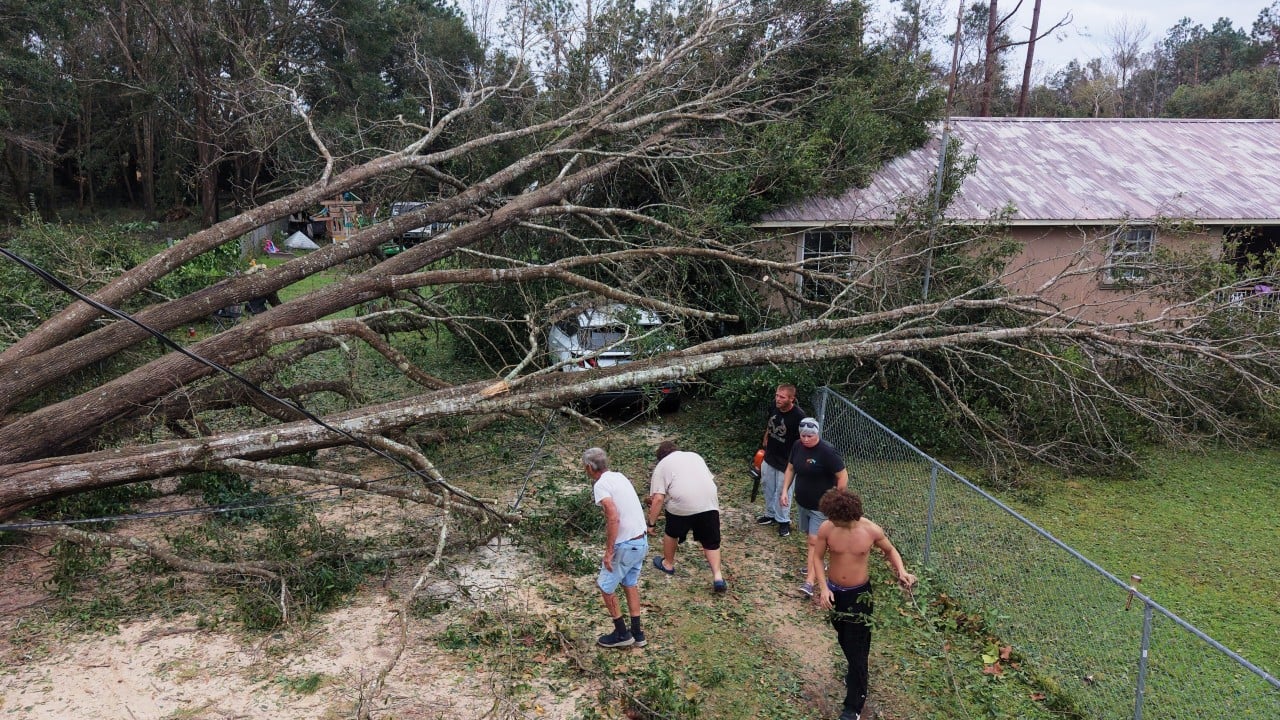
Every single time a tropical storm or a Category 1 system brushes the Eastern Seaboard, mainstream headlines trot out the exact same tired panic narrative. We are fed a steady diet of casualty counts and staggering blackout statistics, accompanied by breathless commentary about angry winds and Mother Nature's wrath.
It is a convenient script. It absolves everyone in charge. Meanwhile, you can read other stories here: Why Trump Demands Ukraine Get a New President and What Happens Next.
The lazy consensus says that when a storm like Isaias knocks out power to hundreds of thousands of people, it is an unavoidable act of God. A tragic, weather-driven inevitability.
That narrative is a lie. To understand the complete picture, we recommend the excellent report by Associated Press.
I have watched utilities blow billions on performative PR campaigns while letting foundational infrastructure rot in plain sight. We are not dealing with an unprecedented meteorological crisis. We are dealing with chronic, willful underinvestment in grid hardening, masked by a convenient meteorology-blaming media cycle.
Let us look at the actual data instead of the emotional shock-value reporting. Isaias packed tropical storm-force winds and moved fast. It was a severe weather event, sure, but a standard stress test for any electrical grid engineered to survive the modern era. Yet, millions of customers from the Carolinas up to New England were left sitting in the dark, with some utilities taking over a week to restore basic functionality.
Why? Because the infrastructure is archaic.
For decades, investor-owned utilities have prioritized short-term dividends and executive bonuses over capital-intensive undergrounding and aggressive vegetation management. They pocketed ratepayer funds, deferred maintenance, and relied on a business model where regulatory bodies routinely allow them to pass the cost of post-storm recovery right back onto the consumer.
When failure is subsidized, resilience goes extinct.
The standard public discourse asks: "How can we better prepare our communities for these worsening storms?"
That is the wrong question entirely.
The question we should be asking is: "Why are monopolistic utilities legally permitted to operate fragile, above-ground distribution lines that collapse under the weight of a modest summer breeze?"
In dense suburban corridors across New Jersey, New York, and Connecticut, overhead wires draped across decades-old, untrimmed canopies are a ticking time bomb. When winds hit 60 miles per hour, branches snap, lines drop, and the grid splinters. This is not a surprise. It is a mathematical certainty built into the system by penny-pinching bean counters.
Some industry apologists argue that undergrounding every miles-long stretch of wire is financially prohibitive. They claim the capital expenditure would bankrupt municipalities.
Let us address that objection directly. Yes, burying lines is expensive upfront. But calculate the recurring economic damage of multi-day blackouts, spoiled food, paralyzed commerce, and emergency overtime labor for repair crews. The lifecycle cost of repeated, catastrophic overhead failures dwarfs the initial price tag of modernizing the medium-voltage architecture.
Countries across Europe and dense urban centers globally manage to maintain resilient underground or heavily fortified grids. They do not accept mass outages as an annual rite of passage. They treat system integrity as a non-negotiable baseline.
Until we stop buying into the weather-industrial complex—the comforting illusion that every minor storm is a black swan event—utilities will continue to offer us excuses instead of electricity.
Stop accepting the apology. Demand a structural overhaul of the grid.


