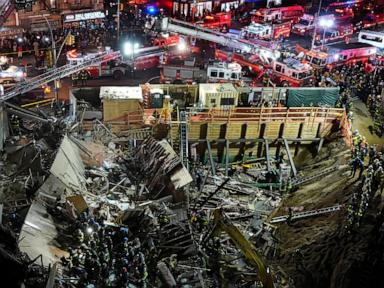
Every time brick and mortar hit the pavement in New York City, the local news cycle runs on autopilot.
A building comes down in Brooklyn. Sirens wail. The FDNY pulls dust-covered workers from the rubble. Someone dies. Someone else goes to the hospital in critical condition. And before the dust even settles on the sidewalk, the headlines write themselves: another shady contractor cut corners, another greedy developer ignored a Stop Work Order, another isolated tragedy caused by bad actors breaking the rules.
That narrative is comforting. It gives the public a clean villain to boo and lets city officials promise another round of crackdowns.
It is also dangerously incomplete.
If you spend enough time inside New York’s construction, structural engineering, and municipal permitting trenches, you realize a hard truth: building collapses in Brooklyn are rarely just the fault of one rogue crew. They are the predictable math of an aging housing stock colliding with a broken regulatory incentive structure, severe labor dilution, and a city that confuses paperwork compliance with actual structural safety.
When we treat every structural failure like a freak crime committed by a cartoon villain, we guarantee the next collapse is already being excavated two blocks away.
The Lazy Consensus Around Urban Structural Failures
Read any breaking news report following a structural collapse in New York City, and you will see the exact same formula.
First come the casualty numbers and the FDNY briefing. Second comes the Department of Buildings (DOB) database lookup, revealing a string of prior complaints or an active violation. Third comes the moral outrage: why was work happening if the city said stop?
This framing misses the mechanics of how buildings actually fail.
Brick and timber structures built between 1890 and 1930 make up the backbone of neighborhoods like Crown Heights, Bedford-Stuyvesant, Sunset Park, and Williamsburg. These buildings were never engineered as rigid, monolithic frames. They are unreinforced masonry (URM) structures relying on gravity, friction, lime-based mortar, and floor joists pocketed directly into brick bearing walls.
They hold together through mutual compression. Everything leans on everything else.
When a modern renovation enters one of these century-old row houses, the market demands open floor plans, dug-out basements for extra square footage, and rear extensions. That means removing load-bearing masonry walls and undermining shallow rubble-stone foundations.
Here is where the conventional wisdom breaks down. People assume a collapse happens because someone skipped a permit. In reality, plenty of catastrophic failures occur on sites with stamped architectural drawings, active permits, and licensed professionals on paper.
A stamped drawing does not hold up a three-story brick party wall when a crew excavates four feet below the adjacent footing without proper underpinning. Paperwork is not shoring.
Why Permits and Fines Do Not Stop Gravity
After every fatal collapse, politicians demand higher fines and stricter permitting rules. They treat structural engineering like a tax compliance problem—if the penalty is high enough, people will obey the law.
Gravity does not care about a $25,000 administrative fine.
I have watched property owners and general contractors burn through hundreds of thousands of dollars in carrying costs while waiting months for basic DOB plan examinations and routine inspections. When a project bleeds $1,500 a day in hard-money loan interest, the financial pressure to keep digging—permit or no permit, engineer sign-off or no sign-off—becomes overwhelming.
Look at the incentive system New York has built:
- Slow, bureaucratic review cycles punish the developers who follow every rule to the letter, rewarding those who build first and pay the fines later as a cost of doing business.
- Paper-heavy oversight forces engineers and architects to spend more time navigating zoning code minutiae and filing administrative amendments than standing in the dirt watching how the temporary shoring is actually installed.
- Fragmented accountability splits responsibility across an owner, a registered architect, a structural engineer of record, a special inspection agency, a general contractor, and three layers of cash-paid subcontractors.
When everyone is technically responsible for a tiny slice of the filing process, nobody owns the physical reality on the job site at 7:30 AM when an excavator bucket scrapes too close to a neighbor's foundation wall.
The Underpinning Trap Nobody Talks About
If you want to understand why Brooklyn buildings suddenly fold inward, stop looking at the roof and start looking six feet underground.
The single deadliest operation in residential New York construction is underpinning—the process of extending an existing foundation deeper into the soil so you can dig out a basement or build a deeper cellar next door.
In theory, underpinning is straightforward. You excavate small, alternating sections (called pits or piers) beneath an existing footing, pour concrete segments, let them cure, and transfer the building's load downward step by step.
In practice, it is surgical trench warfare.
Imagine a scenario where a crew is digging a four-foot-deep pit directly beneath a 120-year-old rubble stone foundation holding up 80 tons of brick and timber. The soil in Brooklyn varies wildly from dense glacial till to loose sand and fill. If the crew digs two adjacent pits at the same time to save two days on the schedule, or fails to dry-pack the concrete tight against the underside of the old footing, the soil shifts by half an inch.
Half an inch of settlement in a brittle, lime-mortar brick wall is fatal.
The wall loses vertical alignment. Eccentric loads spike instantly. The floor joists slip out of their four-inch brick pockets. Within three seconds, the entire structure pancakes straight down into the cellar.
No sensor alerts the city. No Stop Work Order stops the kinetic energy of 150 tons of falling masonry. And yet, under current rules, the people physically digging those pits are often the least trained, lowest-paid workers on the entire site, supervised by a foreman rushing to beat a concrete truck delivery window.
Answering the Questions People Actually Ask
When news breaks of a Brooklyn collapse, search engines light up with variations of the same anxious questions. Most of them start from the wrong premise.
"How can a building collapse if the city already issued a Stop Work Order?"
Because a Stop Work Order is a piece of paper taped to a plywood fence, not an armed guard or a steel shore. Worse, issuing a Stop Work Order on a partially excavated site can sometimes increase the danger. If a crew has already dug open trenches next to a foundation and the city shuts the site down without forcing immediate stabilization and backfilling, rain and vibration will erode that exposed soil while the owner spends six weeks arguing with administrative judges.
"Are older Brooklyn brownstones and brick buildings inherently unsafe?"
No. Left alone and properly maintained, a 1900s Brooklyn masonry building will outlast modern glass-and-steel towers by a century. Old brick is remarkably durable when its mortar joints are repointed and water is kept out. These buildings do not fail from old age. They fail from violent surgical intervention—specifically, cutting out interior load-bearing walls and digging below their foundations without respecting how masonry distributes weight.
"Why doesn't the Department of Buildings inspect every construction site before work starts?"
Because the math makes it impossible. New York City has tens of thousands of active construction and alteration permits running simultaneously across five boroughs. Even with aggressive hiring, municipal inspectors cannot babysit every residential renovation. Relying on city inspectors to catch structural mistakes is like relying on highway patrol officers to prevent every car crash by standing at every intersection. By the time an inspector arrives, the fatal mistake is already buried under fresh concrete or hidden behind drywall.
The Uncomfortable Truth About Labor and Price
We need to talk about money, because nobody in polite real estate circles wants to admit how project budgets drive structural risk.
When a homeowner or small developer in Brooklyn bids out a major gut renovation, they routinely see a 40% to 60% spread between the lowest bid and a legitimate, fully insured, structurally competent general contractor.
Clients almost always take the low bid, telling themselves they are getting a bargain by cutting out "corporate overhead."
They are not cutting out overhead. They are cutting out:
- Dedicated site supervision by someone who can actually read structural steel and shoring drawings.
- Engineered temporary bracing (needling, rakers, and steel cribbing) that costs $30,000 before a single brick is demolished.
- Experienced ironworkers and masons who know what a distressed brick wall sounds like before it shears.
- Legitimate insurance and safety gear, replaced instead by shell LLCs that dissolve the morning after an accident.
The market actively punishes honest contractors who price in real structural engineering and temporary shoring. If you bid a Brooklyn cellar excavation properly, you lose the job to a guy with a pickup truck, a rented mini-excavator, and a borrowed insurance certificate.
Until lenders, insurers, and property owners stop rewarding suicidal pricing, dangerous contractors will keep winning bids.
The Downside of Tightening the Screws
Before anyone mistakes this for a simple call to regulate everything to death, let's be honest about the tradeoff.
Forcing every minor residential alteration through heavy structural oversight, mandatory third-party engineering peer reviews, and strict site safety managers drives up construction costs dramatically. In a city already suffocating under an affordability crisis, adding $50,000 to $100,000 in engineering and compliance overhead to small multi-family renovations shrinks housing supply, pushes rents higher, and locks out small local property owners from improving their buildings.
Over-regulation also creates its own black market. Make legal renovation slow and expensive enough, and desperate owners simply lock the front gate, paper over the windows, and do the entire gut job illegally at night with zero oversight whatsoever.
That is the tightrope New York refuses to walk intelligently. Right now, the city makes it brutally expensive to build legally while leaving massive enforcement blind spots for anyone willing to operate in the shadows.
What Actually Prevents the Next Collapse
If New York wants to stop pulling workers out of Brooklyn rubble, it needs to abandon theater and focus on physics and accountability.
1. Ban Blind Underpinning in Small Residential Conversions
If a developer wants to dig out a basement below the existing footing of an unreinforced masonry building, require a mandatory, independent geotechnical and structural peer review—not a rubber-stamp special inspection hired by the contractor. Better yet, stop incentivizing cellar conversions for habitable living space in flood-prone, century-old row houses where the structural risk outweighs the square footage gained.
2. Tie Lender Draws to Independent Structural Sign-Offs
City inspectors are too slow and too stretched to police job sites in real time. Construction lenders and insurance carriers are not. If banks refused to release excavation and foundation draw funds without timestamped, geo-located photographic verification from an independent structural engineer—not one paid by the general contractor—dangerous digging would stop overnight. Money moves faster than municipal subpoenas.
3. Pierce the LLC Veil Immediately on Structural Negligence
Right now, an unscrupulous developer or contractor hides behind a single-purpose LLC. When a wall collapses and kills a worker, the LLC declares bankruptcy, the insurance carrier fights claims for five years, and the principals open a new LLC on Monday morning. Personal financial and criminal liability must attach directly to the individuals who authorize excavation or structural demolition without verified shoring in place.
4. Flip the Permitting Speed Incentive
Create an express, 72-hour permitting lane for projects that retain a fully bonded, pre-vetted structural contractor and independent special inspection firm, while subjecting unverified or violation-heavy operators to mandatory daily site audits. Reward competence with speed instead of drowning everyone in the same bureaucratic mud.
The next time a building collapses in Brooklyn, watch the press conference closely. Listen to officials express shock, promise an investigation, and blame a bad contractor for breaking the rules.
Then look at the foundation pit in the news footage.
You will see the exact same unbraced soil, the exact same undermined century-old brick, and the exact same financial shortcuts that caused the last one. Until we stop pretending these disasters are isolated accidents—and start dismantling the system that makes cutting structural corners the most profitable way to build in New York—we are just waiting for the next siren.