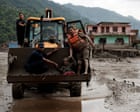
Every time a flash flood sweeps through an adventure hotspot like Nepal and swallows teenagers whole, the global news machine fires up a predictable script. We get the breathless updates, the tragic profiles of children as young as eleven trapped in foreign mountain ranges, and a collective hand-wringing over the cruel unpredictability of Mother Nature.
It is a comfortable narrative. It protects the tourism boards, shields commercial operators, and keeps the cash flowing into high-risk destinations under the guise of cross-cultural enrichment.
It is also complete nonsense.
Nature is not malicious, and flash floods in monsoon-season mountain corridors are not unpredictable acts of God. They are physical certainties. When you drop an Australian tour group—complete with pre-teens—into high-altitude Himalayan drainage basins during peak weather volatility, you are not participating in authentic exploration. You are playing Russian roulette with a weather system that does not care about your itinerary, your booking fees, or your insurance policy.
The Industry Blind Spot Around Himalayan Risk
I have spent two decades managing crisis response and logistics in extreme environments across South Asia. I have watched commercial operators scale back safety margins year after year to protect profit margins and satisfy an Instagram-addicted consumer base demanding raw, unfiltered wilderness experiences.
The lazy consensus holds that adventure travel is inherently dangerous, accidents happen, and regulation can only go so far in the rugged backcountry.
That excuse needs to be buried.
Commercial outfitters operating in Nepal know the hydrological maps. They know the monsoon timelines. They know that deforested hillsides, rapid glacial melt, and narrow river gorges turn minor rain events into walls of water with zero warning. Yet, they continue pushing groups into hazard zones because admitting that a route is temporarily suicidal ruins the quarter's revenue.
When an 11-year-old child is part of a remote mountain tour group caught in a flash flood, the failure did not happen on the riverbank. It happened months earlier in a corporate boardroom in Sydney or Kathmandu, where risk was minimized on a spreadsheet and marketed as resilience.
Demolishing the Myth of the Controlled Wilderness
Tourists love to believe that commercial trekking is sanitized. They pay thousands of dollars for certified guides, satellite phones, and emergency extraction insurance, operating under the dangerous delusion that a safety net turns a hazardous wilderness into an amusement park ride.
It does not.
Insurance companies will not airlift a child out of a raging torrent while boulders the size of cars are tearing down the valley. Satellite messengers will not stop a wall of mud from wiping out a riverside campsite. When flash flooding hits narrow Himalayan canyons, human infrastructure becomes useless in seconds.
The uncomfortable truth is that modern adventure travel has commodified danger. Agencies sell proximity to peril to clients who have zero business being in high-risk terrain, let alone bringing children whose neurological development and physical strength make them utterly unequipped to handle rapid-onset environmental disasters.
What We Should Be Asking Instead
When tragedy strikes an expedition, the media asks the wrong questions. They ask how many people are missing, how long rescue teams will take to arrive, and whether local infrastructure needs more foreign aid.
Those are downstream questions designed to avoid accountability.
Instead, we should be asking:
- Why are commercial operators running high-altitude river treks during peak monsoon windows?
- What justification exists for taking pre-teens into terrain where evacuation is mathematically impossible during a weather event?
- At what point do western adventure companies face criminal liability for selling negligent risk profiles to uninformed consumers?
If you want to trek through the Himalayas, do it with your eyes open. Accept that you are entering a geological zone undergoing massive climate destabilization. Drop the expectation that a local guide can outsmart physics when a hillside lets go.
The Hard Reset on Adventure Tourism
The downside to this hardline stance is obvious: it kills the romantic illusion of travel. It forces agencies to cancel lucrative trips, ruins family bucket-list fantasies, and demands that consumers accept personal responsibility rather than outsourcing their survival to a local guide with a whistle and a first-aid kit.
Good.
We need fewer tourists in vulnerable mountain ecosystems, not more. We need stricter age floors for high-risk treks. And we need to stop romanticizing tragedies caused by human arrogance as unavoidable acts of nature.
Stop buying tickets for expeditions that treat children as disposable accessories for global thrill-seeking. The mountain does not negotiate, and nature does not owe your family safe passage.