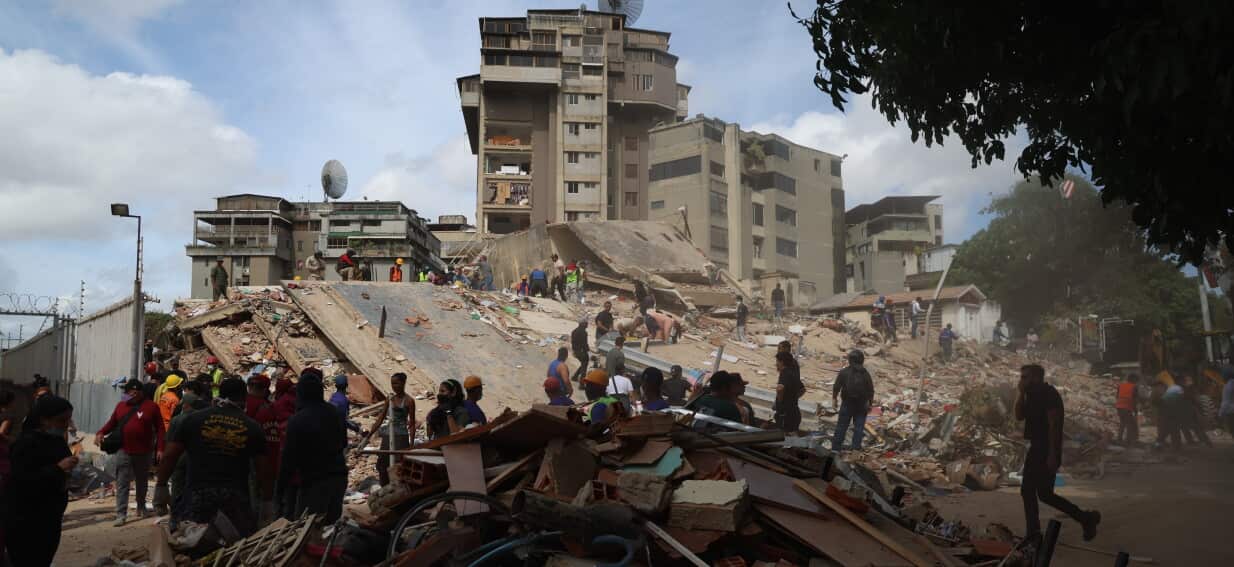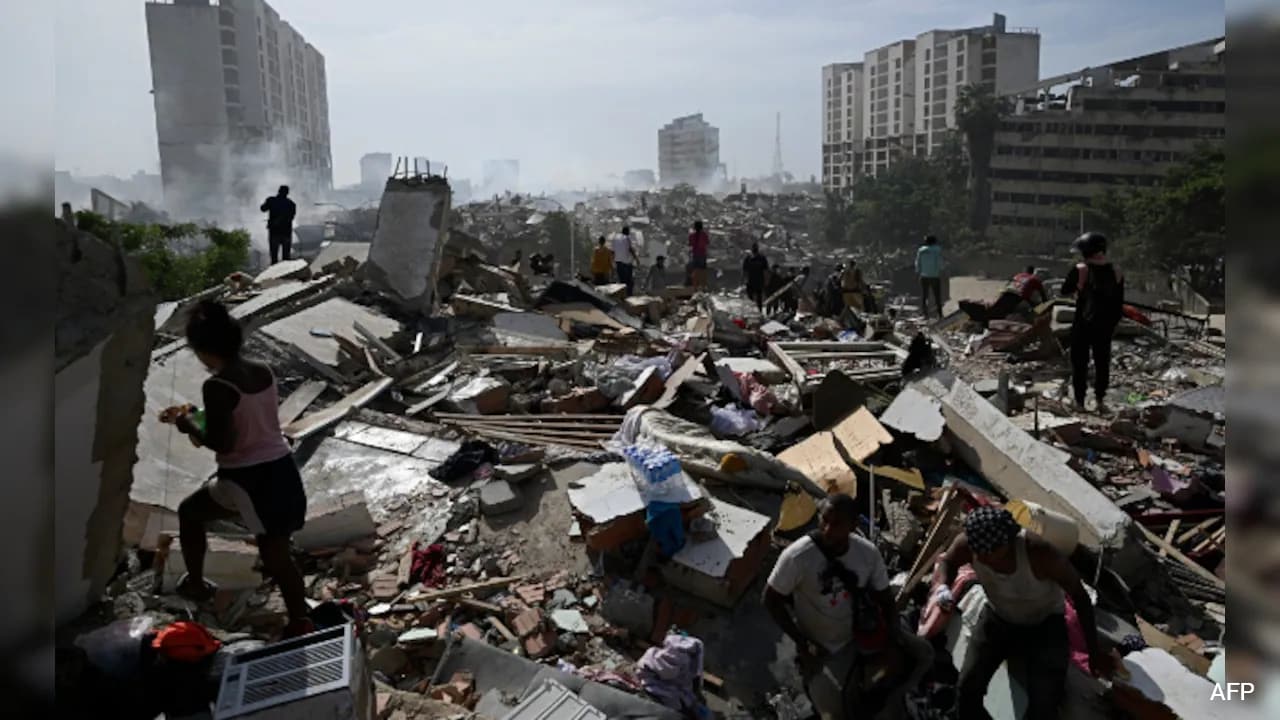
The media coverage surrounding the twin earthquakes that tore through north-central Venezuela on Wednesday evening is following a predictable, lazy script. Outlets are splashing headlines focused entirely on the sheer raw power of nature—the back-to-back 7.2 and 7.5 magnitude tremors, the shallow 10-kilometer depth, and the grim tally of 235 dead and over 1,500 injured. They want you to look at the San Sebastián fault system and see an unpreventable Act of God.
They are wrong. The geological event was inevitable; the humanitarian catastrophe was entirely manufactured.
When an earthquake hits a highly urbanized corridor like the one stretching from the epicenter in Yaracuy down through Valencia, Maracay, the capital city of Caracas, and the coastal hub of La Guaira, the tectonic plates are only pulling the trigger. The bullets were loaded decades ago by terrible structural engineering, institutional neglect, and a complete disregard for seismic building codes. To view this as a purely natural disaster is to let the people who built these deathtraps completely off the hook.
The Myth of the Unpreventable Catastrophe
The standard reporting treats a 7.5 magnitude earthquake as an automatic death sentence for anyone nearby. It isn't. The United States Geological Survey (USGS) notes that this was a strike-slip event—meaning the ground slipped horizontally along a 150-by-20-kilometer rupture zone. Strike-slip events are violent, but engineering structures to survive them is not some unsolved mystery. We have known how to build seismic-resistant high-rise structures for more than half a century.
Look at the mechanics of what actually failed on June 24. In the affluent Caracas municipalities of Altamira and Los Palos Grandes, a 22-story building completely pancaked into a pile of concrete dust. In the coastal region of La Guaira, which has been designated a total disaster zone, multi-story residential blocks didn't just crack—they sheared entirely at the foundation, tilting like dominoes.
This type of failure is a smoking gun for specific structural engineering sins:
- Soft-story vulnerabilities: Designing buildings with open, unreinforced ground floors for parking or commercial space, leaving the entire weight of the upper floors supported by columns that snap instantly under lateral shaking.
- Brittle concrete and substandard rebar: Using concrete mixtures with too much sand or water, combined with insufficient steel reinforcement inside the load-bearing columns.
- Resonance mismatches: Building structures whose natural vibration frequencies perfectly match the seismic waves of the local soil, amplifying the shaking until the material undergoes catastrophic fatigue.
I have spent years analyzing urban risk profiles across Latin America, and the structural decay in north-central Venezuela was a tragedy hiding in plain sight. This region has not felt a truly devastating tremor since the 1997 Cariaco event or the infamous 1967 Caracas earthquake. Decades of seismic silence bred absolute complacency. While regional neighbors like Chile spent the last thirty years aggressively enforcing strict building standards, Venezuela allowed its infrastructure to rot behind a facade of architectural normalcy.
The Inequality of Shaking Ground
A brutal truth of modern seismology is that earthquakes do not distribute damage equally. They act as magnifying glasses for economic and structural inequality.
When the double shockwaves tore through the Caracas valley, they didn't just hit high-rise condos in Chacao; they rippled through the informal settlements, the barrios, clinging precariously to the mountain slopes of Petare and Catia. In these zones, homes are built using non-engineered masonry—unreinforced cinder blocks stacked on top of each other, held together by cheap mortar, and anchored to unstable soil by sheer luck.
When a 7.5 magnitude mainshock hits unreinforced masonry, the walls do not bend or flex; they explode outward. The USGS predictive PAGER modeling initially flagged a massive probability that the final death toll could climb into the thousands or tens of thousands. The only reason the immediate body count stands at 235 instead of 20,000 is a stroke of sheer calendar luck: June 24 is a national holiday commemorating the Battle of Carabobo. Offices were empty. Had these twin quakes struck at 2:00 PM on a Tuesday, the collapsing concrete floors of commercial offices and schools would have created a graveyard on a scale this hemisphere has rarely seen.
The real disaster is that the public health system was broken long before the first shockwave registered on the seismographs. Acting President Delcy Rodríguez and Health Minister Carlos Alvarado have stated that the 235 fatalities represent individuals who arrived at clinics without vital signs or died immediately upon admission. This is a damning indictment of the regional medical infrastructure. Emergency rooms lacked backup generators, basic surgical supplies, and trauma kits. The main airport serving Caracas, Simón Bolívar International Airport in La Guaira, suffered heavy damage to its terminal structure, paralyzing incoming emergency logistics right when hours mattered most.
Redefining the Emergency Response
The standard international response script has already kicked in. The United States has authorized $150 million in humanitarian aid, the United Nations is mobilizing urban search-and-rescue units, and private entities like Starlink are turning on free satellite internet to bypass collapsed cell towers.
This immediate crisis management is vital for the people trapped beneath the rubble in Altamira or the coastal ruins of Puerto Cabello. But let's be entirely honest about the downside of this cyclical charity model: it funds the cleanup while ignoring the systemic rot that caused the collapse.
If the international community simply swoops in, clears the rubble, hands out tents, and allows the country to rebuild using the exact same substandard techniques and materials, it is merely subsidizing the next mass-casualty event. True disaster mitigation requires an uncomfortable, aggressive shift in focus.
Instead of funneling money exclusively into short-term aid buckets, resources must be tied directly to structural accountability. This means shifting from reactive crisis management to proactive engineering enforcement.
- Mandatory Structural Auditing: Every standing high-rise building across the northern plate-boundary corridor must undergo immediate non-destructive testing to assess structural integrity after the 30+ recorded aftershocks.
- The End of Informal Masonry: International aid packages should prioritize providing engineered retrofitting kits—such as carbon-fiber reinforced polymers or wire-mesh plaster overlays—to stabilize homes in high-risk informal settlements before the next fault line slips.
- Transparent Building Registries: Establishing public, decentralized databases detailing the seismic compliance of municipal infrastructure so citizens actually know if the roof over their head is a certified shelter or a trap.
The San Sebastián fault system will slip again. The Caribbean and South American plates will continue their relentless horizontal grind. We cannot control the magnitude of the next foreshock, nor can we predict the exact minute the earth will buckle. But we can absolutely control whether our buildings stand or fall. Stop looking at the sky or the ground for answers. The vulnerability is entirely human, and the fix must be structural.