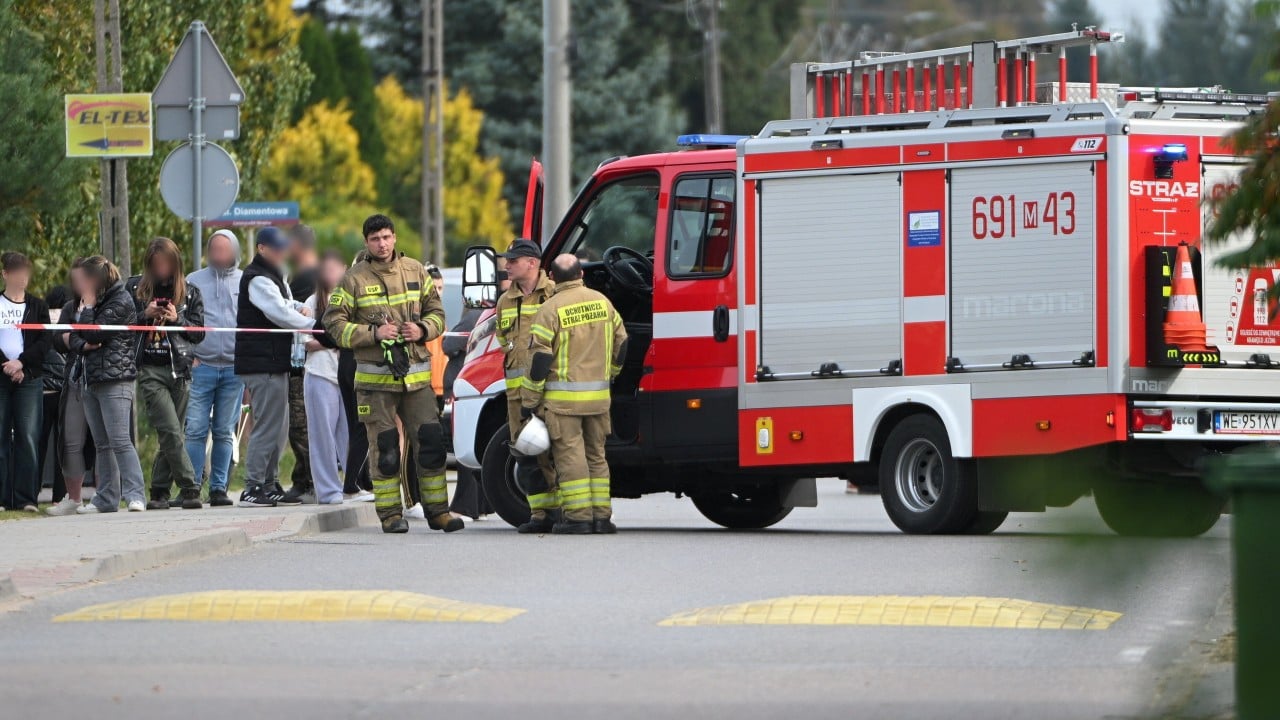
Two days. Two Polish schools. Two knives. The headlines practically wrote themselves before the ink was even dry on the police blotters. Journalists rushed to dust off their favorite buzzword, screeching about a terrifying wave of copycat violence sweeping across Eastern Europe. Every talking head on cable news clutched their pearls, demanding immediate metal detectors, bag checks, and total digital lockdowns for teenagers.
It is a lazy, comforting narrative. It lets authorities point at a shadowy sociological contagion and blame the internet, violent video games, or bad parenting in a neat little package.
Except the copycat theory is a complete fraud.
I have spent over a decade analyzing institutional failure and crisis response mechanisms across public sectors. When back-to-back incidents happen, amateur observers see a trend; professionals see a systemic vulnerability that was already sitting there waiting for a match. We are not watching a viral contagion of teenage nihilism. We are watching a predictable statistical cluster amplified by sensationalist media amplification loops that practically hand disgruntled kids a script for notoriety.
Every time a media outlet screams about copycats, they give an isolated, desperate teenager a masterclass in how to guarantee maximum attention. The transmission vector isn't TikTok or video games. The transmission vector is the front page of every major news site treating a disturbed child like a global superstar for twenty-four hours.
The Lazy Consensus Of Media Contagion
The mainstream argument goes like this: one violent event occurs, the media blasts saturation coverage across every screen, a fragile kid sees it, experiences a psychological trigger, and mimics the act to achieve infamy. It sounds scientific. It sounds sophisticated. It completely ignores human behavioral mechanics.
Real criminologists know that true copycat crimes require explicit behavioral blueprints, detailed technical instructions, and a specific grievance that aligns with the portrayed act. School violence rarely fits this mold. What we call a copycat wave is usually a synchronization effect born of normalization. When an institution maintains zero proactive safety architecture, multiple dormant threat actors reach their breaking point under similar seasonal or social pressures. The proximity in time is a statistical coincidence weaponized by editors who need clicks.
Consider what actually happens inside a typical European secondary school when a panic hits. Administrators roll out reactive security theater. They install cameras that nobody monitors, hire underpaid guards who check phones instead of bags, and hold mandatory assemblies where they lecture kids about behaving. This does nothing to mitigate violence. It only teaches students that their school is a hostile, distrustful prison camp.
When you treat children like maximum-security inmates, you should not be surprised when some of them start acting like prisoners.
Dismantling The Security Theater Industrial Complex
Let us look at the financial incentive behind the panic. Whenever school safety hits the news cycle, a revolving door of consultants, security vendors, and software salesmen flood municipal governments with high-priced proposals. They sell predictive AI algorithms, automated threat-monitoring software for student laptops, and facial recognition scanners.
I have sat in budget meetings where school boards millions of dollars on algorithmic surveillance tools while their school counselors carry caseloads of five hundred students each. It is institutional malpractice.
Predictive software algorithms do not stop violence. They generate thousands of false positives, flag innocent teenagers for writing edgy poetry or venting teenage angst, and exhaust the tiny handful of mental health professionals actually trying to do real work. The data is damning. Automated threat assessment tools deployed in schools across North America and Europe have overwhelmingly targeted marginalized students, students with disabilities, and kids struggling with basic social integration, all while missing actual pre-crisis behaviors.
You cannot code your way out of human alienation with a software subscription.
The Uncomfortable Truth About School Climate
If you want to stop school violence, you have to look at the boring, unsexy fundamentals that school districts love to ignore because they cost time and real leadership.
First, isolation kills. Every single perpetrator of targeted school violence shares one definitive psychological trait: profound, prolonged social disconnection and a sense of absolute invisibility within their peer group. They do not snap because they watched a news report from another city. They snap because they spent months or years walking down crowded hallways feeling like ghosts, ignored by teachers who are too busy grading standardized tests and alienated by peers locked into digital silos.
Second, the threshold for reporting concerning behavior is completely broken. Schools operate on two extremes. Either they ignore warning signs until an explosion occurs, or they overreact to minor infractions with zero-tolerance policies that throw kids into the criminal justice pipeline over a playground scuffle. There is zero nuance.
True safety comes from relational density, not metal detectors. When a school has an environment where students trust at least one adult enough to whisper, "Hey, Dave hasn't been to class and he posted something weird," intervention happens before a knife or a weapon ever crosses the threshold.
What Actually Works When The Panic Fades
If you are a school administrator, a policymaker, or a parent tired of the endless cycle of panic and useless security theater, stop buying into the copycat myth. Here is what you need to demand instead.
Cut administrative bloat and fund human capital. For every dollar spent on surveillance hardware or software licenses, mandate a matching dollar for student-to-counselor ratios that actually allow professionals to know the names of the kids in their charge.
Change how incidents are reported. Media outlets and social platforms need to adopt strict self-regulation regarding the naming and profiling of adolescent offenders. Treat these events like suicides under responsible reporting guidelines: focus on community support, systemic failure, and prevention resources, while starving the perpetrator of the oxygen of fame.
Finally, dismantle zero-tolerance policies. They are lazy administrative cop-outs that replace professional judgment with rigid rules, driving troubled kids further underground where no one can spot their descent into crisis.
The next time a headline screams about a wave of copycats, remember who is actually driving the contagion. It is not the kids on the playground. It is the adults refusing to look in the mirror.


