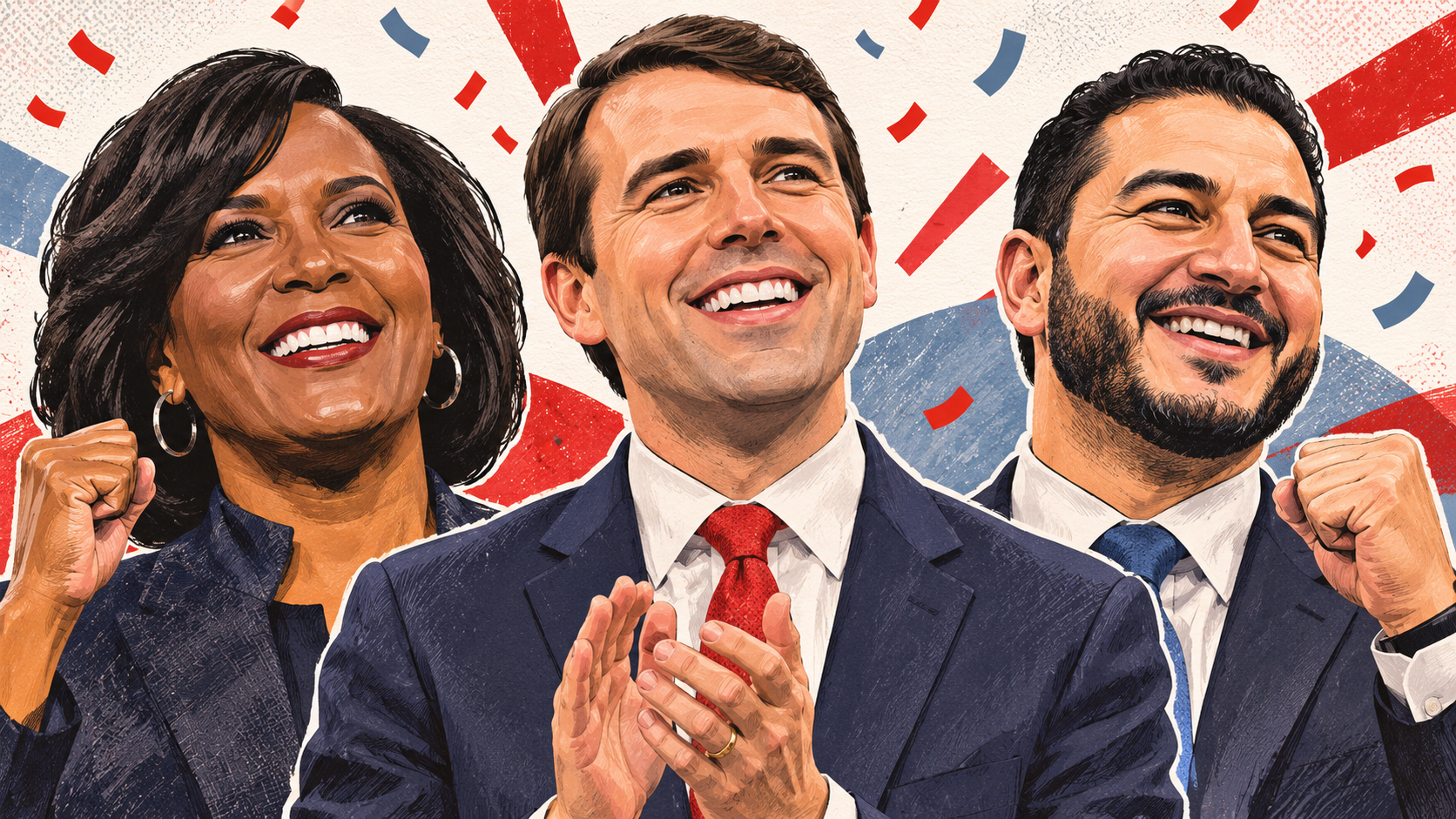
Every election cycle in Jerusalem ends with the exact same predictable theater. The Central Elections Committee certifies the tally, the President of Israel accepts the formal binders at Beit HaNassi, and the head of state delivers a solemn, televised plea for national unity and political compromise.
Foreign correspondents eat it up. Pundits nod sagely about the virtues of consensus. They treat presidential calls for a broad coalition as the height of statesmanship.
They are completely wrong.
The lazy consensus in international journalism is that Israel’s chronic political instability stems from a lack of compromise among stubborn party leaders. In reality, the obsession with forced compromise and broad unity coalitions is the exact mechanism destroying accountability in the Knesset. When President Isaac Herzog—or any Israeli president performing this ceremonial ritual—urges rival factions to set aside ideological red lines to form a government, he is asking politicians to defraud the voters who just elected them.
I have spent years dissecting parliamentary systems across the Mediterranean and Europe, watching institutional analysts burn millions in think-tank grants trying to engineer "consensus models" for deeply divided societies. Every single time, the result is identical: paralysis disguised as harmony.
The Myth of the Ceremonial Unifier
To understand why the standard media narrative fails, you first need to strip away the romanticism surrounding the Israeli presidency. Under Basic Law: The President of the State, the role is strictly ceremonial, save for one critical constitutional function: assigning the mandate to form a government following consultations with Knesset factions.
When the President accepts the certified results and immediately lectures the incoming parliament on the need to heal rifts and compromise, he steps outside mere neutrality and endorses a specific political philosophy—consociationalism.
Political scientist Arend Lijphart popularized consociational theory to explain how fragmented democracies like the Netherlands or Belgium avoided civil war through elite power-sharing. Pundits constantly apply Lijphart’s framework to Israel without realizing it requires one essential ingredient Israel lacks: elites who are actually willing to stop campaigning once the votes are counted.
In Israel's hyper-proportional representation system—where a 3.25% electoral threshold allows a dozen distinct ideological tribes into a 120-seat parliament—compromise does not produce moderation. It produces blackmail.
How "Unity" Subverts the Ballot Box
Consider the mechanics of a coalition negotiation in Jerusalem. Voters cast ballots for clear, mutually exclusive visions on judicial authority, military conscription for ultra-Orthodox citizens, religious status quo, and security doctrine.
When a president pressures opposing blocs to merge into a broad unity government, those core pledges vanish behind closed doors.
- Zero Accountability: If a right-wing party and a center-left party share the cabinet table, neither can execute its manifesto. When policies fail, each side blames its coalition partner. Voters have nobody left to punish at the next election.
- Extortion by the Margins: A narrow, ideologically coherent coalition of 61 to 64 seats relies on shared worldview. A bloated "compromise" coalition relies on lowest-common-denominator payouts. Small sectoral parties extract massive budgetary concessions simply to keep the Frankenstein cabinet breathing.
- The Death of the Opposition: Healthy democracies require a shadow government ready to replace the ruling bloc. When every major party is stuffed into a national unity tent, opposition shifts from the Knesset floor to the streets, fueling extraparliamentary rage and mass protests.
Dismantling the Pundit Class's Favorite Questions
Whenever an Israeli election concludes and the presidential consultations begin, newsrooms recycle the same three superficial questions. Each one rests on a flawed premise.
Does a broad unity government bring long-term stability?
No. History proves the exact opposite. Look at the 2020 "rotation government" formed between Benjamin Netanyahu and Benny Gantz under the banner of national emergency and compromise. It lasted barely seven months before collapsing over a state budget deliberately withheld as political leverage. Look at the 2021 "change government" spanning eight parties from the nationalist right to the Islamist Ra'am party. Built entirely on tactical compromise rather than shared governance philosophy, it disintegrated in barely a year.
Ideological coherence creates stability. Forced compromise creates a ticking time bomb.
Isn't the President obligated to promote national healing?
The President is obligated to uphold constitutional order, not act as a marriage counselor for warring party leaders. By framing sharp ideological division as a moral failure rather than the natural output of a proportional voting system, the presidency inadvertently delegitimizes hard-fought democratic mandates. If a bloc wins a clear majority of seats, telling them to dilute their platform to appease the losers is anti-democratic.
Why don't Israeli leaders simply adopt Western-style bipartisanship?
Because Israel does not use a first-past-the-post, two-party system like the United States or the United Kingdom. In Westminster systems, compromise happens inside big-tent parties before the election. In Israel's pure proportional system, compromise happens between parties after the election. Expecting Israeli politicians to behave like American senators ignores the mathematical incentives of the D'Hondt method (known locally as the Bader-Ofer method) used to allocate surplus Knesset seats.
The Math Behind the Madness
To see why presidential pleas for compromise backfire, look at the structural math of the Knesset.
| Coalition Type | Seat Count | Primary Mechanism | Typical Failure Mode |
|---|---|---|---|
| Narrow Ideological | 61–65 | Shared core platform | Defection of 2–3 rebel backbenchers |
| Broad Unity | 70–90 | Mutual veto power | Complete legislative gridlock on core issues |
| Minority Government | Under 61 | External confidence-and-supply | Instant collapse on first major security crisis |
In a narrow ideological coalition, the Prime Minister governs. Decisions happen. Legislation passes. If the public hates the results, the voters throw the entire bloc out four years later. That is how representative democracy is supposed to function.
In a broad unity coalition—the exact outcome praised by editorial boards every time Herzog steps up to the podium—both major factions hold a mutual veto. Neither side can advance its signature reforms. The government survives only by avoiding every contentious question facing the nation: conscription exemptions, judicial boundaries, and territorial policy.
Imagine a scenario where two surgeons with completely opposite diagnoses are forced to operate on the same patient simultaneously, with each doctor given veto power over the other's scalpel. Nobody calls that medical compromise. They call it malpractice. Yet in politics, commentators applaud the exact same paralysis as "mature governance."
The Uncomfortable Downside of Pure Majoritarianism
Let's be brutally honest about the trade-off here. Rejecting the cult of compromise carries real, dangerous consequences in a country as fractured as Israel.
If a winning bloc forms a razor-thin 61-seat government and governs without restraint, nearly half the country feels completely disenfranchised. Without institutional guardrails—such as a formal written constitution, an upper legislative chamber, or federalized regional autonomy—a bare Knesset majority wields unchecked executive and legislative power.
In systems like Germany or the United States, federalism and bicameral legislatures stop a 51% majority from rewriting the rules of the game overnight. Israel has a unicameral parliament, no formal constitution, and a centralized cabinet that dominates the Knesset floor through strict coalition discipline.
When a narrow government pushes radical institutional changes without broad buy-in, the minority does not quietly accept defeat. Capital flees, reservists threaten non-compliance, and social cohesion frays at the seams. That is the genuine nightmare scenario keeping President Herzog awake at night, and it is why the office of the presidency repeatedly begs for consensus.
How to Actually Fix the System (Instead of Begging for Harmony)
Moralizing from Beit HaNassi will never override mathematical self-interest. Politicians respond to electoral incentives, not speeches about brotherhood. If Israel wants functional governance without endless election cycles, it must stop begging leaders to compromise and start changing the rules that reward gridlock.
- Raise the Electoral Threshold to 5%: The current 3.25% threshold invites micro-factions to hold national policy hostage. Raising it to 5%—the standard used in Germany's Bundestag—forces smaller ideological cousins to merge before election day, reducing the number of veto players in coalition talks.
- Enact Constructive Votes of No Confidence: Borrow directly from the German Basic Law. A sitting government should not fall simply because an opposition coalition agrees they hate the Prime Minister. Parliament should only be allowed to topple a government if it simultaneously elects a replacement with an absolute majority of 61 seats.
- Separate Ministers from Knesset Seats: Enforce the Norwegian Law across the entire cabinet. Every party leader appointed as a minister must resign their Knesset seat, allowing the next candidate on the party list to enter parliament. This restores the separation of powers, creates a legislature capable of overseeing the executive, and stops ministers from treating parliamentary committees like personal rubber stamps.
- Let Winners Govern and Losers Oppose: Drop the toxic obsession with national unity cabinets outside of active, declared total war. Allow narrow coalitions to pass their budgets, implement their policies, and own their failures completely.
The next time television cameras broadcast the formal certification of Israeli election results, ignore the sanitized soundbites about unity and healing. Democracy is not a consensus-building workshop; it is a peaceful mechanism for deciding which competing vision gets to rule until the next ballot. Until Israel forces its political blocs to govern cleanly and face the voters without hiding behind unity coalitions, every presidential plea for compromise is just another excuse for permanent paralysis.