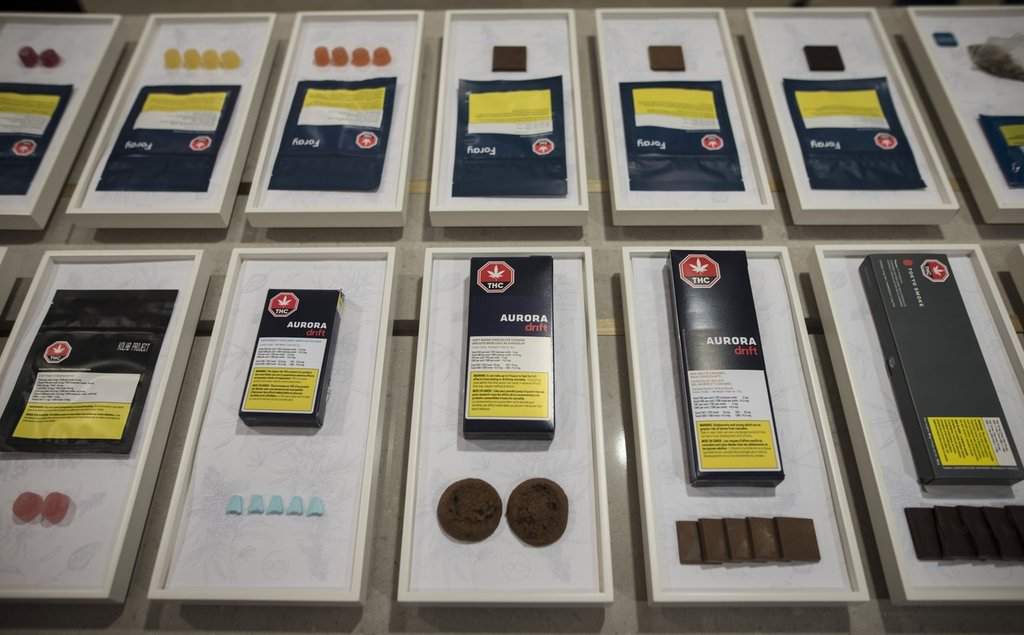
Walk into almost any licensed dispensary in North America right now and look at the menu. You are staring at a museum of compliance. Every eighth of flower is suffocated inside a child-resistant Mylar pouch, slapped with three layers of state-mandated warning stickers, tested by a lab that probably inflated the THC percentage to keep the cultivator's business, and marked up forty percent by excise taxes before the budtender even says hello.
Meanwhile, three blocks away—or via an encrypted messaging app that delivers to a customer’s front porch in twenty-five minutes—the unlicensed operator is selling fresh, un-irradiated flower out of glass jars for half the price, alongside solventless rosin and high-dose edibles that actually work.
For years, the dominant narrative among licensed cannabis executives and trade associations has been predictable: The illicit market is winning because enforcement is weak, taxes are too high, and buying illegal weed is simply too convenient. Legal operators constantly demand public awareness campaigns, landlord liability laws, and padlocking task forces to crush their unlicensed competitors.
That narrative is a convenient fairy tale told by bad operators to excuse terrible unit economics.
Consumers do not buy from the legacy market merely because it is "easy." In many cities, walking into a brightly lit, Apple-Store-style dispensary on a main commercial corridor is objectively easier than texting a guy named Dave and waiting in a Honda Civic behind a strip mall. Consumers buy from the illicit market because, on almost every metric that actually matters to a heavy user—price, potency, freshness, and product variety—the legal market offers an inferior product at a luxury markup.
Until legal operators stop begging state regulators to act as their private security force and start confronting the structural rot inside their own business models, no amount of enforcement will save them.
The Myth of "Convenience" and the Reality of the Pareto Principle
To understand why the legal cannabis industry is bleeding market share, you have to understand who actually buys weed.
In consumer packaged goods, the Pareto Principle—the 80/20 rule—is law. In cannabis, it is even more extreme. Research from firms like Headset and Brightfield Group consistently shows that roughly 20 percent of cannabis consumers account for upwards of 70 to 80 percent of total volume sold. These are daily, heavy consumers. They are not tourists buying a single pack of 5mg gummies before a concert. They are people buying half-ounces, ounces, and multiple grams of concentrates every single week.
When a trade group claims consumers buy illegal pot "because it's easy," they are projecting the habits of casual shoppers onto heavy buyers. A heavy consumer does not care if an unlicensed delivery service takes forty-five minutes instead of twenty. They care that an ounce of top-shelf flower in the legal market costs $320 after state excise taxes, local municipal taxes, and sales tax, while the exact same genetic—often grown by the same cultivator through a backdoor wholesale channel—costs $140 on the traditional market.
I have watched multi-state operators burn through tens of millions of dollars building retail footprints in dense urban markets, assuming that proximity and legality would automatically convert heavy buyers. It never happens. You cannot build a sustainable retail business when your core customer base faces a 35 to 45 percent price penalty just for walking through your front door.
Why Enforcement Is a Sucker’s Bet
Every time a major cannabis market stalls—whether in California, New York, or Ontario—the standard playbook is to lobby the state for aggressive enforcement against illicit storefronts. New York’s "Operation Padlock to Protect" and California’s Unified Cannabis Enforcement Taskforce are held up as the cavalry arriving to rescue licensed retailers.
This is a fundamental misunderstanding of how underground markets operate.
Illicit cannabis is not a brick-and-mortar business model; it is a decentralized network that only uses storefronts when local police temporarily stop caring. The moment a city spends millions of taxpayer dollars padlocking unlicensed shops, the market does not migrate to licensed dispensaries. It simply snaps back to delivery services, telegram channels, and pop-up events—the exact distribution architecture that survived decades of the War on Drugs.
Worse, demanding aggressive policing creates a grotesque optical and strategic trap for legal operators. An industry built on the promise of ending prohibition and undoing the harms of criminalization ends up lobbying the state to arrest its own customers and competitors. Every dollar spent lobbying for crackdowns is a dollar not spent fixing the broken tax code or reforming idiotic packaging laws.
Even if police shut down every illicit storefront tomorrow, legal shops would still fail if they cannot compete on value. You cannot arrest your way to product-market fit.
The Hidden Tax Nobody Talks About: Regulatory Friction
Everyone points to excise taxes as the primary villain, and rightly so. Taxing a plant based on gross receipts or THC milligram content before it even reaches a retail shelf is economic malpractice. Under IRS Section 280E, legal operators cannot even deduct normal business expenses like rent, payroll, and marketing, resulting in effective federal tax rates that routinely exceed 70 percent.
But focusing solely on taxes misses the second massive cost driver: compliance theater.
Consider what happens to a batch of cannabis flower in a regulated market before a consumer ever smells it:
- Remediation: Because states enforce zero-tolerance thresholds for certain microbes and molds—standards far stricter than what applies to the produce you buy at Whole Foods—large cultivators routinely blast their flower with ozone or radiation. This passes the lab test, sure. It also nukes the volatile terpenes that give cannabis its flavor, aroma, and nuanced effects.
- Packaging bloat: State laws require opaque, child-resistant, tamper-evident packaging covered in tiny font warnings. Packaging alone often costs more per unit than the agricultural inputs used to grow the plant. Worse, sealing flower in plastic pouches weeks or months before sale turns premium bud into dry, crumbling dust.
- Lab shopping: Because high THC percentages drive retail pricing, brands pressure testing labs to inflate potency numbers. Consumers are not stupid. When they pay $65 for an eighth labeled "34% THC" that tastes like hay and barely gets them high, they lose trust in the entire legal system.
Imagine a scenario where the craft beer industry was forced to pasteurize every IPA until it tasted like cardboard, seal each can inside a child-proof plastic vault, and pay a 40 percent sin tax at the register—while homebrewers across the street were allowed to sell fresh, unpasteurized pours out of a keg for three dollars a pint. Nobody would blame the homebrewers' "convenience" when the craft breweries went bankrupt.
The Edible Potency Cap Is an Open Invitation to the Black Market
If you want proof that regulators actively design laws that subsidize the illicit market, look at potency caps.
In states like California, Massachusetts, and New York, recreational edibles are capped at 10mg per serving and 100mg per package. In Canada, it is an absurd 10mg per entire package.
For a medical patient or a daily consumer with a high tolerance, 100mg is a single dose. To get their desired effect from a legal dispensary, they have to buy five separate packages, pay five separate sets of taxes, rip open fifty individual plastic wrappers, and eat half a pound of sugar. Meanwhile, the unlicensed market sells a single 500mg or 1,000mg pack of gummies for fifteen dollars.
Legislators put these caps in place to prevent accidental overconsumption by novices. Instead, they handed the entire high-tolerance edible market to unregulated producers on a silver platter. Legal retailers who defend these regulations as "responsible" are celebrating their own irrelevance.
How Legal Operators Actually Win (Without Calling the Police)
If the licensed industry wants to survive, it has to stop acting like a regulated utility entitled to a monopoly and start acting like a consumer-obsessed retail sector. That requires abandoning comfortable consensus positions and pushing for radical structural shifts.
1. Fight for Bulk Deli-Style Retail and Freshness
Pre-packaged weed is the enemy of quality. States like Michigan and Oregon—where legal operators have actually managed to crush illicit market share—allow "deli-style" dispensing. Budtenders weigh flower straight out of large glass jars in front of the customer. The consumer can see the trichomes, smell the terpenes, and buy exact weights without paying for a mountain of single-use plastic. If your state bans deli-style sales, making that legal should be your top lobbying priority—above enforcement, above grants, above everything.
2. Demand the Elimination of Potency Caps and Arbitrary Microbial Limits
Legal operators need to stop nodding along with public health bureaucrats who have never consumed cannabis. Trade associations must aggressively lobby to raise edible package limits to at least 500mg for adult-use consumers, paired with clear dosing scored onto the product. At the same time, the industry must push to replace zero-tolerance microbial testing—which forces radiation remediation—with rational, science-based standards modeled on agricultural food safety. Stop selling dead weed.
3. Kill Weight-Based and Potency-Based Excise Taxes
A flat, low point-of-sale excise tax—ideally under 10 percent—is the only tax structure that allows legal retail to compete with street prices. Michigan proved this. With a 10 percent excise tax and a 6 percent sales tax, combined with unrestricted licensing that let supply meet demand, Michigan drove retail prices down to levels where the illicit market simply stopped making economic sense for most buyers. High-tax states like California and Illinois are still refusing to learn this lesson, watching tax revenues shrink as consumers flee back to legacy dealers.
4. Own the Narrative on the Downsides of Deregulation
Let’s be brutally honest about the trade-off here: adopting a low-tax, open-licensing, deli-style model like Michigan or Oklahoma is brutal for lazy operators. When you remove artificial barriers to entry and lower taxes, prices collapse. Margins compress. Oversupply happens. Companies that built their business models on selling $60 eighths go out of business.
That is not a bug; it is how real markets work. Survival in a free market belongs to operators who can cultivate high-terpene flower at scale for under $400 a pound and run lean, high-volume retail stores with genuine product curation. If your business plan requires armed state agents to eliminate your competition so you can charge luxury prices for mediocre product, you do not have a viable business.
Stop Blaming the Customer
The customer is never wrong about value. When millions of people actively choose to bypass a legal, regulated storefront to buy from an unlicensed seller, they are sending an unmistakable price-and-quality signal.
Legal cannabis executives can keep writing op-eds complaining about how easy it is to buy illegal weed. They can keep posing for photos at press conferences next to police chiefs standing in front of seized garbage bags of flower. None of it will fix their balance sheets.
Fix the taxes, fix the testing, ditch the plastic, and put better weed in the jar. Everything else is just noise.