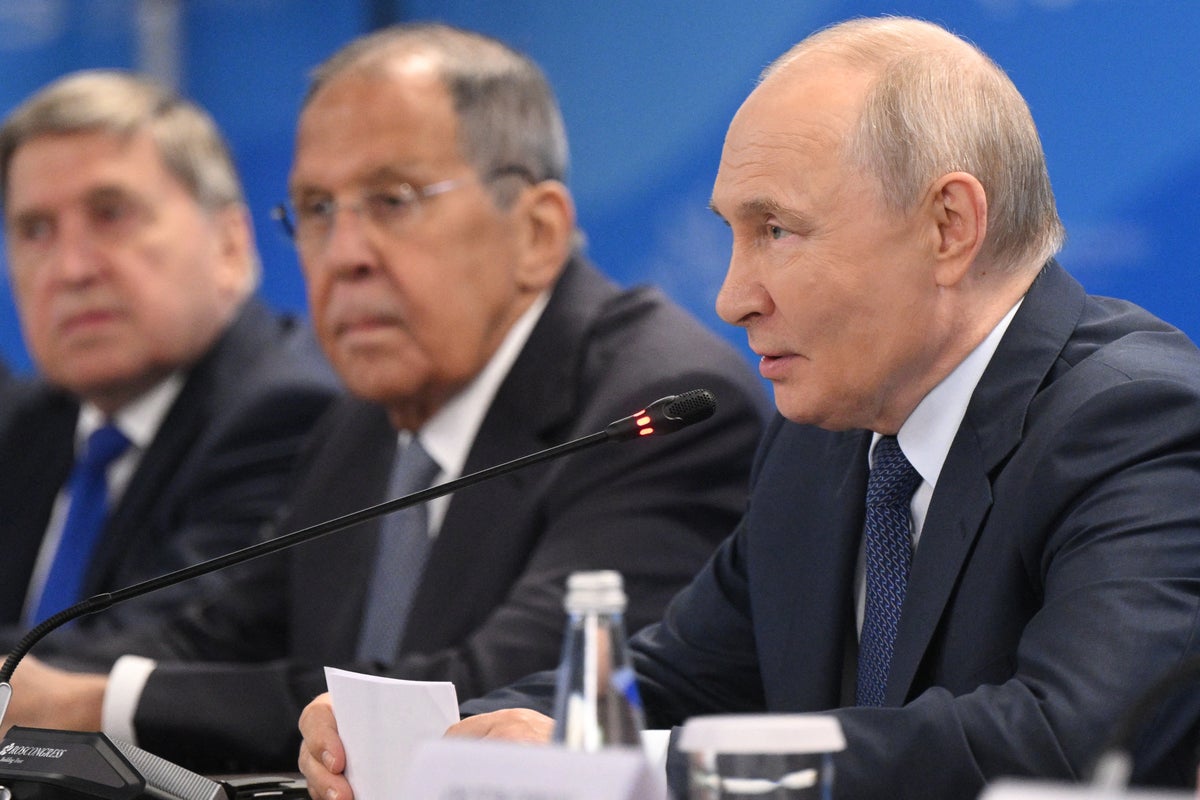
The systematic closure of foreign cultural outposts operates as a precise tool of statecraft, bypassing military escalation while systematically dismantling soft power projection. Recent retaliatory measures targeting German cultural institutions inside Russian territory illustrate a predictable escalation ladder following security accusations tied to alleged intelligence operations and infrastructure sabotage plots. Understanding this friction requires moving past sensationalized headlines to examine the structural mechanics of diplomatic expulsion, institutional asset forfeiture, and the operational collapse of bilateral information channels.
The Anatomy of Diplomatic Retaliation
When a state accuses a foreign actor of orchestrating covert actions or sabotage, the response protocol typically follows a tiered escalation framework.
- Intelligence Expulsion: Declaring diplomatic and intelligence personnel persona non grata to disrupt local command and control networks.
- Information Asset Disruption: Restricting or shuttering state-backed media agencies, broadcast towers, and linguistic distribution channels.
- Cultural Infrastructure Seizure: Revoking operating licenses, freezing bank accounts, and physically seizing properties belonging to language institutes, foundations, and educational exchange centers.
The closure of German cultural centers falls squarely into the third tier. These institutions serve a dual function. On paper, they promote language acquisition, academic mobility, and artistic exchange. In practice, they represent sovereign footholds for civil society engagement, independent academic research, and Western narrative alignment. By dismantling these nodes, the host state removes domestic access points for foreign influence, neutralizing what security apparatuses define as subversion vectors under the guise of cultural diplomacy.
The Economic and Operational Cost Function
Shuttering established cultural infrastructure incurs immediate financial losses and long-term strategic deficits for both the host and target nations.
- Capital Sunk Costs: Real estate acquisitions, long-term facility leases, localized library assets, and administrative investments are abruptly written down to zero.
- Human Capital Dispersion: Local administrative staff, language instructors, and academic coordinators face sudden unemployment, severing institutional memory and localized networks built over decades.
- Information Asymmetry: The removal of physical centers degrades the target nation's capacity to accurately gauge domestic sentiment, academic trends, and linguistic penetration within the host population.
For Germany, losing these centers means a permanent contraction of its cultural footprint in Eastern Europe, reducing its capacity for long-term strategic trust-building. For Russia, the trade-off involves sacrificing reciprocal educational programs and remaining diplomatic touchpoints in exchange for absolute domestic security control and the elimination of perceived foreign subversion hubs.
Information Control and the Elimination of Alternative Nodes
Modern state security frameworks view decentralized cultural networks as vulnerabilities. In an era where information is instantly digitized, physical cultural centers remain uniquely potent because they anchor intangible value in physical space. They provide secure meeting environments for dissidents, independent scholars, and students seeking perspectives outside state-sanctioned media narratives.
The closure mechanism directly targets this vulnerability. By framing the cultural centers as ancillary command posts for drone plots or espionage, the state constructs a legal and political justification that satisfies domestic audiences while preempting international legal recourse. Diplomatic conventions protect official embassies and consulates with robust immunity, but cultural centers operate under bilateral cultural agreements that are easily amended, suspended, or terminated during geopolitical crises.
The Breakdown of Track Two Diplomacy
Official government-to-government communication represents Track One diplomacy, which is often paralyzed during active security conflicts. Track Two diplomacy relies on non-governmental actors, academic institutions, cultural organizations, and think tanks to maintain dialogue, prevent complete miscalculation, and preserve minimal channels of mutual understanding.
The targeted dismantling of German cultural entities severs these critical informal feedback loops. Without language institutes and cultural exchange programs, the pipeline for future diplomats, regional analysts, and commercial partners dries up. This creates an echo chamber effect inside both capitals, where policy decisions are increasingly driven by worst-case security assumptions rather than nuanced local expertise.
Strategic Horizon and Long-Term Fallout
The permanent removal of these institutions signals a definitive transition from competitive containment to structural decoupling. Cultural and educational ties are traditionally the last bridges to fall during geopolitical fracturing; their collapse marks the onset of a prolonged diplomatic ice age.
Future diplomatic normalization will require entirely new architectures for engagement, as the physical infrastructure built over the latter half of the twentieth century is systematically dismantled and repurposed by local security mandates. Institutions seeking to operate in adversarial environments must shift toward decentralized, digital-first models that resist physical seizure, though such models inherently sacrifice the deep, localized trust-building capacity that physical cultural centers historically provided.


