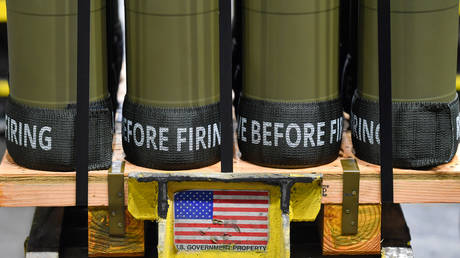
Bureaucratic delays are normal in Washington, but when artillery rounds and air defense interceptors are tied up in paperwork while civilian infrastructure gets pounded by ballistic missiles, the red tape feels a lot more dangerous.
The political gridlock over the stalled $400 million in U.S. security assistance for Ukraine has finally broken loose. Defense Secretary Pete Hegseth recently confirmed to the House Armed Services Committee that the funds—previously blocked at the Pentagon level—have been unfrozen and provided.
But don't let the sudden breakthrough fool you. The monthslong battle over this specific tranche of money exposed deep, worrying fractures between congressional intent and executive branch execution under the current administration.
The Battle of the Purse Strings
Congress approved this $400 million last year under the fiscal year 2026 defense appropriations budget, specifically earmarking it for the Ukraine Security Assistance Initiative (USAI). Unlike standard presidential drawdown authority, which pulls existing weapons directly from U.S. military stockpiles, USAI funding contracts American defense companies to manufacture new weapons for the Ukrainian military.
The money sat frozen for months. Top lawmakers grew increasingly furious as the Pentagon blew past its own deadlines to submit a spending plan.
A bipartisan coalition of senators, led by Democrat Dick Durbin and Republican Chuck Grassley, aggressively turned up the heat on the administration. They fired off a joint letter demanding the immediate obligation of the $400 million, alongside another $200 million meant for defense programs in the Baltic states.
During a heated Senate subcommittee hearing, Durbin openly blasted the delays as "bureaucratic malaise," pointing out the hypocrisy of forcing Ukrainian troops to fight for their lives against ballistic missile barrages while Washington bureaucrats played paper games.
Bypassing Congress Through the PURL Program
The real scandal isn't just that the money was delayed. It's how the Pentagon tried to reshape the entire U.S. approach to foreign military aid behind closed doors.
During budget hearings, Senator Jeanne Shaheen discovered that the Pentagon intended to completely drop the $400 million USAI allocation from its proposed 2027 budget proposal. Instead, the Department of Defense wanted to shift the burden by forcing European allies to finance purchases of U.S.-made weapons through a mechanism known as the Prioritised Ukraine Requirements List (PURL) program.
Basically, the administration tried to use a program meant for alliance-wide burden-sharing to bypass the clear intent of American lawmakers. The logic from the Pentagon? They claimed they were acting "within the framework of building European capacity".
Lawmakers weren't buying it. Shaheen directly grilled defense officials over the lack of transparency, demanding to know why the U.S. was trying to trick its allies into footing the bill for funding that Congress explicitly mandated should come directly from American resources. Under intense scrutiny from both sides of the aisle, the Pentagon finally blinked and released the cash.
What Happens to the Cash Now
Now that the $400 million is officially unblocked, don't expect weapons to magically appear on the front lines tomorrow.
Acting Pentagon Comptroller Jules Hurst clarified that because these funds belong to the USAI procurement framework, the money hasn't actually been tied to specific defense contracts yet. The exact weapons systems purchased will depend on what priority equipment Ukraine requests from U.S. manufacturers.
This means a lengthy procurement and manufacturing timeline at a moment when air defense assets are severely strained. NATO Secretary General Mark Rutte recently noted that while the U.S. has consistently supplied PAC-2 and PAC-3 interceptor missiles for Patriot air defense systems, the sheer volume of incoming Russian missile attacks means Ukraine's current defensive stockpiles remain under constant, dangerous pressure.
The Big Picture on Burden Sharing
This funding fight shows that the era of smooth, predictable bipartisan aid packages for Eastern Europe is completely over. Even though this specific $400 million is small potatoes compared to the multi-billion-dollar packages passed early in the conflict, the political friction required to pry it loose signals a rocky road ahead.
If you want to keep a close eye on where this conflict is heading, stop watching the top-line dollar announcements and start watching the procurement mechanisms. Keep tabs on the upcoming FY2027 defense budget fights, specifically looking at whether Congress successfully forces the continuation of direct USAI funding or if the executive branch successfully shifts the financial responsibility entirely onto the PURL framework and European donors. The friction between congressional mandates and Pentagon execution will ultimately determine whether American defense manufacturing stays actively engaged in the conflict or steps back to let Europe manage its own backyard.
For a deeper look at the raw tension between lawmakers and the State Department over these exact funds, check out this video breakdown of Senator Durbin questioning Secretary Marco Rubio on the Senate floor. It illustrates just how intense the frustration has grown on Capitol Hill.
http://googleusercontent.com/youtube_content/1