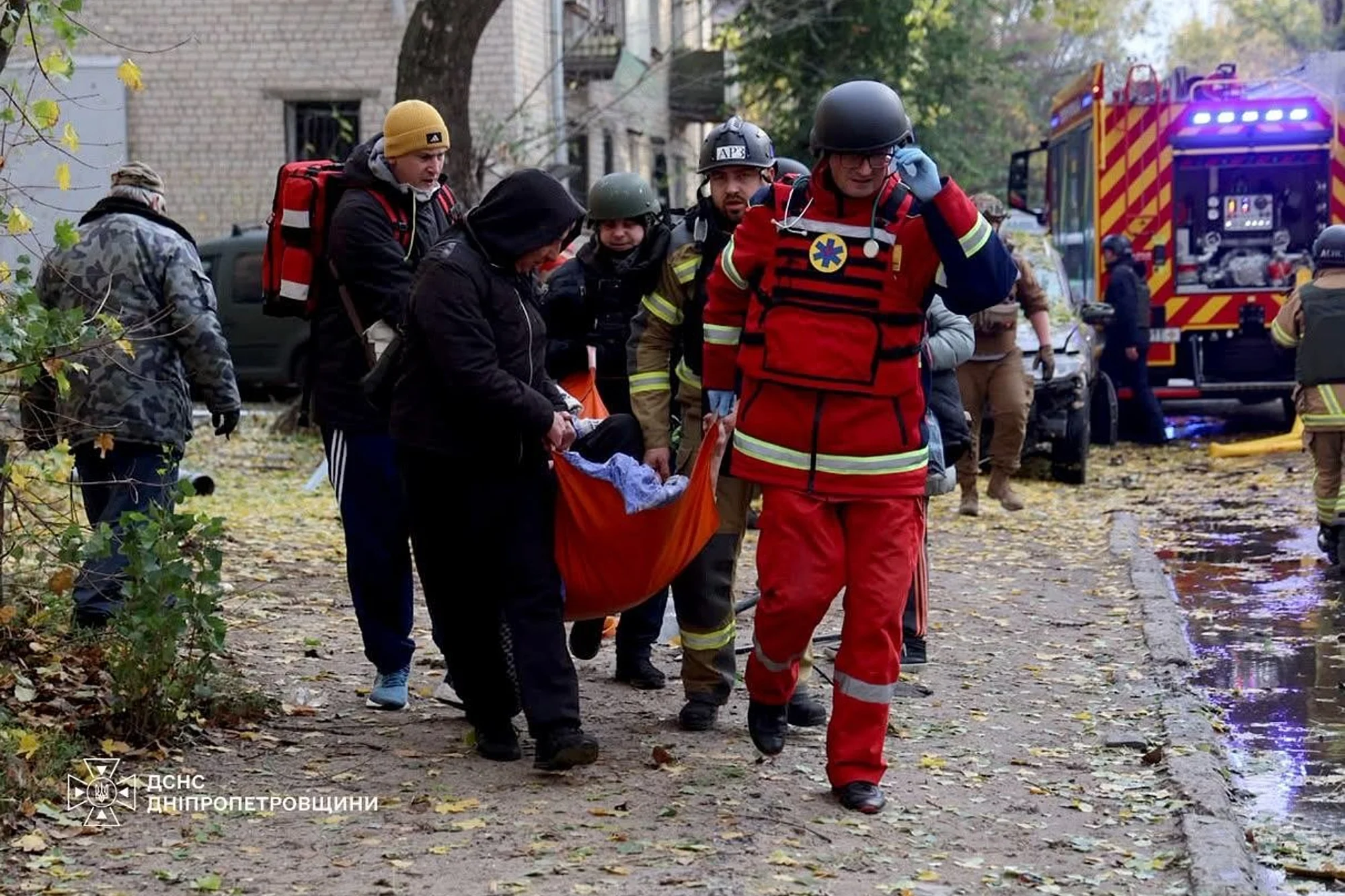
Gravity is a merciless negotiator. When you are standing on the sill of a top-floor window, thirty feet above a concrete sidewalk, gravity does not care about your mortgage, your family photos, or the criminal psychology of whoever just poured accelerant under your front door. It offers only a simple, brutal equation: stay inside and suffocate in four minutes, or step out into the night and let physics decide what breaks.
Last week, a woman in a quiet residential block made that calculation in the dark.
Standard police blotters reduce moments like hers to sterile, clinical shorthand. Suspected arson attack. Victim escaped via top-floor window. Non-life-threatening injuries. We skim those three sentences over morning coffee, nod at the tragedy of it, and scroll down to the weather forecast. We treat arson like an abstract property crime, something handled by insurance adjusters and forensic accountants.
We get it completely backward. Arson is not a crime against drywall and timber. It is an intimate, terrifying weaponization of shelter—the one place human beings are biologically wired to feel safe.
The Architecture of a Trap
To understand what happened in that top-floor room, you have to strip away the Hollywood mythology of fire. Movies show heroes running through corridors of bright orange flames, coughing politely behind a wet handkerchief while shouting dramatic goodbyes.
Real structure fires—especially those accelerated by gasoline or kerosene—do not look like that. They are pitch black.
Consider a hypothetical scenario grounded in fire-science reality: picture Sarah, an ordinary resident asleep on the third floor of a converted Victorian house at 2:14 a.m. Downstairs, someone strikes a match at the base of the wooden staircase. Within ninety seconds, the stairwell—the building's primary artery—becomes a chimney. Superheated gases, carbon monoxide, and hydrogen cyanide rush upward at speeds faster than a human can sprint.
By the time the smoke alarm screams, the hallway outside Sarah’s bedroom door is no longer a path to safety. It is an oven reaching 1,100 degrees Fahrenheit.
If you have never stood near an open blast furnace, it is hard to comprehend what that temperature does to human tissue. One breath of superheated air sears the lining of the lungs instantly, causing them to swell shut. You do not burn to death in a house fire; you drown in toxic black smoke long before the flames ever touch your skin. According to the National Fire Protection Association, modern home furnishings—packed with synthetic foams and plastics—have reduced the average escape time from seventeen minutes in the 1970s to less than three minutes today.
Three minutes. That is barely enough time to find your glasses, let alone your shoes.
When Sarah opens her bedroom door and feels that wall of heat hit her face, her brain enters a state of acute biological panic. The prefrontal cortex—the part of the mind that plans, reasons, and weighs long-term consequences—shuts down. The amygdala takes the wheel. She slams the door shut, buying herself perhaps sixty seconds before the hollow-core wood burns through.
Now, look at the room through her eyes. Behind her, the door handle is glowing hot, smoke curling violently through the frame like black water under pressure. Ahead of her is a single double-hung window. Beyond that glass is nothing but empty night air and a drop onto unforgiving pavement.
Why People Jump
I once spoke with a retired battalion chief who had spent thirty-two years pulling people out of burning brownstones. I asked him what haunted him most, expecting him to talk about collapsed roofs or charred interiors. He shook his head and looked down at his hands.
"It's the sound of the glass breaking from the inside," he told me. "People think jumping is a choice. It isn't. When the heat hits your back, your nervous system overrides your fear of falling. Your body pushes you out the window before your mind even agrees to it."
Think of the window sill not as an exit, but as the edge of a cliff with a pack of wolves charging behind you. You do not leap because you believe you can fly. You leap because the terror behind you has become absolute, while the concrete below still holds a fraction of a percent of hope.
When the woman in our headline swung her legs over that top-floor ledge, she was fighting against every instinct of self-preservation she had ever learned. Humans are born with only two innate fears: loud noises and falling. Every other fear—spiders, public speaking, the dark—is learned. To intentionally throw yourself into empty space requires overriding the deepest survival programming wired into your DNA.
Yet, when arsonists strike residential buildings at night, they force victims into this exact corner. Unlike accidental electrical fires, which often smolder quietly inside walls for hours before erupting, arson is designed for immediate, catastrophic ignition. Accelerants pooled near exits do not just start a fire; they intentionally sever the escape routes. They turn a home into a locked box.
The Invisible Casualties of Arson
Arson occupies a strange, misunderstood space in public perception. We tend to view it as a fringe crime—the domain of desperate business owners chasing insurance payouts or vandals burning abandoned warehouses.
The statistics tell a much darker story. Across North America and Europe, tens of thousands of intentional structure fires are reported annually, resulting in hundreds of civilian deaths and billions of dollars in destruction. More disturbingly, criminologists and fire investigators consistently note that residential arson is frequently tied to domestic disputes, targeted harassment, and neighborhood intimidation. It is rarely random.
When someone sets fire to an occupied dwelling, the legal system often struggles to categorize the sheer malice of the act. In many jurisdictions, unless prosecutors can prove explicit intent to kill a specific individual, the crime is charged primarily as aggravated property damage or reckless endangerment.
Ask the woman lying in an orthopedic ward with shattered ankles and bruised ribs if she feels like a piece of damaged property.
The physical recovery from a three-story fall is grueling enough. A thirty-foot drop generates an impact speed of roughly thirty miles per hour. Landing on concrete at that velocity compresses the spine, fractures the calcaneus bones in the heels, and often drives the femur upward into the pelvis. Survivors spend months in wheelchairs, enduring surgeries, pins, and physical therapy just to walk across a kitchen floor again.
And then there is the psychological aftermath—the part that never makes the six o'clock news.
Imagine trying to fall asleep six months later. Every creak of the floorboards sounds like crackling timber. The smell of a neighbor's backyard barbecue sends your heart rate spiking to 160 beats per minute. You check the locks on your doors four times before bed, not because you are afraid of a burglar taking your television, but because you know how easily a splash of lighter fluid and a cheap match can erase your entire existence while you sleep.
What Happens When the Smoke Clears
We rarely talk about how poorly equipped most residential buildings are for a top-floor fire. Building codes in older neighborhoods are routinely grandfathered in, leaving multi-story homes and walk-up apartments with single wooden staircases, painted-shut windows, and zero sprinkler systems.
If you live above the second floor in a building without an external fire escape, your survival plan relies entirely on the hope that a fire will start somewhere convenient. That is not a plan. That is a gamble.
Fire safety experts have preached the same quiet gospel for decades, yet almost nobody listens until they smell smoke:
- Close before you doze. A simple closed hollow-core bedroom door can keep room temperatures below 100 degrees Fahrenheit while the hallway outside exceeds 1,000 degrees. It is the cheapest, most effective fire barrier in existence, and most people leave it wide open every night.
- Keep a collapsible escape ladder under the bed. For less than fifty dollars, a steel-rung ladder hooks onto a standard windowsill in seconds, turning a fatal thirty-foot drop into a controlled climb.
- Test the latches. Windows painted shut over decades of landlord renovations become death traps in the dark when your hands are shaking and coated in soot.
We resist these small preparations because preparing for disaster feels like inviting it. We prefer to believe that tragedy is something that happens to strangers in blurry news thumbnails—women whose names are withheld, whose broken bones are summarized as "non-life-threatening," and whose terror is forgotten by lunchtime.
The View from the Ledge
There is a moment, right before a person lets go of a window frame, when time stretches thin. Fire investigators who interview survivors hear the same description over and over again. The roar of the fire behind them suddenly goes quiet. The night air feels impossibly cold against their skin. For half a heartbeat, suspended between the inferno at their back and the dark street below, they are completely weightless.
Then gravity takes over, and the long, hard work of surviving begins.
The next time you walk past an old three-story house at night, look up at the top-floor windows. Behind those panes of glass, people are sleeping, trusting the walls around them to hold back the dark, trusting the stairs to carry them down in the morning, trusting that no one outside in the shadows is holding a match.