Physical retrieval of an orbital-class upper stage from a remote oceanic splashdown vector changes the feedback velocity of aerospace engineering iterations. When SpaceX successfully secured Starship Ship 40 following its July 24 test flight and subsequent twenty-four-day transit near Christmas Island, the operation transformed from an opportunistic salvage mission into a high-density forensic acquisition. Telemetry provides engineers with scalar metrics regarding thermal and structural loads, but physical artifacts supply vector-level evidence of material fatigue, thermal protection system degradation, and joint stress that software sensors cannot record.
The Mechanics Of The Ocean Salvage Operation
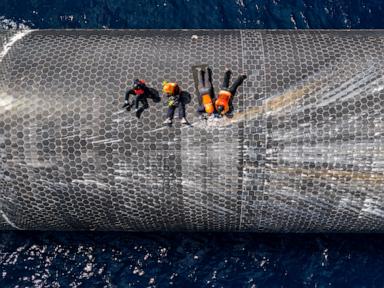
Executing an open-ocean retrieval of a 171-foot stainless steel vehicle requires managing severe operational constraints. Starship was not originally engineered for maritime recovery; the baseline operational architecture relies on catch towers at orbital launch sites. Consequently, securing Ship 40 demanded an ad-hoc logistical chain involving long-duration towing operations through rough seas, utilization of semi-submersible transport assets like the Boskalis vessel Forte, and stabilization in controlled coastal waters.
The primary cost function governing this operation balanced the expense of maritime salvage against the marginal utility of physical inspection. Telemetry from Flight 13 indicated that the vehicle survived atmospheric interface and terminal descent intact. Without physical access to the thermal protection system tiles, alloy skin samples, and internal weld points, engineers would be forced to design subsequent iterations based entirely on inferred data models. The physical return of the vehicle to Starbase in Texas provides absolute calibration for those models, shortening the optimization loop for future test articles.
The Forensic Value Of Saltwater Exposure
A common misunderstanding in aerospace logistics assumes that a recovered vehicle must be flight-ready to justify its recovery. Ship 40 will not fly again; prolonged immersion and transit in saline environments compromise the microstructural integrity of the stainless steel alloys and contaminate sensitive internal components. The value proposition is entirely forensic rather than operational.
Engineering teams dissecting the vehicle focus on three distinct structural variables:
- Thermal Protection System Bonding: Evaluating how hex-tiles withstand the thermal shock of reentry under real-world aerodynamic shear rather than wind-tunnel simulations.
- Alloy Heat Dissipation Signatures: Measuring micro-warp and metallurgical changes across the stainless steel skin to refine thermal modeling.
- Internal Component Sealing: Assessing how effectively primary bulkheads and avionics bays resisted fluid intrusion during the ocean interface phase.
These inspections bypass the filter of digital telemetry. When sensors fail or saturate during peak plasma heating, the physical state of the hardware records the maximum stress threshold directly.
Scaling The Iterative Hardware Loop
The fundamental constraint on rapid aerospace prototyping is the time delta between physical test failures and design corrections. Traditional aerospace methodologies rely on exhaustive non-destructive testing and computer-aided engineering to predict outcomes, pushing flight cadences out by years. SpaceX compresses this timeline by accepting high initial failure rates in exchange for empirical data, a strategy that shifts from simulation-heavy development to hardware-rich iteration.
Recovering an upper stage from an uncrewed ocean splashdown demonstrates that the system can survive the most punishing phase of flight—orbital reentry—in a structurally cohesive state. Even though future iterations like Ship 41 are designed for tower-catch recovery rather than ocean salvage, the baseline data gathered from Ship 40 informs structural reinforcement points, aerodynamic control flap placements, and tile adhesive compositions before the next vehicle clears the assembly bay.
To sustain this velocity of iteration, engineering teams must automate the transition from physical teardown data to computer-aided design updates. Prioritize the immediate digitization of material degradation maps derived from the recovered heat shield, feeding those physical failure boundaries directly into the structural parameters of upcoming orbital test articles.
SpaceX Starship rocket towed to Christmas Island
This video provides visual documentation of the massive Starship upper stage following its Indian Ocean splashdown and subsequent towing operations near Christmas Island.