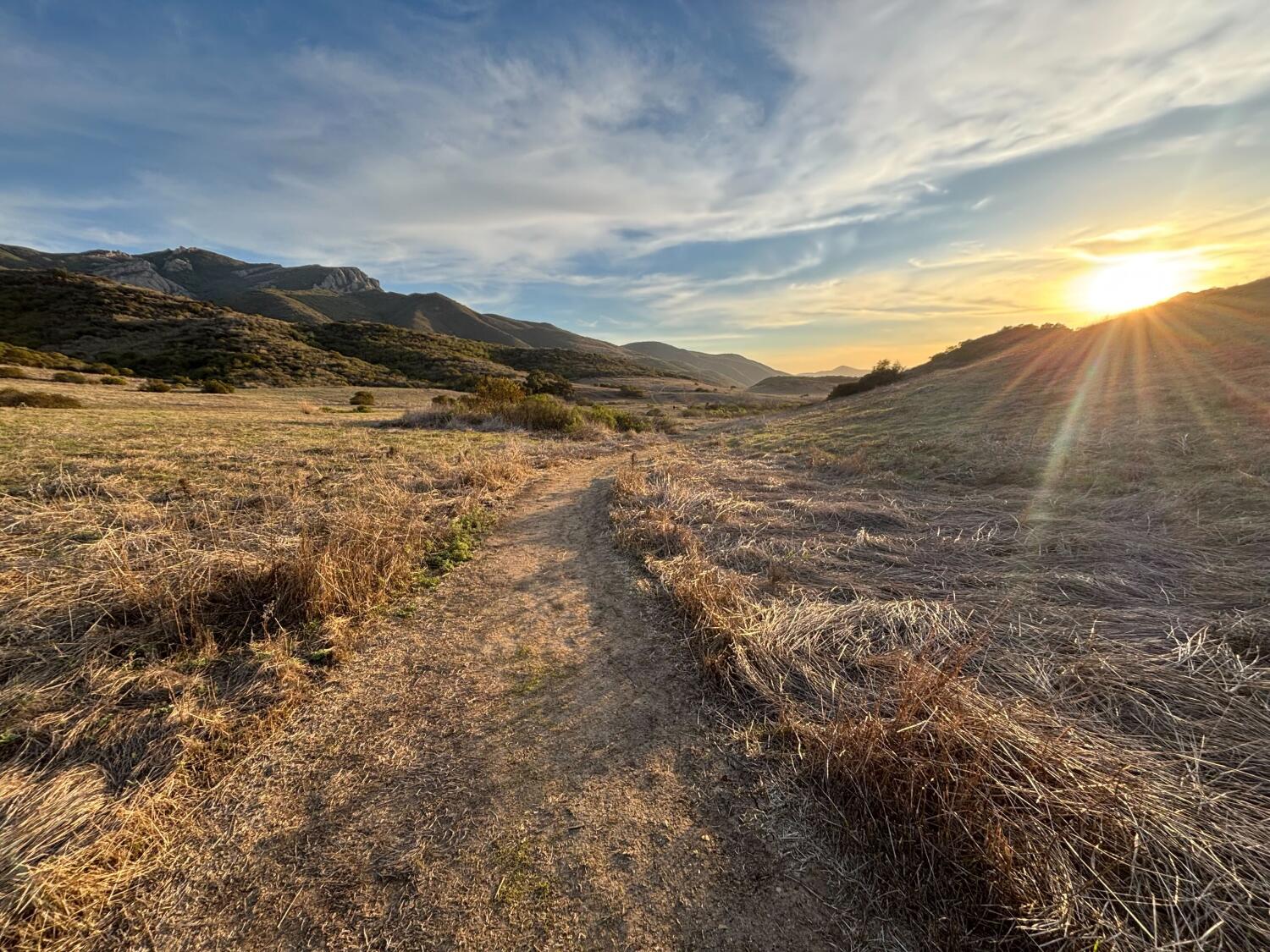
The sound is the first thing that betrays the peacefulness of the California chaparral. It isn't a roar or a scream. It is a high-frequency sizzle, like bacon hitting a hot pan or a frantic spray of pressurized air. To the uninitiated, it sounds like wind through dead grass. To those who grew up in the shadow of the Santa Susana Mountains, it is the sound of a biological landmine arming itself.
Nineteen-year-old Alex was just hiking. It was a Tuesday in Ventura County, a day where the sun bleeds into the canyons and the air carries the scent of dust and sage. One moment, he was navigating the rhythmic crunch of gravel under his boots. The next, he was a protagonist in a medical drama he never signed up for.
The Southern Pacific Rattlesnake doesn’t want to meet you. It is a reclusive, ambush predator that would prefer to spend its afternoon digesting a ground squirrel in the shade of a rock. But when a human foot enters its three-foot radius of perceived safety, the snake stops being an animal and becomes a high-speed hydraulic system.
It happened in a blur of tawny scales and muscle. A strike from a rattlesnake can occur in less than half a second. Before Alex’s brain could even process the visual of the triangular head, the fangs had already found their mark.
The Invisible Chemistry of a Crisis
When a rattlesnake bites, it doesn’t just inject "poison." That’s a common misconception. It injects a complex cocktail of digestive enzymes and hemotoxins designed to liquefy tissue and shut down the circulatory system from the inside out.
Imagine your blood, which is supposed to be a smooth, life-giving river, suddenly turning into a sludge of broken cells. The venom begins to dismantle the walls of your capillaries. It’s an aggressive, localized melting. Within minutes, the site of the bite—usually an ankle or a hand—begins to swell with a terrifying, rhythmic throb. The skin turns a bruised purple-black as the body’s internal plumbing starts to leak.
For Alex, isolated on a trail in the hills near Moorpark, the stakes weren’t academic. They were visceral. The "golden hour" of trauma medicine is a generous estimate when you are dealing with Crotalus oreganus helleri. You aren't just fighting the clock; you are fighting a chemical fire that is spreading through your lymphatic system.
The rescue wasn't a simple matter of walking back to the car. The terrain in Ventura County is a labyrinth of steep draws and crumbling sandstone. If Alex tried to hike out, his heart rate would spike. A faster heart rate means faster circulation. Faster circulation means the venom reaches the core organs sooner.
He had to stay still while his body felt like it was being branded with a hot iron.
The Logistics of Mercy
The rescue of a teen in the backcountry is a feat of modern engineering and raw human grit. When the call hit the Ventura County Sheriff’s dispatch, a silent machinery roared to life. This isn't just about a helicopter; it’s about a coordinated strike against geography.
Crews from the Venture County Fire Department and the Sheriff’s Air Unit have a specific cadence. They know these canyons. They know that the wind can shear off a ridge and toss a light aircraft like a toy. They also know that every second Alex spent sitting on that dirt was a second the venom was winning the war against his red blood cells.
The paramedics who dropped onto that ridge didn't just see a patient. They saw a countdown.
Standard protocol for a snakebite is deceptively simple but incredibly difficult to execute in the wild: Keep the limb below the heart. Do not use a tourniquet. Do not, under any circumstances, try to "suck out" the venom like they do in old Westerns. That's a myth that has caused more infections and lost fingers than the snakes themselves. The only real cure is antivenom, and you don’t find that in a backpack.
You find it in a sterile vial at a Level II trauma center, costing upwards of $10,000 a dose.
The Cost of a Step
We often treat the wilderness as a playground, a curated backdrop for our fitness goals or our Instagram feeds. We forget that the chaparral is a workplace for thousands of species that have been honing their survival skills for millions of years.
A rattlesnake bite is a high-cost interaction. For the snake, it’s an expensive loss of resources; it takes a long time to replenish that venom. For the human, it is a reminder of our fragility. We are soft-skinned creatures moving through a world of thorns and fangs.
When the helicopter hovered over the brush, kicking up a storm of dust and dry leaves, the rescuers performed a "hoist" operation. It is a delicate dance. A cable drops, a flight medic secures the patient, and they are lifted into the sky, dangling between the earth that tried to kill them and the machine trying to save them.
Inside the emergency room, the atmosphere shifted. The medical team was ready with CroFab, the primary antivenom used in the United States. It is made by injecting sheep with small amounts of snake venom and then harvesting the antibodies their bodies produce. It is a literal exchange of life across species.
Alex survived because of a chain of events that had to be perfect. The cell signal had to hold. The pilot had to navigate the thermals. The nurses had to have the sheep-derived magic ready in the fridge.
Survival is a Shared Burden
This wasn't just a news blip about a kid on a trail. It was a story about the thin line between an afternoon stroll and a life-altering catastrophe. It was about the fact that in the middle of our sprawling suburbs and high-tech lives, nature still holds a wild, unpredictable card.
As the spring sun continues to warm the rocks of Southern California, the snakes will keep waking up. They aren't hunting us. They are simply existing in the spaces we've built our homes around.
The next time you’re out on the trails of Wildwood or Point Mugu, listen for that sizzle. Don't look for a monster. Look for a creature that is just as startled as you are.
Stop. Back away slowly. Give the mountain back its silence.
The bruising on Alex’s leg will eventually fade, and the swelling will go down. But he will never hear the sound of wind through dry grass the same way again. He knows now that the earth has a voice, and sometimes, it speaks in a hiss to tell you exactly where you don’t belong.
The wild doesn't offer apologies, only lessons written in heat and heartbeat.