Diplomacy is built on quiet rooms. It thrives on heavy mahogany tables, the clink of porcelain coffee cups, and the calculated, practiced smiles of people who have spent decades learning how to mask their contempt behind polite syntax. Words matter. Every syllable is weighed, measured, and sanitized before it ever crosses a statesman's lips.
Then, someone forgets to whisper.
Imagine the atmosphere in a high-stakes briefing room. (Note: This is a hypothetical reconstruction based on documented public reports of the incident.) The air smells stale, filtered through industrial vents and heavy with the scent of printing paper and nervous tension. Men and women in pressed uniforms sit upright, their posture rigid, carrying the invisible weight of sovereign borders on their shoulders.
And then comes the sound. A chuckle. A remark tossed across a digital divide or a conference table.
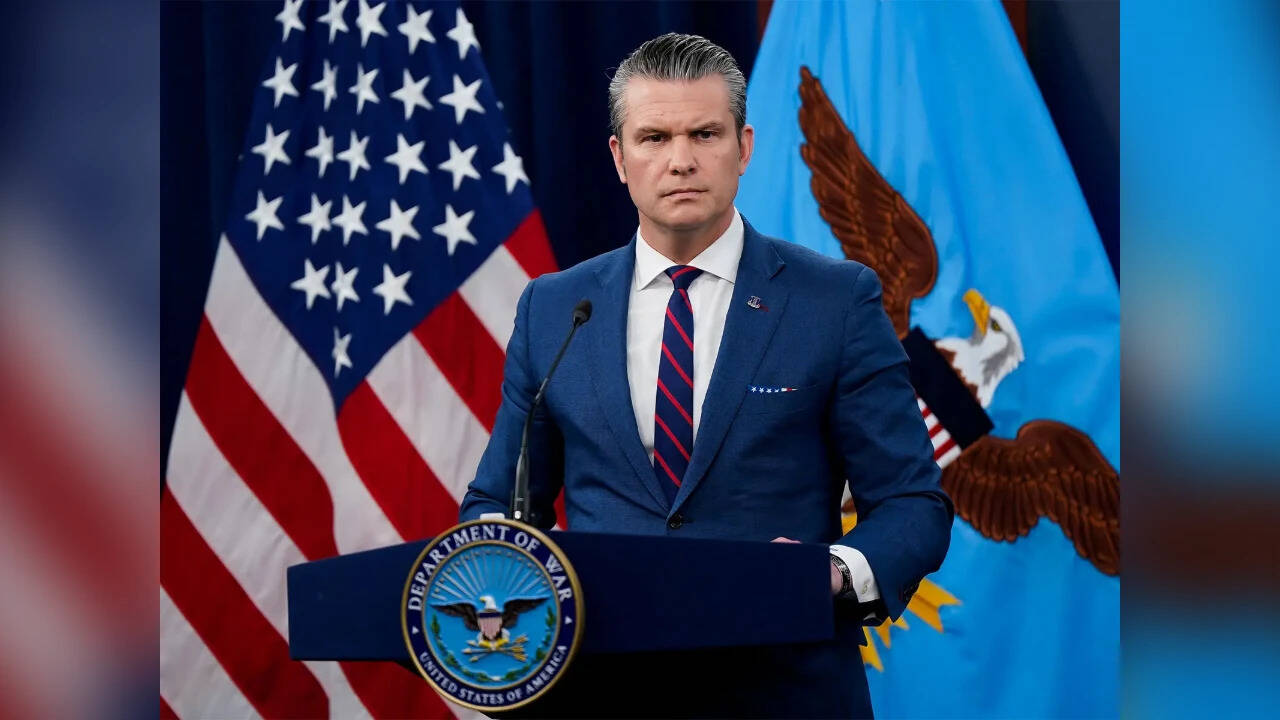
When the US Secretary of War reportedly appeared to mock a Canadian military woman during a period of rising diplomatic friction between Washington and Ottawa, the digital ether didn't just record a gaffe. It recorded a rupture.
The Anatomy of an Undervalued Ally
We forget how fragile alliances are. We treat them like permanent fixtures of the geography we learned in school, as if the longest undefended border in the world were an immutable law of physics rather than a daily, exhausting choice made by two distinct nations.
Consider what happens next when a senior official lets slip a token of disrespect. It is never just a personal insult. It is a cracked mirror reflecting an underlying imbalance.
To understand why a stray remark about a Canadian service member carries such explosive weight, you have to look past the brass buttons and the salutes. You have to look at the math of modern defense. Canada has long stood in the shadow of its gargantuan southern neighbor, contributing quietly to NORAD, patrolling freezing northern waters, and sending its sons and daughters to the same foreign deserts.
Yet, beneath the surface of the mutual back-slapping lies a persistent, patronizing whisper from Washington corridors. The assumption that the junior partner is merely tagging along. The quiet belief that when the real decisions are made, the smaller voice can be safely ignored, or worse, laughed at.
When that attitude leaks into public view, it strips away the polite fiction of absolute equality. It exposes the raw nerve of national pride.
The Human Cost Behind the Uniform
Let us strip away the geopolitics for a moment and look at the person in the crosshairs.
Picture a hypothetical captain in the Canadian Armed Forces. Let us call her Sarah. She didn't join the military for glory or for the casual amusement of foreign cabinet members. She woke up before dawn in a chilly barracks in Kingston or Edmonton, pulled on a uniform that smells of starch and wool, and prepared to brief superiors on Arctic sovereignty or intelligence sharing.
She represents a tradition of service that dates back through the mud of Vimy Ridge and the freezing Atlantic convoys.
When a high-ranking American official allegedly mocks a female Canadian officer, the sting isn't just felt in Ottawa's Parliament Hill. It ripples down to every recruit lacing up combat boots in a damp hangar. It says: Your sacrifice is background noise. Your presence is punchline material.
That is how you hemorrhage trust. Trust is not lost in a sudden, dramatic explosion. It erodes grain by grain, dismissal by dismissal, until the foundation is too weak to hold when a real storm hits.
The Cost of Arrogance in Dangerous Times
We live in an era where the rules-based international order is fraying at the edges. Authoritarian shadows are lengthening across Europe, the Pacific, and the high north. In this climate, treating your closest neighbors like punchlines is a luxury no superpower can afford.
The relationship between the United States and Canada has weathered domestic political shifts, economic disputes, and cultural frictions for generations. It has survived because, at the end of the day, both nations understood a fundamental truth: geography dictates destiny, but mutual respect preserves it.
When that respect is punctured by casual condescension, the damage goes deeper than offended sensibilities. It hands ammunition to domestic critics on both sides of the border who argue that alliances are transactional traps rather than partnerships of shared values.
A smirk can travel faster than a treaty. A poorly chosen chuckle can undo months of quiet diplomatic labor.
The room grows quiet again. The coffee cups are cleared away. The press releases are drafted, vetted, and released into the wild, smoothing over the jagged edges with bloodless corporate language about enduring partnerships and shared strategic goals.
But the sound lingers. Somewhere in the North, a radar station hums against the freezing wind, tracking the dark expanse of the pole, waiting to see who has your back when the night turns cold.