Salt crusts on the windshield by sunrise, whitening the glass until the horizon blurs into a single, blinding streak of glare. Out here, on the edge of the Gulf of Oman, the air tastes of sulfur and old diesel. You do not think about geopolitics when you are wiping salt from your eyes at four in the morning. You think about coffee. You think about whether the seals on the hatch will hold against the humidity. You think about the cargo down below—thousands of tons of fuel oil or steel coils or grain—and whether the men sleeping in the bunks will get to see their daughters turn six next month.
Then the world cracks open.
It does not sound like a movie. It sounds like a metal shipping container dropped from a crane onto concrete, magnified a thousand times, followed immediately by a wet, tearing hiss that takes the breath straight out of your lungs. A bulkhead buckles. Alarms begin to shriek in frequencies designed to drill straight through human skulls.
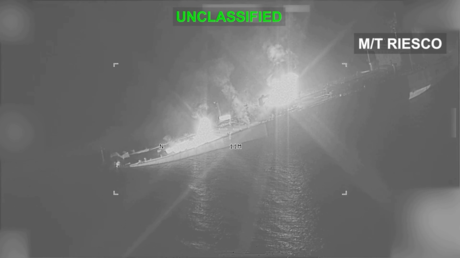
This is what an attack on an oil tanker actually feels like. Not a ticker tape scrolling across a financial network in New York or London. Not a dry diplomatic cable handed to a junior attaché in a wood-paneled room in Vienna. It is fire licking at the paint of a hull that cost millions to build and seconds to breach. It is the sudden, terrifying realization that the narrow strip of water you are floating on is the fragile jugular vein of the global economy, and someone has just taken a knife to it.
When the explosions echoed across the Gulf waters, the official machinery of states ground into gear with predictable, heavy motions. Thousands of miles away, television anchors adjusted their ties and spoke in grave, measured cadences about maritime security and freedom of navigation. But in Tehran, the reaction was immediate and sharp. Iranian diplomats stood before microphones to condemn the strikes on the oil tankers, labeling the violence a grave violation of international security. They pointed fingers outward. They demanded emergency sessions at the United Nations. They called for an independent, rigorous investigation into who lit the match in a room full of gasoline.
The irony hangs thick over the water. For decades, the waters surrounding the Strait of Hormuz have functioned as a high-stakes chess board where every ripple is measured for hostile intent. When tankers burn, everyone loses, yet everyone rushes to weaponize the smoke.
Consider a hypothetical captain standing on the bridge of a vessel registered in a neutral flag-state, watching black plumes roll off the starboard bow. Let us call him Captain Vance, though his name matters less than the cold knot in his stomach. Vance has spent thirty years crossing every ocean on earth. He knows the temperament of the North Atlantic in January and the deceptive calm of the South China Sea. But nothing in his seamanship manuals prepared him for the modern gray zone conflict, where commercial vessels become proxy targets in quiet wars fought by governments that never formally declare hostilities.
"They aren't trying to sink us," Vance might mutter to his first officer, watching the flames dance against the dawn. "They're trying to send a telegram."
And what a brutal telegram it is. Every barrel of crude that catches fire in these vital shipping lanes sends a shiver through markets that dictate the price of a gallon of gasoline in Chicago, a loaf of bread in Cairo, and a heating bill in Berlin. The global supply chain is not a machine of titanium and concrete; it is a web of absolute trust spun across thousands of miles of open ocean. When tankers are targeted, that trust frays. Insurance rates skyrocket within hours. Crew members refuse contracts. Ships begin to steam farther out to sea, burning extra fuel, adding days to transit times, quietly inflating the cost of simply staying alive for billions of people who have never seen the ocean.
Iran’s urgent appeals to the United Nations stem from a very specific calculus. To the leadership in Tehran, an unstable sea lane is both a vulnerability and a pressure valve. When economic sanctions squeeze a nation until the breath leaves its lungs, the surrounding waters invariably grow turbulent. By loudly condemning the attacks and demanding international oversight, Iran attempts to frame itself not as an instigator, but as a victim of a broader conspiracy designed to isolate its economy and demonize its posture. It is a desperate diplomatic dance on the edge of a volcano.
Yet, the United Nations Security Council remains a theater of rhetorical attrition. Resolutions are drafted. Red lines are drawn in invisible ink. Speeches are delivered with righteous indignation, translated simultaneously into six official languages, and then filed away into digital archives where policy papers go to sleep. Meanwhile, the sailors who swab the decks of these floating behemoths continue to look over their shoulders at every shadow moving across the radar screen.
The truth is that maritime security is an illusion maintained only by the restraint of rivals. The moment that restraint slips, civilization is reminded of how terrifyingly thin our lifelines really are. We rely on steel hulls and tired men to ferry the energy that powers our cities, yet we treat the routes they travel as disposable pawns in diplomatic wrestling matches.
The smoke eventually clears from the horizon, dissipated by the brutal desert winds of the Middle East. The charred steel is towed into dry dock for repairs that will cost millions. The stock markets adjust, absorbing the shock wave into the endless background noise of modern capitalism. Life resumes its frantic pace in the capitals of the world, far away from the salt, the diesel, and the fear.
But out on the water, the next shift begins. Another crew steps onto a gangway in the dark, hoisting their duffel bags, looking out at the vast, indifferent sea, and wondering who is watching the horizon.