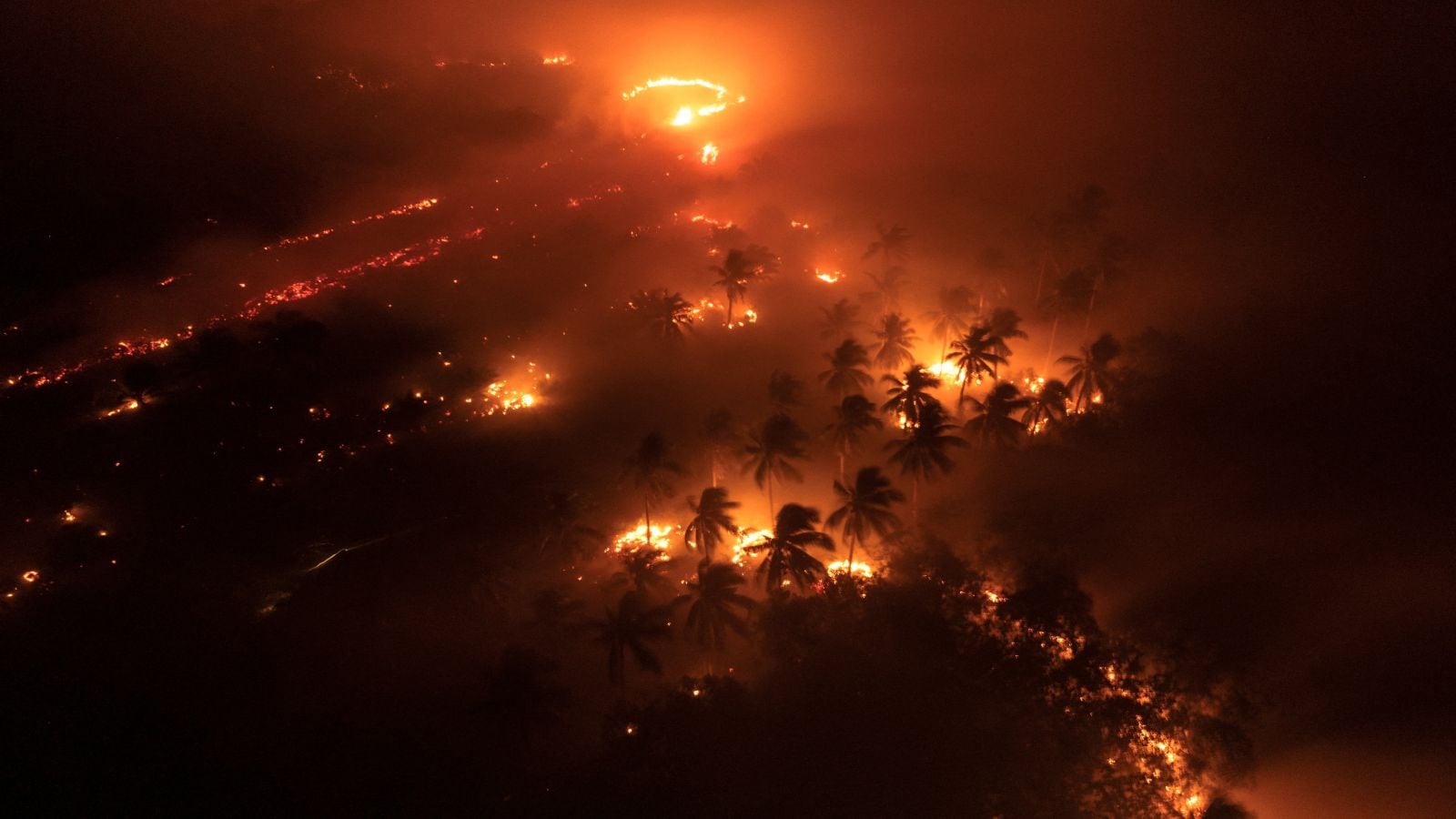
The morning does not arrive with gold or pink. It arrives as a bruise.
In the heart of Indonesian Borneo, in the province of Kalimantan, daybreak looks like an old photograph left too long in the sun—sepia, faded, and choked with gray. When I first stepped out into the smoke years ago, the air did not merely smell of wood; it tasted of it. It coated the back of the throat like bitter ash, a physical reminder that somewhere out in the peatlands, the earth was burning from the inside out.
To understand why Kalimantan is perpetually caught in this cycle of fire and haze, you have to understand what peat actually is. Imagine a sponge. Not a kitchen sponge, but a cathedral-sized sponge made of compressed, half-rotted vegetation that has accumulated over thousands of years in waterlogged tropical swamps. Beneath the lush green canopy of the Borneo rainforest lies a massive carbon vault. When that vault is wet, it locks away gigatons of greenhouse gases, keeping the sky blue and the climate stable.
When it dries, it becomes gunpowder.
El Niño is the match. We hear the term tossed around in weather reports as if it were a distant abstract concept—a shift in Pacific Ocean temperatures, a slight wobble in the global thermostat. But on the ground in Kalimantan, El Niño translates to a terrifying absence. The monsoon rains simply do not come. The sky turns cruel and cloudless for months. The water table drops, retreating deep into the muck. The ancient sponge dries out, turning crisp and hollow.
And then, someone strikes a match. Or a piece of glass catches the equatorial glare. Or a rogue spark from a land-clearing operation drifts into the brush.
What happens next is not a typical forest fire. In a pine forest, flames race through the trees, roaring and snapping before burning themselves out. In Kalimantan, the fire goes underground. It burrows into the peat layers, burning silently beneath the roots at temperatures that can smolder for weeks, completely invisible to overhead aircraft. You can walk across a seemingly safe patch of dark soil, only for the ground to collapse beneath your feet into a glowing subterranean oven. It is a ghost fire. You cannot easily hose it out because water runs off the hydrophobic dry crust. You can only wait, cough, and pray for the monsoon to return.
Behind every hectare of burning peat is a human equation, though it is rarely simple. Consider Pak Joko, a hypothetical smallholder farmer whose daily choices are dictated by the unforgiving economics of survival. Pak Joko wants to plant oil palm or clearing space for subsistence crops. For generations, traditional slash-and-burn agriculture was a manageable rhythm—controlled, small-scale, synchronized with the seasonal rains. But when corporations move in, draining millions of hectares of contiguous peatland through massive canal networks to feed global supply chains, the landscape changes fundamentally. The water drains away. The natural firebreaks disappear. A small clearing fire meant for a backyard plot suddenly metastasizes into a regional disaster that spans hundreds of thousands of acres.
It is easy to point fingers from afar, to decry the farmers or curse the conglomerates. Yet, standing in a clinic in Palangka Raya, watching mothers hold infants gasping for air through makeshift cloth masks, the moral clarity of blame dissolves. Nobody wants to poison their own children. Nobody wants to blanket neighboring Singapore and Malaysia in an acrid yellowish fog that grounds flights and shuts down schools. The crisis persists because the economic incentives reward the quick clearance of land, while the true cost—billions of tons of carbon released into the atmosphere, irreversible biodiversity loss, and shattered human lungs—is outsourced to the future.
The statistics are numbing. Millions of tons of carbon dioxide spewed into the atmosphere in a matter of weeks, erasing global emission reduction gains overnight. Endangered orangutans fleeing into villages, their fur singed, their ancient habitats reduced to moonscapes of black dust. Schools closed for months, robbing children of their education. We read these numbers and we blink.
We forget that behind every statistic is an orange horizon at high noon.
The air hurts to breathe. It feels heavy, greasy, and old. You look up at where the sun should be, and you see only a pale, sullen disc, fighting a losing battle against a ceiling of smoke. It is a sobering realization: the health of a rainforest thousands of miles away is not a distant environmental concern. It is the air in our lungs, the temperature of our globe, and the fragile margin between life and ruin.
The fires in Kalimantan will eventually go out when the rains finally break the drought. The smoke will clear, the sky will return to blue, and the world will move on to the next headline. But the peat remains drained. The underlying tinderbox waits. Until we learn to respect the ancient, wet architecture of the earth, the next El Niño is not a question of if, but when. And the smoke will be waiting for us.