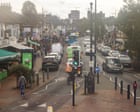
The coffee in the corner bistro on Boulevard Saint-Michel is always too hot and too bitter, but at seven in the morning, nobody cares. The steam rises from porcelain cups, mixing with a thin, greasy exhaust from a passing scooter. Outside, the autumn air has that sharp, metallic bite that warns you winter is coming down from the north, dragging its grey skirts across the rooftops of Paris.
Across the cobblestones, nineteen-year-old Lucas shifts his weight from one foot to the other. His hands are buried deep inside the pockets of a canvas jacket that has seen better years. Around him, the street is waking up, but not the way it usually does. There is no lazy shuffling of bakers flouring their counters, no quiet folding of morning newspapers. Instead, there is a low, collective hum. A nervous electricity. If you found value in this post, you should read: this related article.
By noon, that hum will turn into a roar.
To understand why thousands of French teenagers and university students are walking out of lecture halls and high school gates, you have to look past the breaking news banners and the neat television graphics about labor reforms and pension timelines. You have to stand where Lucas stands. You have to feel the specific, crushing weight of a future that feels less like an open horizon and more like a toll booth you cannot afford to pass. For another angle on this story, check out the recent update from NBC News.
In France, the street has always been a classroom.
Long before TikTok or encrypted group chats, generations of young people learned their politics on the asphalt. They learned that if you want the state to listen, you do not write a polite letter. You block the traffic. You shut down the intersections. You make the machinery of daily life grind to a screeching, inconvenient halt until the adults in the oak-paneled ministries are forced to look out the window.
Yet something has shifted in the air over the last few seasons. The anger is no longer just about a specific clause in a retirement bill or a tweak to university entrance fees. Those are merely the matches thrown into a room that has been filling with gas for a decade.
Consider the arithmetic of modern youth in Western Europe. Inflation climbs like a relentless vine, choking grocery budgets and doubling the price of a small studio apartment in Lyon, Marseille, or the Latin Quarter. Entry-level wages stay stubbornly flat, tethered to an economic model that seems designed for a world that vanished twenty years ago. When a student spends forty hours a week hunched over lecture notes and another twenty hours stocking shelves at a supermarket just to pay for rent and instant noodles, the social contract begins to fray at the edges.
It snaps entirely when the government announces that the goalposts are moving once again.
"They talk to us about fiscal responsibility," Lucas says, his voice cutting through the distant clatter of a metro gate opening down the block. He isn't angry anymore; he sounds exhausted, and that is far more dangerous. "Responsibility for whom? We are expected to work longer, pay more, and inherit a planet that is burning while the middle class shrinks into nothing. At what point do we say no?"
The morning grows louder. A line of yellow-vested police officers forms fifty yards away, their shields catching the pale, watery Parisian sunlight. They do not look hostile yet. They look bored, resigned, and cautious. They have done this dance before.
In every French city experiencing these walkouts, the choreography is strikingly similar. It begins on digital boards—encrypted channels where thousands of students coordinate banner-making sessions and meetup points. By eight o'clock, high school gates are chained shut from the inside with bicycle locks. Desks are piled against the doors.
When the headmaster arrives, he finds a courtyard full of teenagers holding cardboard signs scrawled in thick black marker. Our futures are not disposable. Study, work, die, repeat.
(I use the word "choreography" deliberately, but let us be entirely clear: there is nothing graceful about the fear driving these kids. It is raw, urgent, and entirely real.)
By mid-morning, the march begins. It spills out of the school zones and onto the grand boulevards. High schoolers march alongside university undergraduates, creating a strange, noisy coalition of seventeen-year-olds worrying about their baccalaureate exams and twenty-two-year-olds worrying about whether their master's degree will land them anything better than an unpaid internship.
Drivers trapped behind the human wave honk their horns in frustration, but a surprising number of them roll down their windows and flash a thumbs-up. Everyone in this country knows someone who is struggling. Everyone knows the system is groaning under its own weight.
Governments in glass towers often make a fundamental miscalculation. They view public dissent as a logistical problem to be managed. They deploy riot police, they issue stern press releases about the sanctity of public order, and they wait for the rain to drive the protesters back indoors.
They forget that for the young, protesting is an act of reclamation.
When you feel entirely locked out of the housing market, when the cost of living turns basic survival into an extreme sport, and when the political discourse feels like a closed loop of technocratic jargon, standing in the middle of a blocked street gives you something priceless. It gives you agency. It turns you from an invisible statistic into a physical body that cannot be ignored.
As the afternoon shadows lengthen across the Place de la République, the chants grow louder. Drums begin to beat—steady, rhythmic, heartbeat-slow. Flares ignite, sending thick plumes of red and blue smoke billowing into the autumn sky, coloring the stern neoclassical statues that look down from every corner of the square.
Lucas is somewhere in that crowd now, swallowed by the sea of jackets, banners, and raised fists. He is not thinking about tomorrow morning's history seminar. He is not thinking about career paths or credit scores.
Right now, in the shadow of the republic, he is simply learning what it means to refuse a future written by someone else. And as the smoke drifts across the asphalt, the city holds its breath, waiting to see if anyone inside the ministry is finally listening.