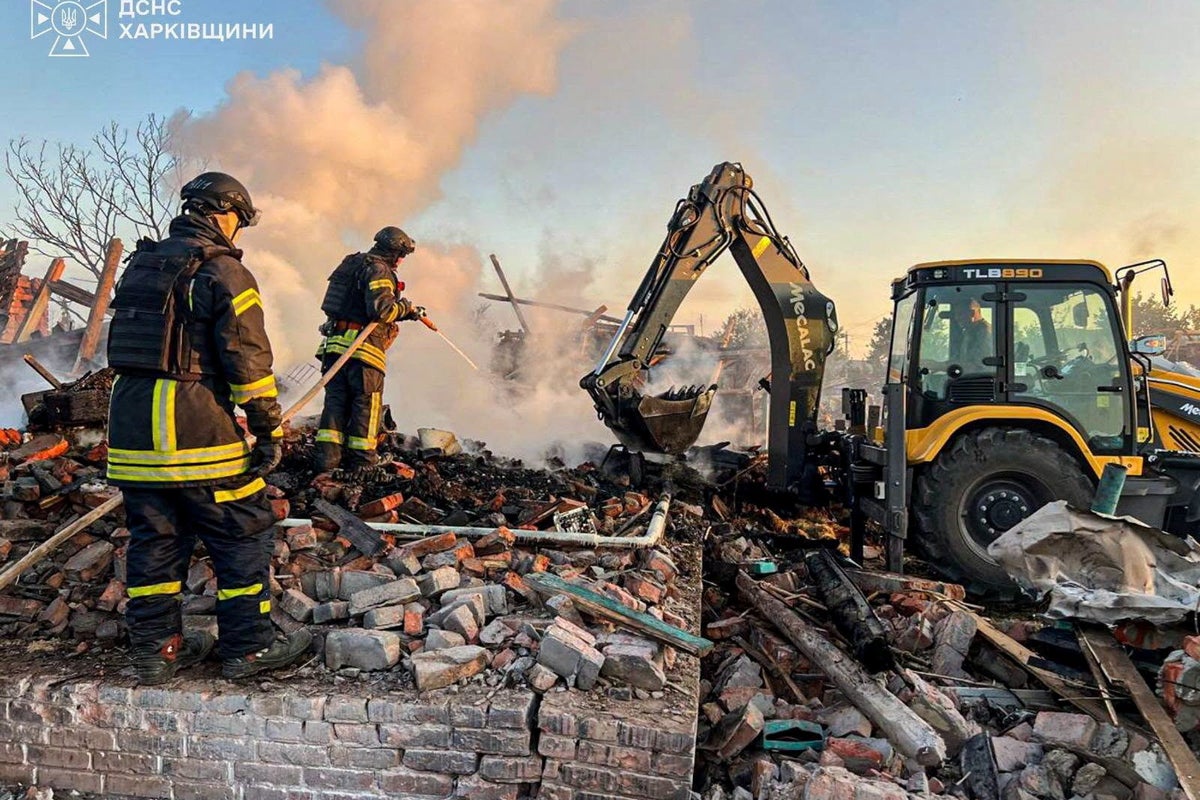
The morning air in Kharkiv does not smell like politics. It smells like pulverized concrete, scorched wiring, and the bitter, unmistakable tang of sulfur that lingers long after the concussion wave has flattened the glass against the pavement.
You wake up before dawn because the building shudders. Not a tremor from the earth—the earth here is ancient and steady—but a concussive shove from the sky. Three lives ended before the kettle could whistle. Three human beings who went to sleep with plans for tomorrow, whose final moments were measured in milliseconds of descending fire.
We talk about the Ukraine-Russia war in statistics. We tally craters, tonnage, interception rates, and casualty sheets printed on clean white paper thousands of miles away. But war is not a spreadsheet. War is the sound of an elderly neighbor sweeping shattered windowpanes off a welcome mat while her hands shake so violently she can barely hold the straw broom.
Consider what happens next: half a world away, a notification pings on a smartphone screen.
An online retailer drops its latest promotional campaign. Notification. Flash sale. Discount codes delivered straight to an app interface designed with behavioral psychology precision to capture wandering attention. It is a strange, jarring juxtaposition of human realities. In one corner of the globe, commerce runs on algorithmic speed, delivering packages to doorsteps with frictionless ease. In another, commerce has become a secondary target, a digitized lifeline, or an administrative headache for a nation trying to collect digital taxes from multinational e-commerce giants while its electrical grid flickers under drone swarms.
This is the strange geography of modern endurance.
Kharkiv sits under a persistent shadow. Located just a breath away from the northern border, the city has become a living laboratory of resilience. When the air raid sirens wail—that familiar, mechanical shriek that pierces through bone—people do not panic with cinematic hysteria. They move with heavy, practiced exhaustion. They grab their coats, herd their pets into cramped corridors, and wait for the dull thud of interception or impact.
(Note: While the specific characters navigating the street below are composite sketches built from dozens of verified field reports, the terror they carry is entirely authentic.)
Imagine a young woman named Olena, standing in a dim kitchen. Her phone rests on the table, glowing intermittently. On one tab, a tracking number tells her that a winter coat she ordered online is stuck at a sorting facility near Kyiv because a nearby warehouse facility was recently targeted. On the other tab, a local Telegram channel posts a grainy photograph of a smoking crater three blocks from her apartment building.
Two worlds collide in the palm of her hand. One represents the stubborn refusal of normal life to die. The other represents the lethal friction of history trying to crush it.
Why do aerial strikes target logistics hubs, retail distribution centers, and commercial warehouses? To the military strategist looking at a map, an online retailer’s distribution hub is not just a place where boxes get sorted. It is part of the logistical circulatory system of a nation under siege. Disrupt the flow of goods, paralyze the supply chain, starve the civilian economy of morale, and the state begins to fray from within.
Yet, the digital economy adapts with an almost terrifying elasticity. Delivery drivers weave their vans through potholed streets marked by anti-tank hedgehogs. Coders write security patches from bomb shelters illuminated by flickering battery-powered LEDs. Commerce becomes an act of quiet defiance. Every package delivered is a small middle finger directed at a doctrine of annihilation.
We forget how fragile our modern comforts are until someone pulls the thread.
In peaceful countries, ordering an item online is an invisible magic trick. You tap a glass screen, and three days later, a box appears on your porch. You never think about the pneumatic sorting arms, the diesel fuel, the warehouse temperature control, the fiber-optic cables routing your credit card token through three continents in a microsecond.
In Ukraine, that magic trick has been stripped of its illusions. Every transaction carries the weight of survival. Every delivery driver navigating a blackout zone is participating in an unacknowledged logistical war.
The strikes on Kharkiv remind us that security is an illusion we rent month to month. The news cycle moves fast, scrolling past the names of the dead to make room for the next scandal, the next market fluctuation, the next technological breakthrough. But the people of Kharkiv do not get to scroll away. They sweep the glass. They brew tea on camp stoves. They watch the sky.
The distance between a missile impact in a northeastern European courtyard and a shopping app notification on a sleek device in a quiet suburb is shorter than we think. We are all wired into the same fragile global circuitry. When one node catches fire, the heat eventually reaches the rest of us, whether we feel it through our screens or not.
The sun rises over the shattered brickwork of Kharkiv, casting long, sharp shadows across the street. A stray dog picks its way through the rubble, sniffing the air for safety. Down the block, someone has already strung up a makeshift plastic tarp where a storefront window used to be, waiting for the glass to be replaced, waiting for tomorrow, waiting for the sirens to start again.