Sunlight used to spill over the rooftops of Southeast Asia like warm honey. Now it arrives filtered through a bruised, copper-colored veil that tastes faintly of damp charcoal and scorched peat.
You feel it before you ever check an air-quality app. A scratch at the back of your throat on the walk to the bus stop. A dull, persistent ache behind the eyes by mid-morning. A sudden shortness of breath on a flight of stairs you climbed without thinking a month ago. Having lived through seasons when the afternoon sun looked like a pale coin pressed against dirty glass, I know the peculiar disorientation of looking up at a noon sky and seeing no blue at all—just an endless, suffocating gray. You might also find this similar article interesting: The Quiet Price of Vienna's Open Doors.
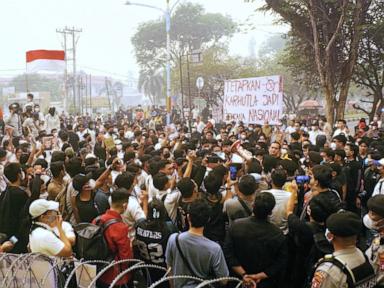
This year, Southeast Asia is enduring its worst haze in over a decade. School assemblies have moved indoors or been canceled altogether. Hospital clinics are seeing spikes in acute respiratory complaints, asthma flare-ups, and irritated eyes. Across capitals and provincial towns alike, university students and high schoolers have walked out of lecture halls and classrooms to stand in the choking air with hand-painted cardboard signs, demanding clean lungs and real accountability.
Stifling. As reported in latest articles by TIME, the effects are significant.
That is the word that keeps coming back to me when I watch footage of teenagers in surgical masks chanting outside government ministries while traffic crawls beneath a lid of smoke. Why are young people the ones leading this revolt, and why has a seasonal crisis turned into a generational reckoning?
What Actually Feeds the Haze
To understand why the skies turn brown, you have to look down—beneath the asphalt, past the gleaming glass towers, into the drying peatlands and cleared agricultural plots across the region.
For decades, slash-and-burn land clearing—often tied to palm oil, pulpwood, and seasonal agricultural burning—has collided with dry spells and shifting wind patterns. Dry peat soil is not like ordinary dirt. It is centuries of compressed plant matter saturated with carbon. When drained and ignited, it smolders slowly, stubbornly, sometimes for weeks beneath the surface, sending thick plumes of smoke aloft that prevailing winds carry hundreds of miles across borders.
A helpful metaphor here—and I want to be explicit that this is a metaphor, not a literal chemistry lesson—is to picture the atmosphere above a haze-struck city as a bathtub with the drain half-plugged. Exhaust from motorbikes and trucks, industrial emissions, and drifting smoke from fires all pour into the basin. When temperature inversions trap cool air near the ground beneath a layer of warmer air, the plug is effectively sealed. Everything we breathe circulates in place.
The most dangerous ingredient in that trapped air is fine particulate matter known as PM2.5—particles measuring 2.5 micrometers or smaller in diameter. To put that in human terms, a single human hair is roughly 50 to 70 micrometers wide. Dozens of PM2.5 particles can line up across the width of a single strand. Because they are so microscopic, they bypass the nose and upper airway defenses, traveling deep into the lungs and crossing directly into the bloodstream.
I remember one afternoon years ago wiping a fine gray film off a balcony railing in a dense urban neighborhood. My fingers came away black. Thinking about what that same soot does inside developing lungs makes the numbers on a pollution monitor stop feeling abstract.
A Hypothetical Day Under the Smoke
To see how a macro-level environmental crisis lands on an individual life, consider a hypothetical scenario. Let us invent a character—call her Maya, a nineteen-year-old computer science student living in a congested city caught in the plume—to trace a single day when the air quality index crosses into hazardous territory. (Maya and her routine are hypothetical composites created to illustrate real-world conditions reported across the region.)
Maya wakes at 6:30 a.m. to a phone notification warning of unhealthy air and advising residents to stay indoors. Her dorm room window is shut tight, yet a faint chemical tang lingers near the air conditioner vent. Downstairs, street food vendors are already lighting stoves, and delivery scooters weave through morning traffic.
By 9:00 a.m., Maya is walking across campus with two classmates. Neither of them is an environmental policy expert. One is worried about an upcoming midterm; the other has a younger brother with moderate asthma back home who has already used his inhaler twice in forty-eight hours. When they pass the administration building, they see a crowd gathering near the gates. A student organizer is speaking through a megaphone about missed class days, soaring clinic bills, and promises made after previous haze episodes that faded as soon as the monsoon rains finally arrived.
Maya stops. She thinks about how often adults treat severe haze as an unavoidable act of weather, like a tropical downpour, rather than the predictable outcome of choices made on land and in boardrooms. She adjusts her mask, steps toward the crowd, and decides she is tired of waiting for the wind to change her luck.
Why Students Are Stepping Into the Streets
Young people have a clear reason to push back harder than anyone else: time is not on their side when it comes to cumulative exposure.
Children and adolescents breathe faster relative to their body weight than adults, and their lungs are still growing. Repeated exposure to heavy smoke during formative years can reduce lung function growth and heighten vulnerability to respiratory illnesses later in life. At the same time, students are old enough to grasp the geopolitical and economic tangles behind transboundary haze—how supply chains, weak enforcement, corporate concessions, and slow regional diplomacy all play a part—yet young enough to refuse polite resignation.
Protests also serve a function that technical reports cannot. Governments and corporations can release statements about firefighting task forces, satellite monitoring, or seasonal wind shifts. A crowd of students standing in thick smoke with signs reading We Have a Right to Breathe forces the human cost into plain view. It turns an environmental statistic into a civic demand.
Still, I catch myself wondering—and I want to be honest about this uncertainty—whether street protests alone can force rapid change when the economic incentives driving land clearing and fossil-fuel transport are so entrenched. Sometimes the sheer scale of the problem feels overwhelming, even to people who care deeply. When a crisis spans multiple jurisdictions, seasonal droughts, and complex markets, there is no single lever you can pull to clear the sky by tomorrow morning.
Three Questions Everyone Asks When the Smoke Rolls In
Whenever haze returns at this severity, the same urgent questions ripple through group chats, family dinners, and news feeds. Weaving them into the picture helps clarify what is happening and what actually helps.
Does wearing a standard cloth or surgical mask really protect you?
Basic cloth masks offer minimal defense against ultra-fine PM2.5 particles because the weave is too loose and the fit around the face usually leaves gaps. Properly fitted N95 or KN95 respirators filter out a much higher percentage of fine particulates, provided they seal well against the skin. Even the best mask, though, cannot turn toxic air into fresh air all day long, and wearing one for hours can feel hot and exhausting in tropical humidity.
Why does the haze seem to get worse every few years despite past pledges?
History shows a frustrating pattern: severe haze sparks outrage, emergency measures, and regional pledges, followed by months of quieter skies once rain returns or wind patterns shift. When urgency fades, enforcement often slackens, dry seasons arrive with hotter temperatures, and old vulnerabilities resurface. Without sustained year-round prevention—protecting peatlands, holding polluters accountable, curbing urban emissions, and expanding cleaner transit—the cycle repeats.
What can an ordinary person do when the air outside is bad?
On high-haze days, reducing personal exposure matters immediately. Keeping windows closed, running indoor air purifiers with true HEPA filtration if available, limiting strenuous outdoor exercise, and checking reliable local air-quality readings before heading out can ease strain on the body. Yet individual precautions are a shield, not a cure. Lasting relief requires collective pressure for stronger public health protections, transparent emissions data, and enforceable environmental rules.
Between Short-Term Relief and Real Change
A common mistake during a haze emergency is treating survival tactics as a substitute for systemic reform. Buying an air purifier or staying indoors for a week protects your lungs today, and that matters. Do not dismiss practical self-care.
But the real problem lies elsewhere: we have normalized breathing compromised air as the price of economic growth and convenience. If a city's tap water turned brown and carried contaminants, people would storm city hall within hours. Because bad air is invisible in its finest, deadliest form, we often tolerate it until visibility drops to a few hundred meters and coughing becomes a chorus on every street corner.
Consider what happens next if students keep their pressure steady beyond a single week of headlines. When young citizens connect environmental health to everyday rights—the right to attend school safely, to sleep without wheezing, to inherit a livable climate—they shift the political calculus. Policymakers know that today's protesting students are tomorrow's voters, professionals, and community leaders.
I do not pretend that a single wave of demonstrations will extinguish smoldering peat fires overnight or magically untangle cross-border trade pressures. Progress on problems this deep is messy, slow, and full of setbacks. Yet I have seen what happens when people stop treating an injustice as inevitable: the silence breaks, the excuses sound thinner, and demands that once sounded radical start looking like basic common sense.
The Air We Share
Picture a student standing at a crossroads at dusk, streetlights glowing like amber halos inside a wall of smoke. Around her, engines hum, sirens wail faintly in the distance, and hundreds of other young voices rise together against the gray. She takes a breath through her mask, feeling the weight of the air—and the quiet, stubborn resolve of a generation refusing to accept that choking is normal.


