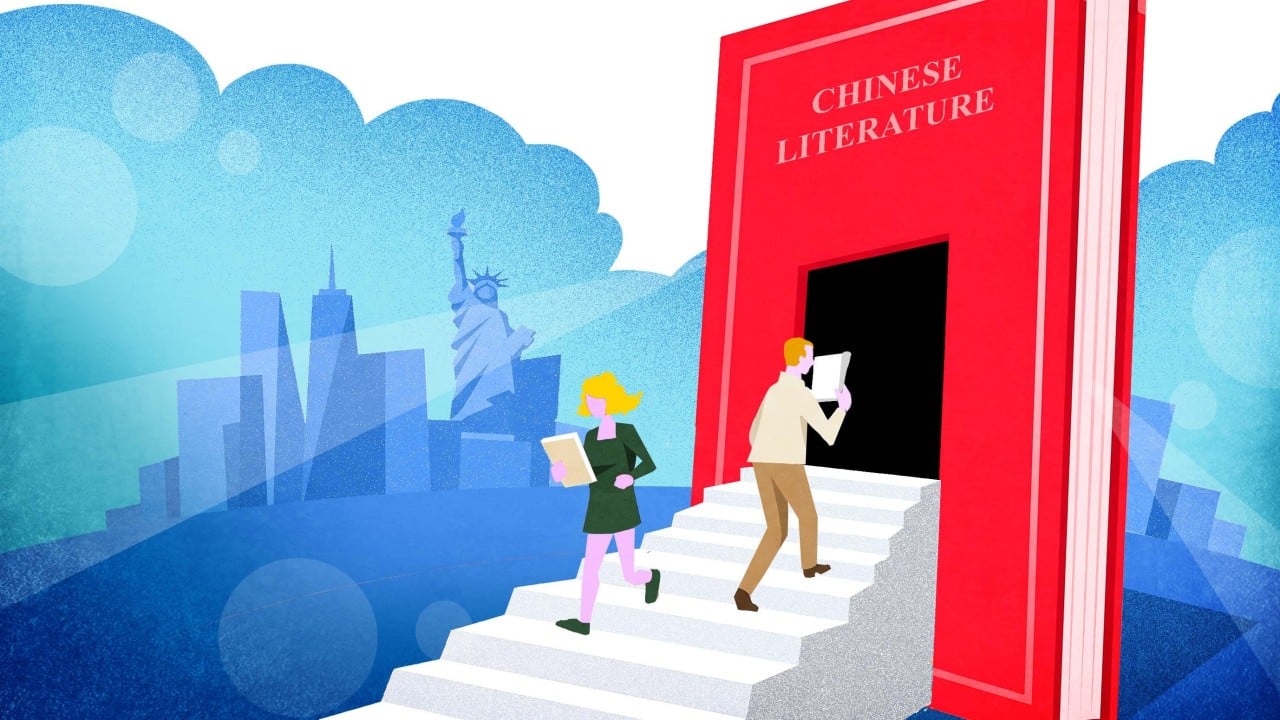
Washington is obsessed with microchips, tariffs, and naval choke points. Walk into any think tank session on the Sino-US rivalry and you will hear a lot of noise about military deterrence and trade deficits. But policymakers are completely blind to the quiet cultural engine that actually built these perceptions over the last century.
Books matter. Fiction shapes the subconscious biases that politicians later turn into foreign policy. The historical Sino-US literary relationship has done more to construct the American image of China—and vice versa—than decades of state department white papers.
If you want to understand why Washington and Beijing view each other with a mix of deep fascination and intense paranoia, you have to look at the books that crossed the Pacific. It is a messy history of propaganda, cultural misunderstandings, and sudden bursts of genuine human connection.
How early novels built the Western image of China
For most Americans in the early twentieth century, China was not a place on a map. It was a story. Specifically, it was Pearl S. Buck’s 1931 novel The Good Earth.
Buck was the daughter of American missionaries. Her book about the struggles of Chinese farmers became a massive bestseller. It won a Pulitzer Prize. It became a major Hollywood movie. It single-handedly transformed the American perception of Chinese people from distant, alien caricatures into deeply human, hard-working, family-oriented souls. When World War II arrived, this literary sympathy made it politically easy for the United States to align with China against Japan. A single book laid the emotional groundwork for a military alliance.
At the exact same time, Chinese writers were trying to explain their own country to the West on their own terms. Lin Yutang wrote My Country and My People in 1935 in English. He wanted to break through Western exoticism. He wrote with wit, comparing Chinese philosophy to Western pragmatism. He did not write for academics. He wrote for the average American reader.
Then came Edgar Snow. His 1937 book Red Star Over China introduced Mao Zedong and the Chinese Communist Party to the Western world. Snow was an American journalist who actually gained access to the communist base in Yan'an. His reporting was highly idealized, but it became the primary text for anyone trying to figure out what was happening behind the nationalist lines.
These books were not just entertainment. They were geopolitical data points. They created an idealistic American empathy for China that eventually shattered when the revolution of 1949 took place. The sudden shift from "suffering Christian farmers" to "communist threat" left the American public feeling betrayed. That emotional whiplash still influences how American politicians talk about China today.
The ideological filter of modern translation
The Cold War effectively killed the organic Sino-US literary relationship for decades. When cultural exchanges slowly restarted in the late 1970s and 1980s, a new problem emerged.
Western publishers became gatekeepers with a distinct political agenda.
For decades, if a Chinese writer wanted to get translated into English, their book usually had to fit a specific narrative. It had to be dissident literature. The West wanted stories about the Cultural Revolution, state oppression, and underground resistance. Writers like Ma Jian and Liao Yiwu found audiences in New York and London because their work confirmed what Westerners already believed about the Chinese government.
There is nothing wrong with dissident literature. It provides vital, courageous critiques. But when it is the only literature allowed through the gate, it creates a distorted view. It tells Western readers that Chinese people are either passive victims of an authoritarian system or heroic rebels trying to escape it.
This narrow focus misses the entire fabric of ordinary life in China. It ignores the humor, the domestic dramas, the corporate rat races, and the generational divides that occupy the minds of actual citizens in Shanghai or Chengdu. Writers like Yu Hua managed to break through with dark satire in novels like To Live and Chronicles of a Blood Merchant, showing the gritty reality of survival. Yet, the pressure to conform to Western political expectations remains a heavy burden for contemporary Chinese authors looking abroad.
The sci-fi bridge that changed the game
Everything changed in 2014. That was the year Ken Liu translated Liu Cixin’s science fiction epic The Three-Body Problem into English.
It was a massive cultural moment. The book became the first Asian novel to win the Hugo Award for Best Novel. High-profile figures like Barack Obama and Mark Zuckerberg praised it publicly. Netflix eventually spent millions of dollars adapting it into a global series.
This was not a story about historical trauma or political dissidence. It was a massive, high-concept hard sci-fi trilogy about alien invasion, astrophysics, and cosmic sociology. For the first time, millions of Western readers encountered a Chinese cultural product that was forward-looking, technologically sophisticated, and deeply philosophical.
The success of Chinese sci-fi opened a completely new window for the Sino-US literary relationship. Through authors like Hao Jingfang and Chen Qiufan, Western readers began to see how Chinese thinkers view the future of artificial intelligence, automation, and environmental collapse. These books do not mimic Western sci-fi tropes. They reflect distinct Chinese anxieties about rapid modernization, hyper-competition, and the social costs of breakneck technological progress.
Ironically, while Washington policymakers view China’s technological rise as a pure military threat, American readers are devouring Chinese sci-fi to understand the human cost of that very same rise. It is a rare space where the two cultures can contemplate the shared fate of humanity without immediately pointing fingers over geopolitical superiority.
Why state-sponsored culture always fails
Beijing knows that stories hold power. The Chinese government spends billions of dollars on soft power initiatives to tell China's story well to the world. They fund massive translation projects through the Foreign Languages Press and support state-aligned literary journals.
Most of it completely bombs in the West.
You cannot manufacture a literary phenomenon through a bureaucratic committee. When state-sponsored publishers export heavily sanitized, ideologically approved translations of classical literature or contemporary socialist realism, Western audiences simply ignore them. The books feel stiff. They lack the edge, the vulnerability, and the internal critiques that make great literature resonant.
The real breakthroughs in the Sino-US literary relationship always happen organically. They happen when independent translators work out of sheer passion. They happen when small indie presses take risks on weird, experimental fiction.
Consider the work of independent translation collectives and small presses like Paper Republic or Graywolf Press. They do not have government budgets. What they do have is an ear for authentic voices. They understand that a quirky, messy novel about a lonely factory worker in Shenzhen tells a Western reader far more about modern China than twenty volumes of state-approved cultural history.
Reading past the headlines
If you want to escape the echo chamber of modern geopolitical commentary, you need a better reading strategy. Stop reading the books written by DC pundits who spent two weeks in Beijing on a junket. Start reading the fiction that people in China are actually buying.
You can start taking concrete action right now to broaden your perspective.
First, look for works translated by specialists who understand the nuance of the language. Translators like Ken Liu, Michael Berry, and Nicky Harman do not just swap words; they translate cultural contexts. Look for their names on the cover.
Second, diversify your genres. Do not just stick to historical fiction or political memoirs. Read Chinese noir, speculative fiction, and modern urban dramas. Authors like Shuang Xuetao offer a brilliant look at the rust-belt realities of Northeast China through a gritty, neo-noir lens. It is a side of China that rarely makes it into western news broadcasts.
Third, pay attention to online literature. China has a massive, hyper-active web novel ecosystem with hundreds of millions of readers. Genres like Xianxia (fantasy martial arts) have built an international cult following without any help from traditional publishing houses. It is raw, fast-paced, and highly revealing of what young Chinese readers use for pure escapism.
The Sino-US rivalry will likely dominate the rest of our lives. The politicians will keep shouting about tariffs and military posture. But if you want to understand the people behind the policies, skip the evening news. Pick up a novel instead.