The air inside a cleanroom is unnervingly still. It is a space defined by what is absent: no dust, no stray skin cells, no static. In this sterile vacuum, engineers handle the H100—a slab of silicon and metal from Nvidia that serves as the literal nervous system of the artificial intelligence revolution. To hold one is to hold the most heavily guarded geopolitical currency of the twenty-first century.
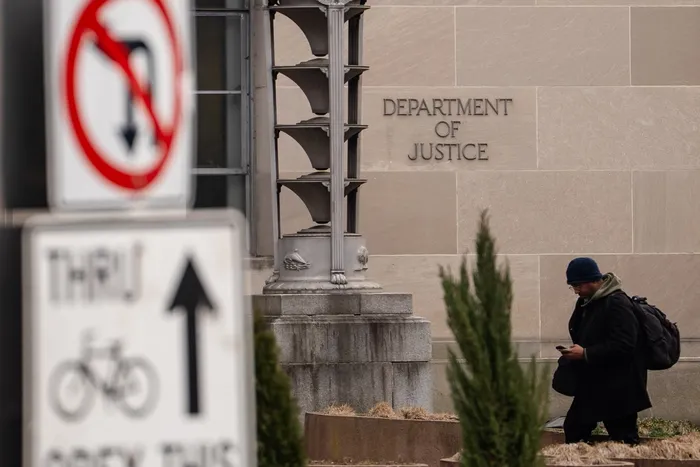
But as the Department of Justice recently revealed, the most sophisticated security protocols in the world are useless against a simple human choice.
On a Tuesday that felt like any other in the high-stakes corridors of Silicon Valley, the federal government pulled back the curtain on a shadow play that had been running for years. The indictment of Super Micro Computer co-founder Liao Shih-wei, along with employees Heung-Luen Lau and Robert Chao, isn't just a story about a corporate bypass. It is a chronicle of how easily the "impenetrable" digital iron curtain between the United States and China can be parted by those who already have the keys.
The Architecture of a Ghost Export
To understand the gravity of these charges, you have to look past the spreadsheets. Consider a hypothetical shipping container sitting on a rain-slicked pier in Long Beach. On paper, it contains standard server components destined for a neutral third party—perhaps a distributor in a country with no trade restrictions.
But inside the logic boards of those servers live the restricted Nvidia chips. These are the processors capable of training large language models and simulating advanced weaponry. They are the exact items the U.S. Department of Commerce has spent years trying to keep out of the hands of the Chinese military.
The strategy was elegant in its simplicity and devastating in its execution. The indictment alleges that between 2020 and 2024, the trio utilized a web of intermediaries to mask the final destination of their tech. By shipping to entities in places like Taiwan and Hong Kong, they created a paper trail that looked like routine business. Once the crates cleared U.S. customs, they were rerouted.
The destination? China.
This wasn't a one-time lapse in judgment. This was a sustained, rhythmic effort to feed a hungry superpower the one thing it cannot yet manufacture for itself. While the U.S. government was tightening the screws on export controls, the very people tasked with building the infrastructure of the future were allegedly drilling holes in the floor.
The Human Friction of High-Tech War
We often talk about "trade wars" as if they are fought by abstract entities—faceless corporations and monolithic governments. But trade wars are fought by people in cubicles who feel the pressure of quarterly quotas. They are fought by founders who see a massive market being walled off and decide that the wall is more of a suggestion than a law.
Liao Shih-wei wasn't just a cog in the machine; he was a co-founder of Supermicro, a company that has become a titan in the server world. When a leader of that stature is accused of orchestrating a scheme to bypass national security laws, the shockwaves travel far beyond the stock price. It touches on a fundamental vulnerability: the conflict between the borderless nature of innovation and the rigid boundaries of national security.
Imagine the internal dialogue. On one side, the patriotic duty to protect a technological lead that ensures global stability. On the other, the seductive pull of a multi-million dollar contract from a "gray market" buyer who doesn't ask questions.
Greed is a common motivator, certainly. But there is also a specific type of arrogance found in the upper echelons of tech—a belief that the slow-moving bureaucracy of Washington D.C. doesn't truly understand the speed of the world they’ve built. They believe they can outrun the regulators because they helped build the track.
The Invisible Stakes
Why does a handful of chips matter so much? To the average person, a GPU is something that makes a video game look better or helps a chatbot write a poem. But in the hands of a nation-state, these chips are the fuel for a different kind of fire.
Artificial intelligence is the first technology in history that acts as a force multiplier for every other technology. It cracks codes. It designs new chemical weapons. It optimizes the flight paths of hypersonic missiles. When those chips are diverted, the strategic advantage of the United States doesn't just dip—it evaporates.
The Department of Justice alleges that Supermicro’s employees didn't just ship the hardware; they provided the technical support to make sure it worked once it arrived. They were the concierge service for a digital insurgency. According to the charges, when questions were raised about where the equipment was going, the defendants didn't stop. They pivoted. They fabricated documents. They whispered in encrypted chats.
This is the "human element" that data security experts fear most. You can have the most advanced firewalls and the strictest "Know Your Customer" (KYC) protocols, but if the person signing the shipping manifest is in on the deal, the system is broken from the inside out.
A Pattern of Shadow Plays
The Supermicro case is not an isolated incident; it is a symptom of a broader, systemic struggle. Across the valley, the tension is palpable. The U.S. government is currently engaged in a massive effort to "de-risk" the supply chain, which essentially means moving the manufacturing of critical components away from adversarial territories.
However, the global economy is not a series of LEGO bricks that can be easily pulled apart. It is a tangled mess of roots. Supermicro, like many other tech giants, has deep ties to the Asia-Pacific region. Their supply chains are intertwined. Their engineering teams are often cross-continental.
When the Department of Commerce adds a company to the "Entity List"—the black book of organizations banned from receiving U.S. tech—it creates a massive incentive for smuggling. The price of an Nvidia H100 on the black market in Shenzhen can be double or triple its retail value. For a worker sitting in a warehouse or a middle manager looking to hit a bonus, that margin represents a life-changing amount of money.
The indictment claims that Liao and his associates weren't just looking for a quick payday, but were maintaining a steady flow of forbidden fruit. They were allegedly building a bridge where there was supposed to be a chasm.
The Cost of the Crackdown
For the rest of the industry, this case serves as a grim warning. The days of "move fast and break things" are over when it comes to international trade. The federal government is no longer content to issue fines that can be written off as the cost of doing business. They are coming for the individuals.
The charges—conspiracy to violate the Export Control Reform Act and smuggling—carry heavy prison sentences. This shift in strategy marks a new era in the tech cold war. It is an attempt to inject fear into the decision-making process of every executive who thinks they can play both sides.
But there is a secondary cost. As the government tightens its grip, the atmosphere of trust within these companies begins to sour. Who is watching the exports? Who is auditing the auditors? When the co-founder is the one under fire, the very culture of the organization is called into question.
The irony is that the very chips being smuggled are the ones that will eventually be used to track smuggling. We are entering an era where AI-driven logistics will monitor every pallet and every container on the high seas. But for now, we are still reliant on the integrity of the people in the room.
The Echo in the Cleanroom
Back in the quiet of the cleanroom, the H100s continue to roll off the assembly line. Each one is a marvel of human ingenuity, representing billions of dollars in research and decades of progress. They are packed into boxes, taped shut, and loaded onto trucks.
We like to think of our national security as a series of high-tech sensors and satellite arrays. We imagine a digital shield that keeps the bad actors out. But the Supermicro indictment reminds us that our security is actually a fragile web of promises. It is held together by the hope that the people at the top of the pyramid believe in the mission more than the margin.
When those promises are broken, the damage isn't always immediate. There is no explosion. No sirens. There is only a slow, quiet shift in the balance of power. Somewhere, in a laboratory thousands of miles away, a restricted chip is being plugged into a motherboard. A light flickers on. A fan begins to spin. And a secret that was supposed to be safe is suddenly shared with the world.
The real tragedy of the Silicon Leak isn't just the hardware that left the country. It is the realization that in the race for the future, the greatest threat isn't the technology we haven't built yet—it's the people we've already hired.
The crate is loaded. The ship leaves the port. The paperwork says one thing, but the silicon knows the truth.
Would you like me to analyze the specific export control laws that were allegedly bypassed in this case?