For thousands of years, humanity looked up at the night sky for guidance, poetry, and a quiet sense of permanence. The constellations stayed put. The North Star never moved. We built our myths around the steady, predictable ticking of the cosmic clock, treating the heavens as an eternal sanctuary far removed from the petty squabbles of the soil below.
That sky is gone.
Look up tonight with a high-powered telescope, and you will not just see ancient starlight. You will see a crowded, frantic highway of metal. Thousands of commercial satellites, classified payloads, and experimental hardware streak across the dark, locked in a silent, high-stakes dance of positioning and survival. We have taken our terrestrial anxieties, our geopolitical paranoia, and our weaponized ambitions, and we have hurled them three hundred miles straight up.
To understand why this matters, we have to look past the sterile language of defense briefings. We have to look at what happens when the invisible architecture of modern life becomes a combat zone.
The Glass Floor of Modern Life
Imagine waking up to a world where your phone screen is entirely blank. Not dead from a drained battery, but stubbornly, permanently blank. No GPS to guide your morning commute. No synchronized time stamps to keep global financial markets from tearing themselves apart in microsecond chaos. No weather satellites to give farmers a three-day warning before a devastating frost ruins an entire harvest.
We treat space as a distant abstraction, something belonging to astronauts and billionaires with rockets. In reality, space is the invisible floorboards of our entire global civilization.
Military planners know this better than anyone else. For decades, orbital assets served as the eyes and ears of peace. Spy satellites watched missile silos from the quiet safety of the thermosphere, offering a crude kind of stability through total transparency. If you could see your adversary lacing up their boots, you could lace up yours. Mutually assured observation kept the peace.
Until the rules changed.
When Watching Becomes Threatening
Beijing is worried. They have good reason to be.
When military strategists in Washington authorize the deployment of new, highly maneuverable orbital hardware—satellites designed not just to float passively, but to track, inspect, approach, and potentially disable rival spacecraft—the strategic calculus shifts overnight. Beijing’s warnings about a war in outer space are not empty rhetorical flourishes meant for state-run television. They are the panicked reactions of a superpower realizing that its primary blind spots are suddenly being mapped from above.
Consider a hypothetical scenario played out in high-security simulation rooms across the Pentagon and the People's Liberation Army headquarters.
A communication satellite belonging to a major economic power suddenly experiences an unexplainable malfunction. Its solar panels drift off-axis. Its telemetry stutters. Is it a random strike from a stray piece of space debris—a fleck of paint traveling at seventeen thousand miles per hour? Or is it a robotic interceptor, a silent hunter launched months earlier under the guise of scientific research, gently nudging a critical lifeline out of alignment?
In the vacuum of space, there are no smoking guns. There are no charred craters to photograph, no intercepted radio transmissions shouting a declaration of war. There is only a drift. A silence. And a terrifying ambiguity that could easily trigger a kinetic retaliation thousands of miles below.
This is the reality of the new orbital arms race. We are building weapons designed to fight a war where nobody can hear the shots, but everyone on Earth will feel the fall.
The Escalation Trap
History teaches us a harsh lesson about technology and fear. Every time we build a shield, our adversary invents a sharper spear. Every time we orbit a surveillance satellite, someone invents a ground-based laser to blind it.
We are currently careening down an escalation path driven by mutual paranoia. The United States points to China’s rapid advancement in counter-space capabilities—anti-satellite missiles, co-orbital jammers, robotic arms capable of snatching foreign hardware out of the sky. China points to America’s secretive space plane programs and the rapid commercialization of mega-constellations that could easily be dual-purposed for military tracking.
Both sides are locked in a prisoner's dilemma of cosmic proportions. If you do not militarize the dark, your enemy will. If you do militarize the dark, you guarantee the very catastrophe you are trying to prevent.
We call this deterrence. It is a polite word for a loaded gun pointed at our own collective future.
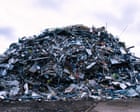
The danger is not just that a satellite might be shot down. The real danger is Kessler Syndrome—a catastrophic cascading chain reaction where the destruction of a single large satellite creates thousands of high-speed shrapnel bullets. Each piece of debris becomes a projectile capable of destroying another satellite, which creates more debris, until low Earth orbit becomes an impassable, shimmering cloud of lethal shrapnel.
We could accidentally trap ourselves on our own planet. We could lock humanity in a cage of our own making, cutting off our access to the stars simply because we could not resist turning the cosmos into a trench warfare trench line.
Looking Up with Different Eyes
We stand at a strange, quiet crossroads in human history. The decisions being made right now in windowless rooms in Colorado Springs and Sichuan will determine whether the next chapter of human expansion is defined by cooperation or annihilation.
The stars used to represent our highest ideals—our infinite potential, our escape from the mud and blood of terrestrial history. By dragging our conflicts upward, we risk staining the last clean canvas we have left.
The next time you step outside on a clear night and see a bright speck of light gliding smoothly across the constellations, do not just admire the engineering. Wonder what it is carrying. Wonder who is watching it. And remember that the future of humanity is no longer being decided solely in parliaments and battlefields down in the dirt, but in the cold, silent, and increasingly crowded dark above our heads.