Turn the handle. Listen to the hiss, the sudden rush, the familiar splash against ceramic. You brush your teeth, rinse the mug, and walk away without a second thought.
We treat running water like gravity—an invisible, unbreakable law of the universe that simply happens when we wake up. You might also find this related story useful: Inside the €830,000 Brad Pitt Scam That Exposed a Major Banking Failure.
That quiet assumption is cracking.
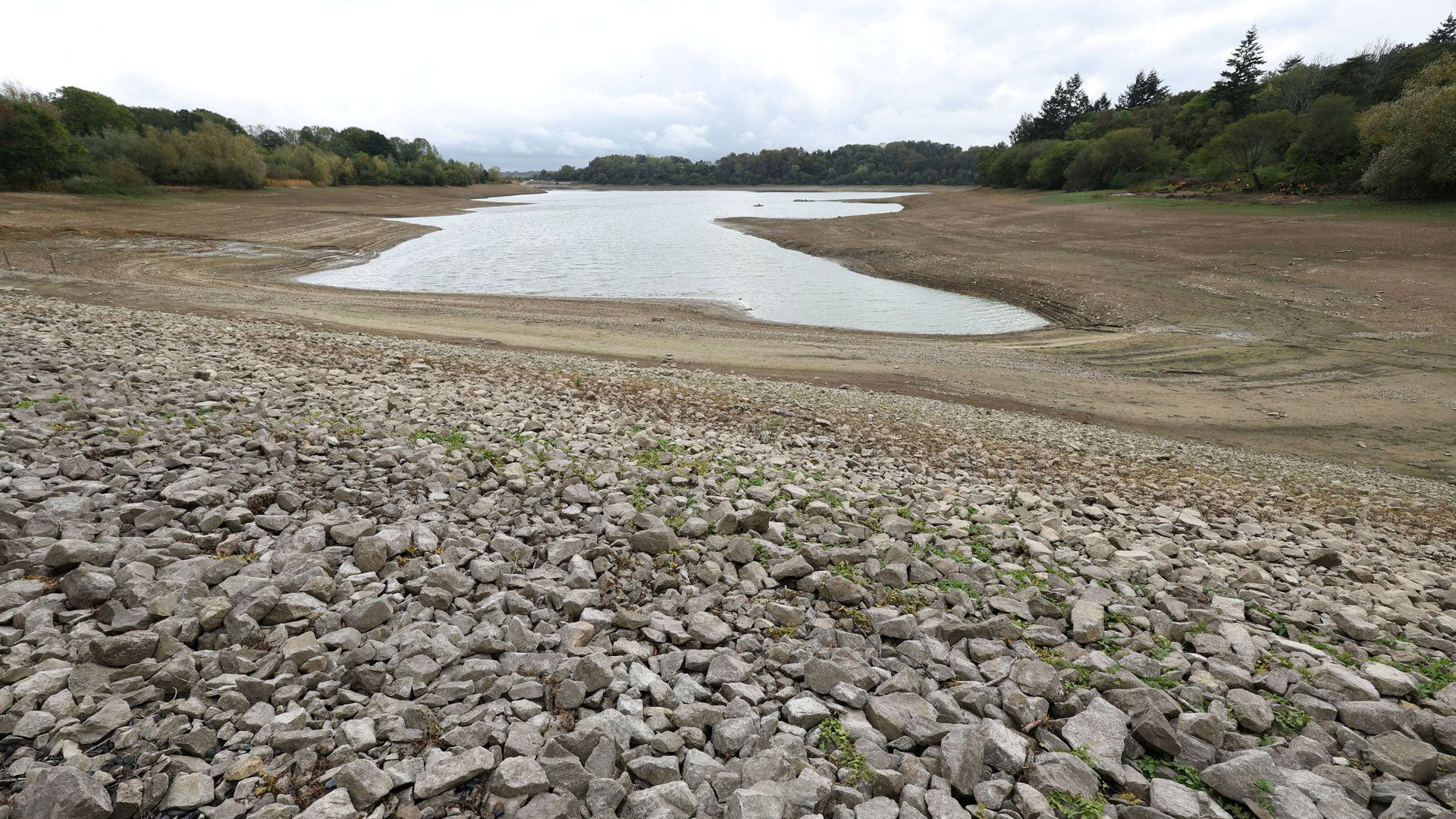
Across the country, regulators have just issued a stark warning to the utility giants that pipe life into our homes. The message is blunt: act now, because the drought gripping our reservoirs is no longer a passing summer anomaly. It is stretching its bony fingers straight into next year. While corporate executives sit in glass-walled boardrooms debating infrastructure budgets and shareholder dividends, a slow-motion crisis is unfolding beneath our feet. As highlighted in latest reports by Reuters, the results are widespread.
To understand what a multi-year drought actually feels like, you have to step out of the policy briefings and walk into a kitchen where the pipes have gone quiet.
The Sound of an Empty Pipe
Consider a hypothetical family—let’s call them the Millers—living on the edge of a mid-sized town that relies on a single aging reservoir. For decades, their biggest water worry was a frozen pipe in January or a soggy lawn in April. Then came two consecutive winters with barely enough snowpack to dust the hills, followed by a spring that baked the soil before the seeds could even sprout.
At first, the changes are polite. A municipal letter arrives on thick paper, asking residents to water their lawns only on Tuesdays and Thursdays. Neighbors side-eye anyone whose driveway looks damp at noon.
By autumn, politeness evaporates.
Picture Sarah Miller standing at her sink at six in the morning, holding a plastic pitcher under a faucet that sputters like a dying engine before delivering a lukewarm trickle. In this scenario, local water pressure has been deliberately throttled by the utility company to prevent catastrophic bursts in drying, shifting clay soils.
Every ordinary chore suddenly requires complex math. Do you flush the toilet now, or wait until three people have used it? Do you wash the toddler’s mud-caked clothes, or save those gallons for boiling pasta? The shower becomes a frantic, ninety-second military drill—wet, turn off, soap, rinse, shiver.
This isn't dystopian fiction. Variations of this exact routine have already played out in rural pockets and sprawling suburbs alike whenever a dry spell refuses to break. When a drought crosses the threshold from a single bad season into a multi-year siege, the rules of modern life rewrite themselves overnight.
The Checking Account We Forgot to Refill
Why are regulators suddenly sounding the alarm about next year when the calendar hasn't even turned?
Think of a regional water supply like a household checking account. Rainfall and winter snowmelt are your paycheck. Daily showers, industrial cooling, agricultural irrigation, and leaking pipes are your bills.
During a normal year, winter deposits enough water into underground aquifers and surface reservoirs to cover the heavy spending of summer. You might dip into your savings in August, sure, but November rains always bail you out.
Right now, the account is overdrawn, and the employer just announced a pay freeze.
Water engineers look at a metric called soil moisture deficit. When the earth goes months without a deep, soaking rain, the ground turns into a giant, bone-dry sponge. When rain finally does fall, the parched soil greedily drinks up every drop before a single ounce can run off into rivers or trickle down into the reservoirs.
Even if the skies open up tomorrow, it takes months of relentless, steady precipitation just to pay back the dirt's debt before our drinking water supplies see a dime of the deposit.
Utility companies know this math intimately. Yet for years, many have operated on a dangerous gamble—betting on average weather patterns while deferring expensive maintenance. When you look at the numbers, the negligence becomes staggering. Across many aging municipal networks, roughly twenty to thirty percent of all treated, drinkable water never even reaches a customer's tap. It vanishes underground through cracked Victorian-era mains, corroded joints, and unmonitored pressure valves.
Millions of gallons of clean water are literally watering the dirt beneath our streets every single day while executives warn consumers to take shorter showers.
The Hidden Economics of Thirst
I still remember the summer my grandfather’s well ran dry.
I was twelve years old, staying at his farmhouse during a brutal July heatwave. One evening, I turned the bathroom tap, and instead of water, the pipes let out a hollow, metallic groan that echoed through the floorboards. For the next three weeks, our lives revolved around five-gallon blue plastic jugs hauled from a distribution center ten miles down the highway.
You don't realize how heavy water is until you have to carry it up a flight of stairs just to wash your hands. Every spilled drop on the linoleum floor felt like a minor crime. I watched my grandfather—a man who had weathered recessions, factory closures, and bitter winters without flinching—stare out at his browning vegetable garden with a quiet, helpless grief.
That visceral memory is why the current corporate stalling feels so infuriating. When water companies delay action, they aren't just risking a dry garden; they are gambling with the foundational stability of entire communities.
Look at what happens when a utility fails to prepare for a multi-year drought:
- The Infrastructure Death Spiral: Drying soil shrinks and shifts. Underground pipes, brittle with age, snap under the uneven pressure. Emergency repairs cost triple what planned maintenance does, and those costs get passed straight onto your monthly bill.
- The Economic Chokehold: Breweries, food processors, semiconductor manufacturers, and local hospitals all depend on uninterrupted, high-volume water access. When a utility imposes emergency commercial rationing, businesses halt expansion, lay off workers, or pack up entirely.
- The Ecological Collapse: When companies pump rivers down to a trickle to keep reservoirs afloat, water temperatures spike and oxygen levels plummet. Fish suffocate. Algal blooms turn drinking sources toxic, forcing treatment plants to spend millions on emergency chemical filtration.
Regulators are stepping in now because the window for cheap, proactive fixes is slamming shut. You cannot build a new desalination plant in six months. You cannot lay fifty miles of transfer pipeline over a long weekend. Once a reservoir drops below its "dead pool" level—the point where water sits too low to reach the intake pipes—no amount of emergency cash can conjure rain from a cloudless sky.
Why Private Profit Clashes With Public Survival
To truly grasp why water companies need a regulatory shove, you have to follow the money.
In many regions, water utilities operate as monopolies answerable to private equity firms, pension funds, and public shareholders. For a water executive, spending hundreds of millions of dollars to dig up city streets and replace leaking pipes looks terrible on a quarterly earnings report. It depresses short-term margins. It invites public anger over temporary traffic disruptions and immediate rate hikes.
Doing nothing, on the other hand, is wonderfully profitable—until the reservoirs empty.
For decades, the prevailing business model rewarded reaction over prevention. If a pipe burst, the company fixed it and billed the ratepayer. If a drought hit, the company slapped a hosepipe ban on residential customers, ran a few glossy ads telling citizens to "love every drop," and waited for the weather to save them.
That playbook is officially dead.
Climate volatility has broken the historical weather models that utilities used to predict supply. The "once-in-a-century" dry spell is now showing up every seven years. Regulators have finally realized that leaving long-term drought resilience to voluntary corporate goodwill is like asking a teenager to save their allowance while standing inside a candy store.
The new directives demand hard, verifiable action before next spring. Utilities are being ordered to deploy acoustic leak-detection sensors across their networks, map out emergency interconnectors to borrow water from neighboring regions, and overhaul pricing structures so massive industrial users pay a steep premium for excess consumption.
The Myth of the Infinite Reservoir
There is a comforting lie we tell ourselves whenever we see a massive lake or a wide, rushing river: There is plenty left.
Human brains are notoriously bad at grasping slow depletion. A reservoir at sixty percent capacity looks remarkably full from the shoreline. The water still laps against the boat ramp. Ducks still paddle across the surface. From a distance, everything looks fine.
What you can't see is the steep, bowl-shaped geometry hidden beneath the waterline.
Because valleys and basins narrow sharply toward the bottom, the top half of a reservoir holds far more volume than the bottom half. Dropping from one hundred percent to sixty percent might take eight months of dry weather. Dropping from sixty percent to twenty percent—the threshold where intake pumps start sucking up mud and sediment—can happen in twelve brutal weeks.
By the time a crisis looks obvious to the naked eye, the mathematical point of no return has already passed.
I’ll admit, writing about this brings up a familiar, cold knot in my stomach. There is something uniquely terrifying about resource scarcity because it strips away the illusion of control that modern life sells us. We can buy backup generators for power outages. We can stock canned goods for supply chain disruptions.
You cannot stockpile a year’s worth of water in your hall closet. You are tethered, entirely and helplessly, to the competence of the utility company managing the pipes beneath your neighborhood.
What Happens When the Pressure Drops
Let’s trace the chain reaction if water companies drag their feet through this winter and the drought holds into next year.
First come the mandatory domestic caps. Smart meters—already installed in millions of homes—allow utilities to monitor usage down to the hour. Households exceeding a strict daily liter allowance face punitive surcharges that turn a standard water bill into a second mortgage payment.
Next comes pressure reduction across entire municipal grids. While this saves water from escaping through underground cracks, it creates a silent hazard: backflow contamination.
Normally, high outward pressure keeps groundwater, sewage, and soil bacteria from seeping into tiny fissures in drinking water pipes. When a utility drops system pressure to conserve supply, that protective barrier weakens. Suddenly, the tap water isn't just scarce; it requires boiling before you can safely give it to a child or use it to wash lettuce.
Then come the standpipes.
In severe, prolonged shortages, utilities shut off domestic supply entirely for sixteen hours a day, turning water on only in brief, scheduled windows—or worse, deploying mobile tankers to street corners where residents line up with buckets, milk jugs, and laundry baskets.
Imagine a nursing home trying to sanitize bedding without running water. Imagine a local restaurant forced to shutter its doors because health codes prohibit operating without functioning sinks. Imagine firefighters hooking a hose to a neighborhood hydrant during a dry summer brushfire, only to feel the canvas line go limp in their hands.
These are the invisible stakes buried beneath a dry, bureaucratic headline about regulatory warnings.
Turning the Valve Before Midnight
The frustrating truth is that we know exactly how to prevent this nightmare. The engineering isn't mysterious, and the technology already exists.
Look at regions that have survived decade-long megadroughts without collapsing. They didn't survive by praying for rain; they survived by treating every drop of water like liquid gold long before the reservoirs hit bottom.
True drought resilience requires three aggressive shifts that water companies can no longer postpone:
- Zero-Tolerance Leak Hunting: Deploying satellite ground-penetrating radar and AI-driven pressure monitoring to pinpoint and seal underground leaks within days, not years. Fixing existing leaks is the fastest, cheapest source of "new" water on earth.
- Closed-Loop Recycling: Building advanced purification plants that take treated wastewater, scrub it to molecular purity, and pump it back into the groundwater aquifers. What used to be dumped into the ocean becomes a permanent, weather-proof drinking supply.
- Aggressive Tiered Pricing: Ending flat-rate water bills. When a basic household allocation is kept affordable, but filling a private swimming pool or watering an estate lawn during a drought costs ten times more per gallon, consumption plummets overnight.
Regulators are right to hold utility executives' feet to the fire. For too long, these companies have treated public water as a quiet cash cow while outsourcing the risk of climate failure onto ordinary families.
Tomorrow morning, when you walk into your bathroom and turn that chrome handle, pause for just three seconds. Listen to the rush of water hitting the basin. Watch it swirl effortlessly down the drain.
Right now, that simple, thoughtless gesture is still yours to take for granted—but somewhere beneath the street outside your door, a aging pipe is leaking into dry earth, and a clock is ticking toward next summer.