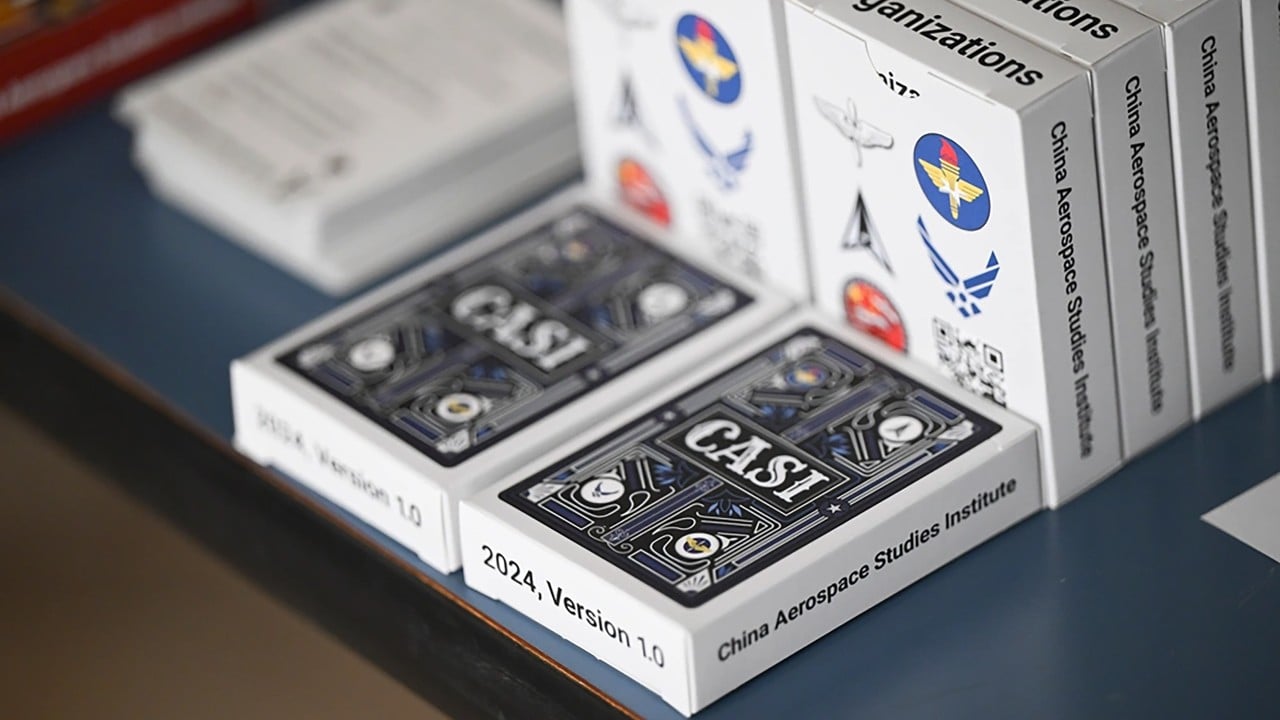
The coffee in the paper cup went cold hours ago. On the desk, illuminated only by the harsh, blue-tinted glare of a dual-monitor setup, sat hundreds of pages of untranslated text—thousands of words of military doctrine, engineering journals, and procurement papers sourced from a language most Americans cannot read.
This was the rhythm of a Tuesday at a specialized research center within the United States Air Force. It was a place designed for a singular, grueling task: to read the mind of a competitor by reading what they wrote about themselves.
Now, the room is quiet. The monitors are dark.
The decision to shutter the center was announced with the bureaucratic quietness of a footnote on a Friday afternoon. No sirens wailed. No congressional hearings stopped traffic on Capitol Falls. Yet, in the machinery of global strategy, a light was extinguished. We chose to close our eyes in the dark, hoping that if we stopped watching, the distance between us would simply cease to exist.
Intelligence gathering is rarely about the cinematic thrill of a midnight drop in a rain-slicked alley. Mostly, it looks like a graduate student with a migraine, staring at a technical diagram of a jet turbine or a translated transcript of a defense symposium in Beijing, trying to figure out what a single shifted adjective means for tomorrow morning.
Consider what happens when you decide you no longer need to translate your rival's whispers.
You begin to guess. And when you guess, you project. You fill the empty spaces with your own fears or your own arrogance.
For years, this particular Air Force research hub did something remarkably unglamorous: it paid attention. It did not rely on satellite imagery or intercepted electronic signals alone. It relied on the slower, harder work of cultural and linguistic comprehension. It looked at the footnotes of foreign academic papers. It tracked which retired generals were writing op-eds in regional mainland journals. It mapped the intellectual trajectory of a rising power by reading their textbooks.
To understand why this closure matters, you have to understand how we misunderstand our rivals.
We tend to view geopolitical competition through the lens of a Hollywood blockbuster. We look for the terrifying new weapon, the sudden technological leap, the dramatic hardware reveal. But real competition is a marathon run in lead boots. It is about industrial capacity, educational pipelines, bureaucratic friction, and ideological coherence.
The researchers in that center knew this. They knew that the most revealing thing about a rival is not their shiny new jet; it is the debate they are having about how to fuel it, who should pilot it, and whether their doctrine is failing.
When you close a center dedicated to that level of granular analysis, you suffer from a specific kind of blindness. You start seeing monoliths where there are only messy, competing bureaucracies. You start believing your own press releases about the other side's omnipotence—or, worse, you dismiss their systemic adaptations as mere noise.
Communication between rival superpowers is already terrifyingly thin. At the highest levels, diplomatic channels are often choked with posturing and public relations messaging designed for domestic consumption. Intelligence agencies, by necessity, focus on capabilities and intentions through classified lenses. But open-source research—the systematic analysis of what a nation publishes about itself—fills the vital space between the two. It is the bridge of context.
When that bridge is dismantled, the gap widens.
There is an old story about a lighthouse keeper who grew tired of the endless, solitary labor of cleaning the lenses and hauling the oil. He looked out at the ocean, saw no storms for months, and decided to let the light dim. After all, the ships had compasses now. The captains were experienced. Nothing had happened for a long time.
The first night the light flickered out entirely, the sea was calm. The second night, the moon was bright. On the third night, the fog rolled in, thick and heavy, swallowing the shoreline whole. The crash came not from a malicious enemy, but from an invisible reef that everyone had simply forgotten was there.
The shuttering of the Air Force's China research center is a dimming of that light.
Budget cuts are always justified in the language of efficiency. We are told that resources must be shifted toward higher-priority domains, toward hypersonic testing, toward algorithmic warfare, toward the hardware that looks good in budget proposals presented to lawmakers who want to see tangible steel. Reading papers doesn't look like defense. It looks like a library.
But wars—hot or cold, economic or diplomatic—are won and lost in the domain of understanding. If you do not know how your competitor defines victory, your own definition of deterrence becomes a dangerous guess. If you do not understand their historical grievances, their internal political pressures, and their technological bottlenecks, you cannot outmaneuver them. You can only react to them. And reaction is the beginning of defeat.
We are entering an era where the margin for error is razor-thin. The technological velocity of the world has outpaced our institutional attention spans. We want quick dashboards, automated threat assessments, and AI-driven summaries that distill complex cultural shifts into a red-or-green indicator light.
Yet human behavior cannot be reduced to a prompt. The ambitions of a rising superpower are shaped by poetry, by ancient history, by domestic economic anxieties, and by bitter institutional rivalries that algorithms cannot parse. It takes human analysts—stubborn, caffeinated, and deeply read—to notice the subtle shifts in tone that signal a change in strategic direction.
When those analysts are sent packing, their databases archived and their desks reassigned, we save a fraction of a percent of a trillion-dollar defense budget. And we pay for it in a currency that cannot be measured until it is entirely gone: clarity.
The room is empty now. The translated pages have been boxed up and hauled away to some subterranean warehouse where documents go to sleep. Somewhere across the Pacific, the writing continues. New papers are published. New doctrines are debated in university lecture halls and military academies. New strategies are forged in languages we have decided we no longer have the time to read.
The dark is very quiet. The reef is still out there. And we have just put out the lamp.