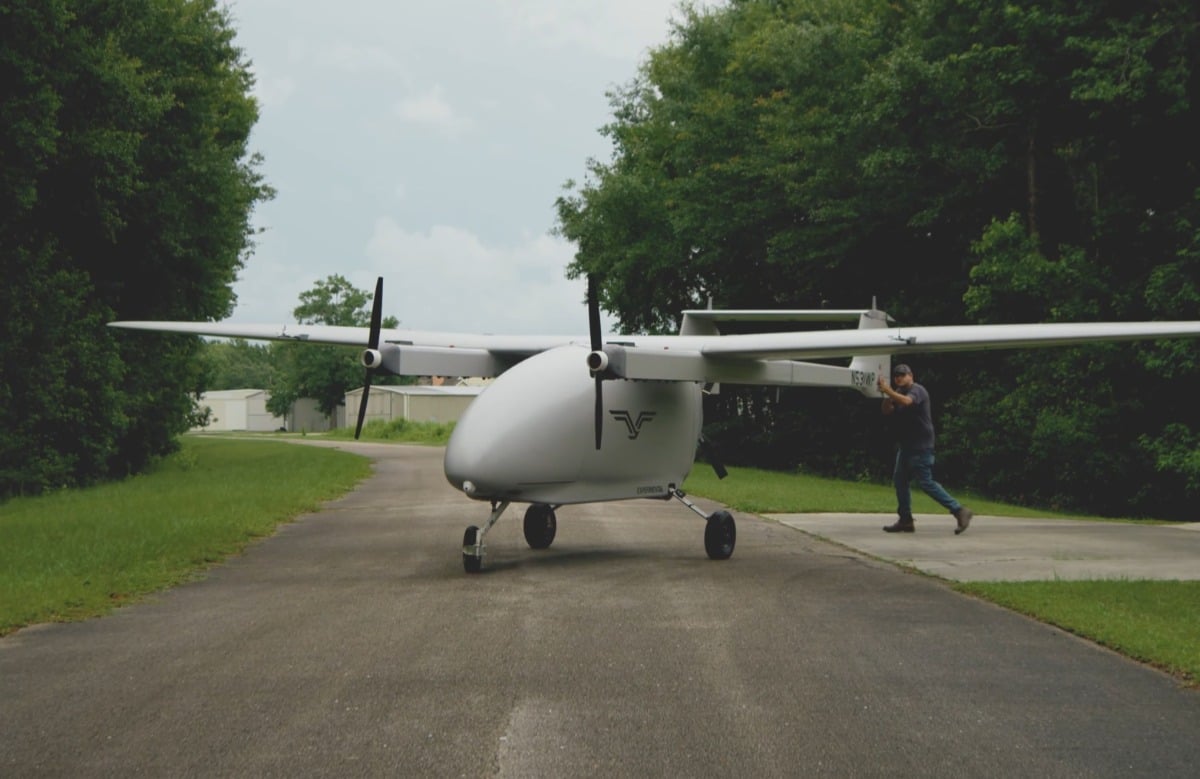
The U.S. Army Reserve is quietly shifting its tactical resupply strategy away from heavy, crewed helicopters toward autonomous electric aircraft. During a recent live-fly exercise, military planners integrated Pyka’s Pelican Cargo—a zero-emission, autonomous airplane—into simulated combat logistics chains. This move addresses a critical vulnerability in modern warfare: the reliance on massive, fuel-thirsty convoy systems and high-maintenance rotorcraft to deliver basic supplies to isolated troops. While flashy combat drones capture headlines, the unglamorous work of moving batteries, blood bags, and ammunition determines who wins a prolonged conflict.
For decades, military logistics relied on brute force. If a remote outpost needed parts, the Pentagon spun up a multi-million-dollar helicopter or risked a convoy on an improvised explosive device (IED) laced route. The deployment of autonomous cargo aircraft in military exercises suggests that the old calculus is no longer sustainable.
The Mathematical Breaking Point of Traditional Resupply
The modern battlefield is expanding, yet the resources to sustain it are shrinking. In a contested environment, traditional logistical nodes are the first targets. Large cargo helicopters like the CH-47 Chinook are exceptionally capable, but they are also loud, expensive to operate, and require extensive maintenance footprints.
When a helicopter flies a mission to deliver a 400-pound pallet of rations, the cost-to-benefit ratio breaks down completely. The aircraft burns thousands of pounds of fuel, exposes a highly trained crew to anti-aircraft fire, and racks up hours of maintenance that ground the fleet for days afterward.
Autonomous electric cargo planes flip this equation. By removing the pilot, the military eliminates the risk of human casualty during routine supply runs. By utilizing electric propulsion, the aircraft operates with a fraction of the thermal and acoustic signature of a gas turbine engine. It flies low, runs quiet, and lands on unpaved clearings that would baffle standard cargo planes.
Breaking Down the Operational Math
Consider the basic friction points of a standard logistical run. A tactical unit requires an urgent resupply of communications batteries and medical kits.
| Metric | Traditional Utility Helicopter | Autonomous Electric Cargo (Pelican Class) |
|---|---|---|
| Crew Required | 2 to 4 personnel | 0 onboard (remote monitoring) |
| Fuel Source | Aviation turbine fuel | Electric battery |
| Maintenance Hours per Flight Hour | High (intensive mechanical inspection) | Low (fewer moving parts) |
| Acoustic Signature | Detectable from miles away | Minimal propeller noise |
| Runway Requirement | Vertical takeoff (flexible but high footprint) | Short takeoff and landing (unpaved strips) |
The contrast is stark. The goal is not to replace the heavy lift capacity of traditional aviation but to offload the thousands of small, low-weight missions that clog up military supply lines.
The Logistics Insurgency Inside the Army Reserve
The Army Reserve often serves as the testing ground for dual-use commercial technology because its leadership wrestles with real-world resource constraints. In recent exercises, the integration of autonomous cargo airframes focused heavily on the concept of distributed operations.
Modern defense strategy assumes that large, centralized bases will be targeted and destroyed early in a peer conflict. Forces must scatter into small, hidden pockets. Sustaining those scattered pockets is a nightmare for a traditional supply clerk.
During the evaluation, operators tested how quickly an autonomous electric aircraft could be loaded, launched, and recovered by minimal ground crews. The system operates via programmed waypoints, navigating autonomously without constant satellite communication loops that adversaries could jam.
This is not a drone in the traditional sense. It is a self-flying cargo van. The distinction matters because remote-piloted drones require a one-to-one ratio of pilots to aircraft, often backed by a small army of data analysts. True autonomy allows a single operator on the ground to manage a small fleet of delivery assets simultaneously, shifting the labor burden from piloting to inventory management.
The Unresolved Friction Points of Electric Military Aviation
No technology enters the theater of war without friction. The promise of electric flight is massive, but the realities of the field present severe bottlenecks that the Pentagon has yet to fully solve.
The most glaring vulnerability is the battery infrastructure. Electric aircraft require robust charging systems. If an autonomous plane lands at a forward operating location that lacks power, it becomes an expensive piece of static lawn ornament. Generating that electricity in the field currently requires diesel generators, which partially defeats the purpose of transitioning away from fossil fuels.
Furthermore, lithium-ion batteries are heavy. The laws of physics dictate that every pound of battery carried is a pound of cargo left on the tarmac. While the current generation of autonomous electric cargo planes can carry hundreds of pounds over regional distances, they cannot match the range or payload density of liquid-fueled engines.
There is also the question of regulatory and airspace integration. Flying an autonomous asset in a sterile test range is simple. Inserting that same asset into crowded military airspace—where combat jets, artillery shells, and tactical helicopters share the sky—requires a level of automated traffic management that is still in its infancy. The military must build a framework where these systems can sense and avoid other aircraft without relying on civilian GPS networks, which will be the first things turned off in a major conflict.
The Threat of Bureaucratic Stagnation
The technical viability of autonomous cargo flight is largely proven; the commercial sector already uses similar platforms for agricultural spraying and remote commercial deliveries. The real battleground for the military is bureaucratic.
The Pentagon's acquisition system is designed for multi-decade procurement cycles. It excels at building massive, exquisite platforms like aircraft carriers and stealth fighters. It routinely fails at purchasing rapid, iterative software-driven technologies.
If the military treats autonomous cargo aircraft like traditional aviation assets, requiring the same multi-year certification processes and bloated maintenance contracts, the technological advantage will evaporate. Adversaries are moving fast, utilizing commercial off-the-shelf components to build disposable logistics networks. The U.S. military must adopt an attitude of rapid procurement, treating these smaller autonomous aircraft as expendable tools rather than precious national assets.
The Shift in Tactical Doctrine
Using autonomous aircraft changes how a platoon leader thinks about survival. When supply runs are costly and rare, commanders hoard supplies. They build massive stockpiles that are easily spotted by enemy satellites.
When resupply is autonomous, cheap, and frequent, the doctrine shifts to just-in-time logistics. Units can move lighter and faster, knowing that a quiet, low-flying electric asset can drop ammunition or water into a tree line under the cover of darkness. This flexibility fundamentally alters troop maneuverability.
The live-fly tests conducted by the Army Reserve are not a final endorsement of a single platform, but rather a proof of concept for a entirely new category of warfare asset. The future of tactical logistics will not be defined by larger engines or heavier armor, but by autonomous, distributed networks that keep soldiers supplied without exposing them to the meat grinder of modern anti-aircraft systems. The Pentagon must now decide whether to scale this capability or let it languish in the graveyard of promising military prototypes.