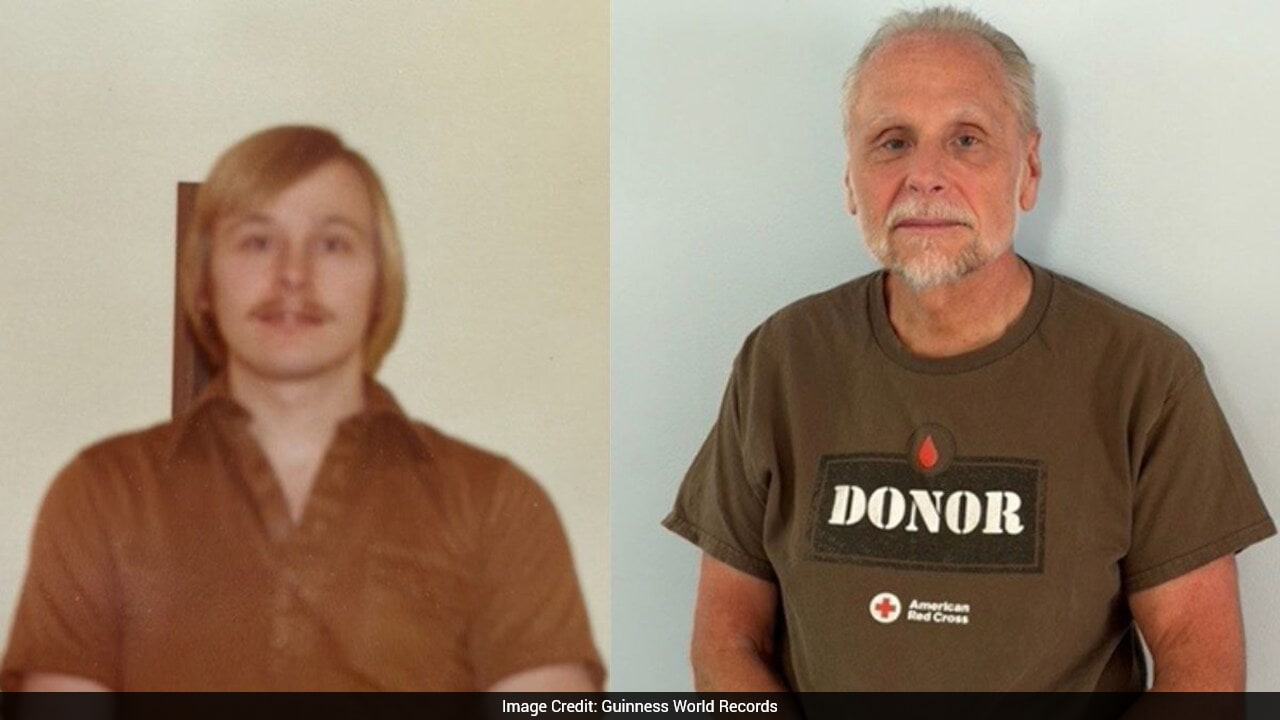
An American man recently set a monumental milestone by donating more than 30 gallons of blood over several decades, a feat that translates to saving potentially hundreds of lives. While viral news headlines routinely celebrate these rare, hyper-dedicated "super-donors" as anomalies of human altruism, they actually expose a fragile reality. The global healthcare infrastructure is dangerously over-reliant on a graying, shrinking cohort of lifetime donors. Modern medicine cannot function without a steady supply of cellular components, yet the systems engineered to collect, process, and distribute this biological resource are facing unprecedented systemic strain.
To truly understand how someone manages to surrender 30 gallons of fluid from their veins without collapsing, you have to look at the strict mathematics of human biology and the rigorous scheduling of blood banking. The average adult human body contains roughly 1.2 to 1.5 gallons of blood. When a person sits in a donor chair for a standard whole blood donation, the collection bag takes exactly one pint.
Because the human body requires time to replenish its red blood cells, regulatory bodies like the FDA enforce a strict eight-week waiting period between whole blood donations. That limits an individual to a maximum of about six donations per year. To stack up 30 gallons—which equals 240 pints—a donor must maintain near-flawless health and uninterrupted commitment for at least 40 years.
The Hidden Logistics of the Pumping Heart
The journey of a single pint of donated blood is not a simple transfer from point A to point B. It is a highly sophisticated, time-sensitive manufacturing process.
Once the needle is withdrawn, the unit is chilled and rushed to a processing laboratory. Here, it rarely remains whole. Instead, technicians use high-speed centrifuges to spin the fluid, separating it into three distinct, life-saving components.
- Red Blood Cells: The heavy, iron-rich cells that carry oxygen. They are kept in specialized refrigeration and have a shelf life of just 42 days.
- Platelets: The tiny cellular fragments that enable clotting. These are critical for cancer patients undergoing chemotherapy, but they are incredibly volatile. They must be kept at room temperature under constant agitation and expire after a mere five days.
- Plasma: The liquid matrix carrying proteins and antibodies. Plasma can be flash-frozen and stored for up to a year, serving as a vital resource for trauma victims and burn patients.
This split-product strategy means that a single donation from a multi-gallon milestone donor can be distributed to three entirely different patients. It also means hospitals are trapped in a perpetual race against the calendar. A massive surge in donations during a national tragedy sounds helpful, but it often creates a logistical nightmare. A mountain of platelets collected in the wake of a disaster will expire in less than a week, frequently leading to heartbreaking waste, while the baseline shortages return a month later.
The Demographic Collapse of Volunteerism
The veteran journalists tracking healthcare trends see a dark cloud hanging over this feel-good narrative. The 30-gallon donor belongs to a generation that is aging out of the donor pool.
Data from major blood collection organizations across Western nations reveal a stark demographic cliff. The bedrock of the blood supply consists of individuals over the age of 50. These are civic-minded citizens who grew up in an era where blood drives were standard fixtures of workplace culture and community life. As these loyal donors enter their twilight years, they are increasingly disqualified from donating due to chronic medical conditions, travel restrictions, or the natural frailties of aging.
The replacement rate is dismal. Younger generations are not stepping up to fill the void at the same velocity. It is not necessarily a lack of empathy, but rather a shift in societal structure. Gig-economy employment, remote work arrangements, and the erosion of localized community hubs mean that the traditional mobile blood drive parked outside a corporate headquarters is no longer effective. The collection models are outdated, built for a 1980s corporate ecosystem that no longer exists.
The Fiction of Artificial Blood
Whenever shortages hit the headlines, the public inevitably asks why science has not engineered a synthetic alternative. The short answer is that human blood is an extraordinarily complex, living tissue that defies easy replication.
For decades, researchers have attempted to create viable hemoglobin-based oxygen carriers (HBOCs) and perfluorocarbon emulsions. The chemistry works in a lab dish, but the human body routinely rejects them. Early clinical trials of various blood substitutes frequently triggered severe side effects, including systemic vasoconstriction, high blood pressure, and an increased risk of heart attacks. The endothelial lining of human blood vessels is incredibly sensitive; it recognizes synthetic substitutes as foreign invaders or toxic anomalies.
While research continues into growing red blood cells from stem cells, the economic reality is prohibitive. Manufacturing a single unit of blood in a bioreactor currently costs thousands of dollars and requires weeks of meticulous cultivation. A volunteer donor produces the same unit for the cost of a juice box and a sleeve of cookies. For the foreseeable future, the apex of trauma medicine relies entirely on the altruism of a stranger's arm.
The Shadow Economy of Paid Plasma
To fully comprehend the blood ecosystem, one must look at the massive, parallel universe of commercial plasma collection, a multi-billion-dollar industry where the United States acts as the OPEC of the biological world.
While donating whole blood is strictly voluntary and uncompensated in most developed nations to ensure purity and safety, collecting plasma for pharmaceutical manufacturing is a highly commercialized enterprise. Private companies pay "donors" cash stipends to sit for hours while apheresis machines separate their plasma and return their red blood cells. This plasma is not used for direct hospital transfusions; it is processed into expensive therapies for autoimmune diseases, hemophilia, and immunodeficiencies.
The United States permits paid plasma donation up to 104 times a year. This regulatory leniency means the U.S. supplies roughly 70% of the entire global export market for plasma. The industry disproportionately places its collection centers in low-income neighborhoods and college towns, effectively turning bodily fluids into a survival stipend for the financially insecure. This creates an ethical friction point. The booming, aggressive marketing of paid plasma centers actively cannibalizes the pool of volunteer whole-blood donors. When a young person can choose between giving blood for free or selling plasma to pay their rent, the economic incentive wins.
Reengineering the American Lifeline
Relying on rare individuals to give 30 gallons of blood over a lifetime is a failing strategy for a modern healthcare system. If the architecture of blood banking does not evolve, hospitals will face localized rationing protocols where surgeries are routinely postponed based on inventory levels.
Fixing the supply chain requires abandoning the passive model of waiting for volunteers to walk through the door. Collection agencies must transition to data-driven, hyper-targeted mobilization. If a hospital knows it has three major cardiovascular surgeries scheduled for next Tuesday, the local blood bank should be micro-targeting verified type O-negative donors via direct, localized scheduling apps, treating the donation process with the same logistical precision as a high-end supply delivery.
Institutional reform must also address structural barriers. High schools and universities remain the most fertile ground for establishing life-long donation habits, yet regulatory hurdles and bureaucratic inertia often lock blood drives out of these spaces. Reversing the demographic decline means making the donation experience frictionless, transparent, and integrated into the digital routines of younger demographics. The milestone of the 30-gallon donor should be viewed as a monumental achievement, but also as a stark warning of a generation of selflessness that we are failing to replace.

.jpg?width=1200&auto=webp&trim=0%2C0%2C0%2C0)