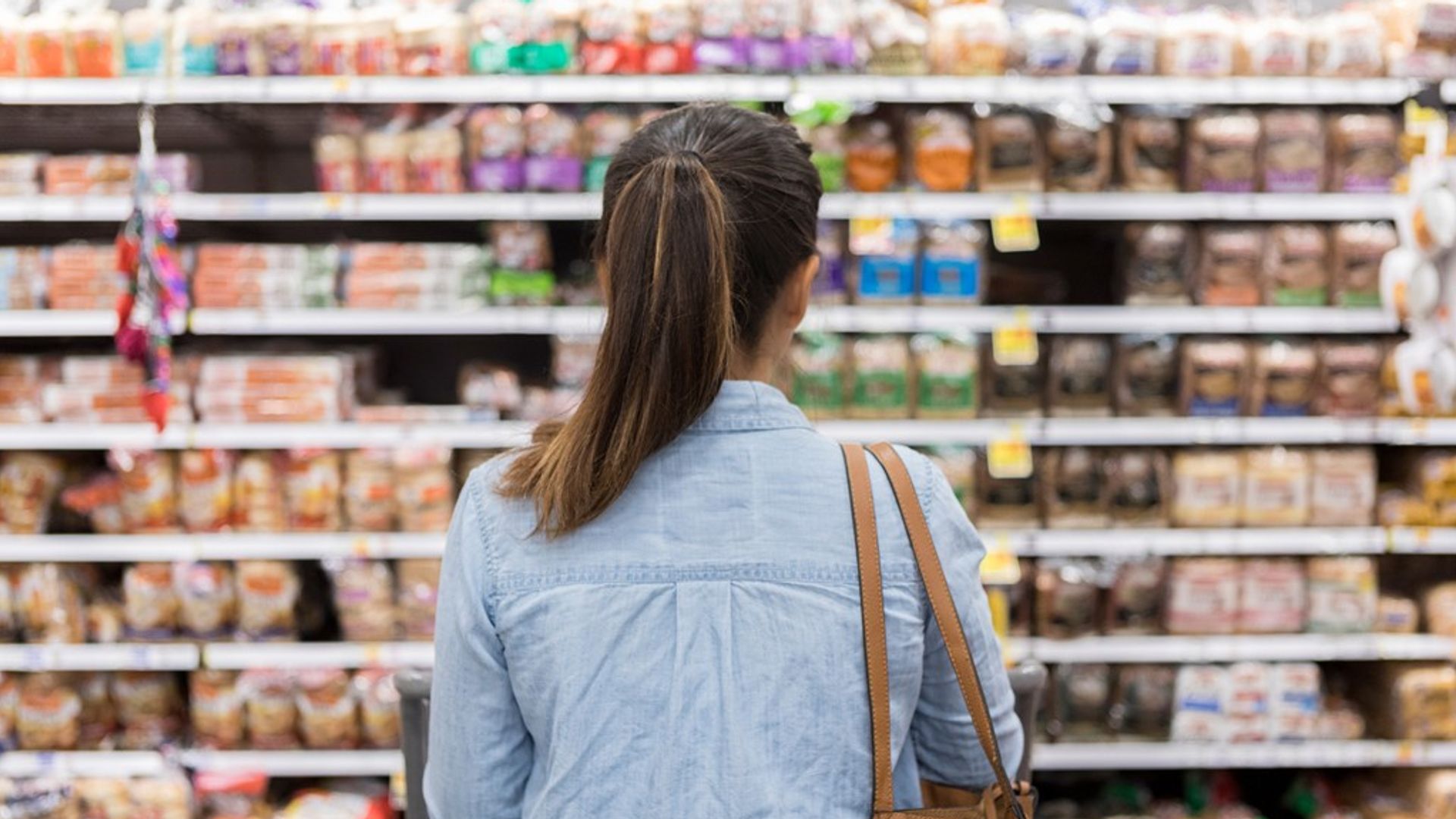
Sarah stands in Aisle 4, her thumb tracing the edge of a plastic yogurt container. The fluorescent lights overhead hum with a clinical, aggressive persistence. She is tired. The kind of tired that settles into your marrow after a forty-hour week and a Saturday spent chasing a toddler through a park. To Sarah, this supermarket is a necessary chore, a place to exchange hard-earned currency for the fuel her family needs to survive another seven days.
She sees price tags. She sees colorful boxes. She sees "New and Improved" bursts on cereal packets.
What she doesn’t see is the conversation happening right in front of her. The shelves are talking. They are whispering in a dialect of alphanumeric sequences and strategic placements. They are telling her which milk was delivered three hours ago and which has been sitting in the dark since Tuesday. They are signaling whether a "sale" is a genuine act of clearance or a psychological anchor designed to make her spend more on the item next to it.
We are all Sarah. We walk through these cathedrals of consumption believing we are the ones making the choices. But the house always has an edge. To reclaim your autonomy, you have to learn to read the walls.
The Ghost in the Barcode
The first time I realized the grocery store was hiding things from me, I was working as a stock clerk during a sweltering summer in my early twenties. My manager, a man who treated a pallet of canned peas with the reverence of a museum curator, pulled me aside. He pointed at a small, handwritten code on a cardboard flap near the dairy section.
"Look at the last digit," he said. "That tells you if we’re desperate to move it or if we’re just teasing the price."
Retailers use terminal digits—the cents at the end of a price—as a shorthand for their inventory systems. While a price ending in .99 is the oldest trick in the book to make $10.00 feel like $9.00, other numbers carry much heavier weight. In many major chains, a price ending in .97 or .88 isn’t just a random discount. It is a "manager’s special." It signifies that the item has been marked down manually to clear space for new shipments.
If you see a price ending in .00, the store is often trying to flush the inventory entirely. That item is on its deathbed. It’s the retail equivalent of a "going out of business" sign for that specific brand of organic almond butter.
But the real secret is in the barcodes. Sarah looks at the black-and-white stripes on a bag of oranges and sees a scanner-friendly identifier. But for those who know where to look, there is more. On many produce stickers, a four-digit code is just a conventional identifier. A five-digit code starting with an 8 used to signal genetically modified organisms (GMOs). A five-digit code starting with a 9, however, is a badge of honor. It means the item is certified organic.
Sarah picks up a Granny Smith apple. It has a sticker. It starts with a 4. It’s "conventionally" grown. It’s been sprayed. It’s fine, she thinks, but she could have chosen the 9-series if she’d known the shelf was holding secrets.
The Geography of Memory
Walk with Sarah for a moment. She starts on the right side of the store. Most grocery chains are designed with a counter-clockwise flow. This isn't an accident. Humans, generally right-handed and habituated to driving on a certain side of the road, feel more comfortable turning left and looking right.
Store planners call this the "decompression zone." The moment you step through the automatic doors, the air smells like baking bread and roasted rotisserie chickens. Your salivary glands activate. Your brain prepares for a reward. You are no longer Sarah the budgeter; you are Sarah the hunter-gatherer in a field of plenty.
The high-margin items live at eye level. This is the "Bulls-eye Zone." Brands pay for this real estate. It’s the most expensive space in the building. Sarah reaches for the brand of peanut butter she’s seen in three commercials this week. It’s at 1.5 meters high.
Look down. At the level of Sarah's knees, the store hides the store-brand equivalents and the bulk bags. These items are often identical in composition to the premium products above them. But the store doesn't want Sarah to look down. It wants her to maintain eye contact with the marketing.
Then there is the "Kids’ Zone." Sarah’s toddler, trailing behind her in a plastic car-shaped shopping cart, has a different eye level. It is precisely at this height that the most colorful, sugar-laden cereals are placed. The boxes are designed to look down, meeting the child's gaze at a slight angle. It’s a silent pact between the cereal company and the toddler. The ensuing tantrum is a predictable outcome of a layout designed to trigger a specific behavioral response.
Sarah ignores the impulse to buy a $6.00 box of artisan crackers. She thinks she’s winning. But the store has more tricks in its pocket.
The Decoy and the Anchor
In the middle of the pasta aisle, Sarah sees two jars of marinara sauce. One is $8.00. The other, right next to it, is $5.00 and marked as "On Sale!"
She buys the $5.00 jar, feeling a small, dopamine-fueled victory. She saved $3.00.
But the $8.00 jar was never meant to be sold in high volume. It is a "decoy." Its primary purpose is to make the $5.00 jar look like a bargain. Without the $8.00 anchor, the $5.00 sauce might have felt expensive for a crushed tomato product. By placing them side-by-side, the retailer has controlled Sarah’s perception of value.
Price anchoring is the most pervasive form of manipulation in modern commerce. It isn't just about the numbers; it’s about the relative distance between them.
Consider the "Buy 10 for $10" promotions. Sarah only needs two cans of chickpeas. But the number 10 is now anchored in her mind. She feels an irrational pull to complete the set. She might not buy all ten, but she is statistically more likely to buy four or five than if the cans were simply priced at $1.00 each.
The store isn't just selling chickpeas. It’s selling a sense of scarcity that doesn't actually exist.
The Mystery of the Milk
The dairy section is the ultimate destination in Sarah’s journey. It is almost always located at the very back of the store, as far from the entrance as possible.
This is not a logistical necessity. It is a calculated trek. To get a liter of milk—the most common reason people enter a grocery store—Sarah must walk past the end-caps of snacks, the bakery, and the brightly lit frozen food section. Every meter she walks is an opportunity for a "planned impulse" buy.
When she finally reaches the milk, Sarah does what we all do. She reaches to the very back of the refrigerated shelf. She’s looking for the latest expiration date.
She thinks she’s being clever. But the stockers know this. They use a system called FIFO: First In, First Out. The oldest milk is at the front. The newest is at the back.
But sometimes, the store plays a different game. They hide "short-coded" items in the middle of a stack. They know that seasoned shoppers skip the front row but rarely dig to the very bottom of a crate. By burying the items that expire in two days under the items that expire in four, they increase the chances of clearing the aging stock before it becomes a total loss.
Sarah finds a carton with a date two weeks away. She feels a sense of triumph. She doesn't realize she’s just navigated a labyrinth specifically designed to make her feel exactly that way.
The Silent Alarms
The store is also listening. Not to Sarah’s voice, but to her movement.
Modern supermarkets use heat-mapping technology to track foot traffic. If Sarah lingers too long in front of the specialty cheese display, the store’s data systems record it. They know which aisles are "dead zones" and which are "hot spots."
They use this data to rearrange the store. Every six to twelve months, Sarah arrives to find the bread has moved. The coffee is now where the pet food used to be.
This is frustrating. It’s inefficient. And it’s deliberate.
The moment you become efficient in a grocery store, you stop looking at the shelves. You become a robot, moving from Point A to Point B with blinders on. By disrupting your mental map, the store forces you to "re-explore" the aisles. In the three minutes Sarah spends searching for the olive oil, she will inevitably see three other things she didn't know she wanted.
Frustration is a sales tactic.
The Check-out Mirage
Sarah reaches the end of her journey. She stands in the queue for the register.
This is the narrowest part of the store. The walls close in. You are trapped in a canyon of candy bars, batteries, and magazines. Your "decision fatigue" has set in. After forty-five minutes of weighing prices, checking dates, and navigating crowds, Sarah’s willpower is depleted.
The check-out aisle is designed to exploit this exhaustion. It is the final tax on your patience.
The "unit price" on these small convenience items is often astronomical compared to the same items in the main aisles. A single chilled bottle of soda at the register might cost twice as much per milliliter as a two-liter bottle in Aisle 6. But Sarah is thirsty now. She is tired now.
She puts a chocolate bar on the conveyor belt.
The clerk scans it. The screen flashes. Sarah pays. She leaves the store, pushing her cart into the cooling evening air of the parking lot.
She feels like she did a good job. She found the "deals." She got the freshest milk. She stayed close to her budget.
But as she loads the bags into her trunk, she doesn't see the codes on the receipts or the patterns in her trunk. She doesn't see that her path was paved long before she arrived.
The grocery store is a living, breathing machine. It is an organism that feeds on our habits and our tiredness. It is a masterpiece of psychological engineering.
The next time Sarah walks through those doors, she might look at the prices differently. She might look for the .97. She might look for the 9 on the sticker. She might resist the anchor.
But for now, she just goes home. The yogurt is in the bag. The toddler is finally quiet. And the fluorescent lights continue to hum in the empty aisles, waiting for the next Sarah to arrive.
The store never sleeps. It just re-prices the world while we aren't looking.