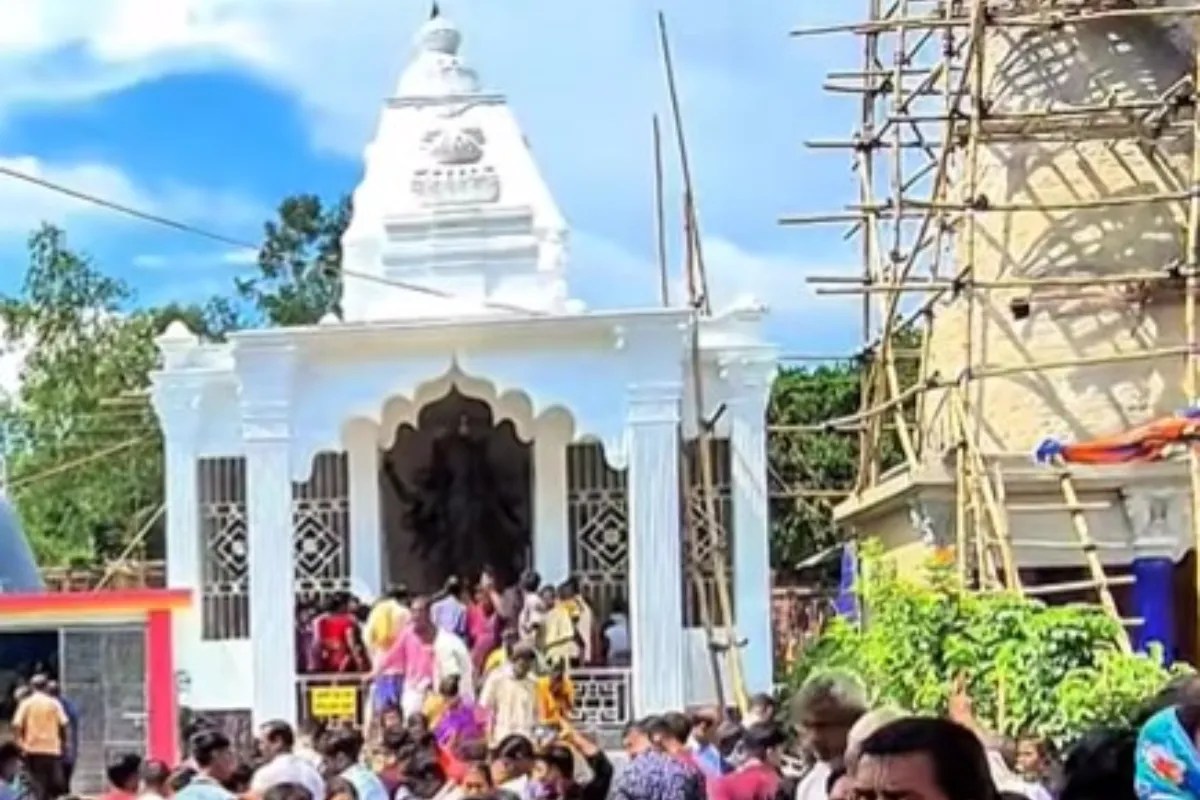
Recent threats targeting the Radha-Govinda temple in Bangladesh highlight a systematic pattern of intimidation facing Hindu religious heritage in the region. This is not an isolated incident of local vandalism. It is part of a coordinated pressure campaign designed to shrink the visible footprint of minority faiths through land encroachment, legal vulnerabilities, and targeted intimidation. For decades, historical structures across the country have faced dual pressures from rapid urbanization and sectarian tension, leaving ancient cultural sites increasingly defenseless.
The Mechanics of Encroachment
Demolishing a historic temple rarely begins with a bulldozer. It starts with paperwork, property disputes, and strategic neglect.
In many districts across Bangladesh, minority religious properties operate under precarious legal titles. The historical legacy of the Vested Property Act—formerly the Enemy Property Act—created a framework where the state could seize land from minorities who left the country. Though legislative reforms have attempted to address these imbalances, the bureaucratic reality on the ground remains hostile to minority landowners and temple trusts.
Local land grabbers frequently exploit these ambiguities. They manufacture competing deeds, challenge the boundaries of temple grounds, or leverage local political connections to tie up religious committees in protracted legal battles. When legal avenues stall, threats of physical demolition or desecration are deployed to force a quiet settlement or abandonment of the property.
The Failure of Statutory Protection
The institutions tasked with protecting cultural heritage routinely fail minority sites due to a mix of underfunding and political calculation.
+--------------------------------------+------------------------------------------+
| Institutional Barrier                | Impact on Heritage Protection            |
+--------------------------------------+------------------------------------------+
| Bureaucratic Inertia                 | Delays in granting protected status      |
| Underfunded Archaeology Departments | Inability to secure or monitor remote sites|
| Political Expediency                 | Local officials avoid policing majority  |
|                                      | encroachments to preserve vote banks      |
+--------------------------------------+------------------------------------------+
The Department of Archaeology lacks the manpower to monitor thousands of historical shrines scattered across rural sub-districts. More importantly, local administrations face immense pressure from influential religious factions and commercial developers. Intervening to protect a minority temple offers little political reward and carries significant risk of local backlash. Consequently, law enforcement often treats these existential threats as mere civil property disputes rather than targeted cultural erasures.
Financial Motives Disguised as Zealotry
While public rhetoric surrounding temple disputes often focuses on religious differences, the underlying driver is frequently financial.
Temple lands are often situated in prime commercial areas or fertile agricultural zones. Secular economic greed routinely wears the mask of religious fervor to mobilize local mobs. By framing a land grab as a defense of local majority values, developers can outsource the intimidation of temple caretakers to radicalized youth groups, insulating themselves from criminal liability.
The loss extends far beyond bricks and mortar. Every dismantled ashram or defaced deity represents the erasure of a syncretic history where diverse communities coexisted for centuries. When these physical markers vanish, the historical legitimacy of the minority population erodes with them, making future displacement even easier.
International Silence and Local Complicity
Global rights organizations frequently overlook these localized threats, focusing instead on large-scale political violence during election cycles. This oversight allows low-level, continuous intimidation to function undetected.
National governments in Dhaka have historically promised protection, yet the implementation of safety measures remains selective and reactionary. Deploying paramilitary forces after a shrine is threatened provides a temporary truce, but it does nothing to dismantle the local networks of land speculators and political fixers who profit from the instability. Without a fundamental overhaul of land registration transparency and a dedicated judiciary task force to protect minority trusts, the architectural history of Bangladesh will continue to vanish piece by piece.