The sun does not rise over the Mediterranean so much as it ignites it. On the southern coast of Cyprus, near the salt lakes where flamingos gather in the winter, the morning air usually smells of brine and wild thyme. But for the residents of the villages surrounding RAF Akrotiri, the dawn often carries a different scent: the sharp, metallic tang of aviation fuel and the low-frequency hum of engines that never truly sleep.
It is a sovereign base, a curious remnant of a colonial past that has transformed into a high-tech nerve center for modern warfare. To the casual observer, it is a runway and some barracks. To the strategic planner, it is an unsinkable aircraft carrier. Recently, the diplomatic cables between London and Washington smoothed the path for something much more consequential than a routine patrol. The UK has signaled its assent for American forces to utilize these British territories to launch strikes against Iranian missile sites.
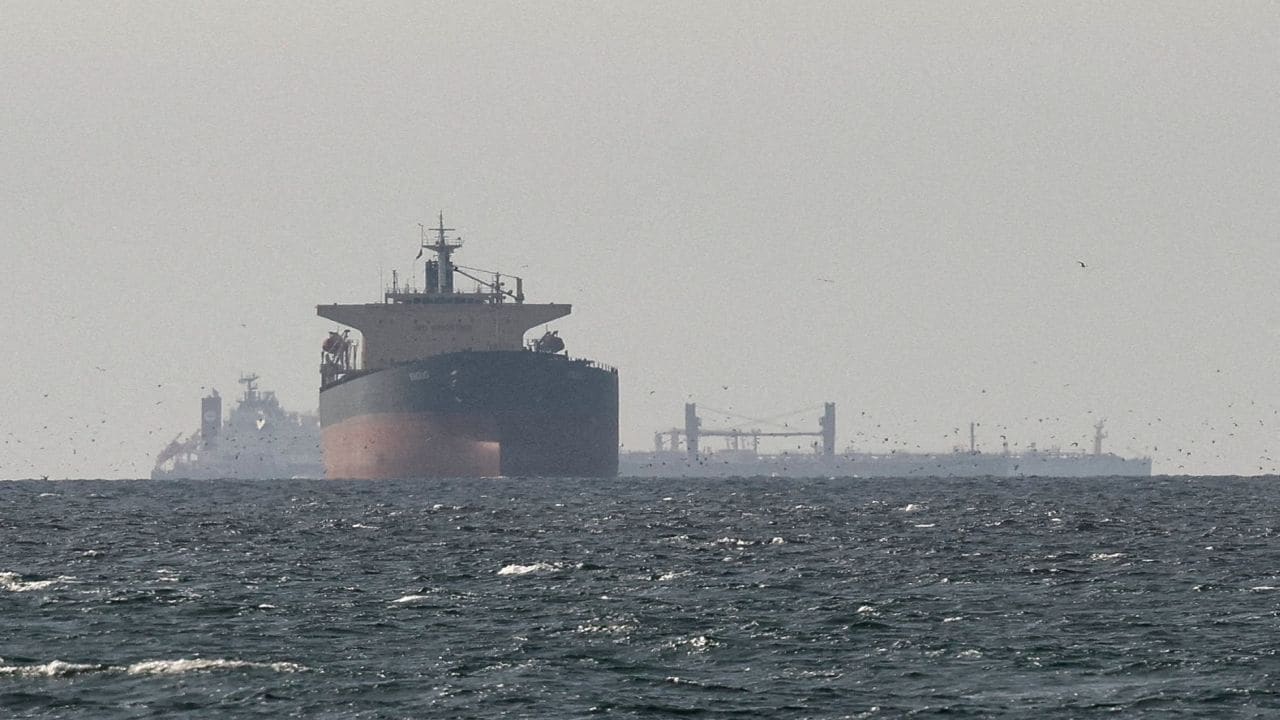
The targets are specific. They are the launch pads and storage facilities used by Iranian-backed groups to harass, burn, and sink the merchant vessels that keep the world’s heart beating. We often talk about global trade as an abstraction—a series of lines on a digital map or a fluctuating percentage on a stock ticker. It is not. It is a rusted hull full of grain. It is a crew of twenty sailors from the Philippines or Ukraine wondering if the horizon will suddenly bloom into a fireball.
The decision to greenlight these strikes was not made in a vacuum of "policy." It was made because the cost of inaction has become a physical weight. When a missile strikes a container ship in the Red Sea, the ripple effect doesn’t just stop at the waterline. It travels through the Suez Canal, bypasses the Mediterranean, and eventually arrives at your local supermarket in the form of a price tag that has jumped by twenty percent.
Consider the "Sovereign Base Areas." This is a term that sounds like dry legalese, but in practice, it is the ultimate geopolitical skeleton key. By allowing the U.S. to operate from Cyprus, the UK isn't just offering a runway; it is offering a shortcut. It bypasses the political minefields of Middle Eastern nations that might be hesitant to host offensive operations against Iran. It provides a sanctuary of Western jurisdiction just a short flight away from the volatile chokepoints of the Levant and the Gulf.
The Physics of the Threat
Why Iran? Why now? The technical reality is that the gap between a "militia" and a "modern military" has evaporated. In decades past, non-state actors used small arms and improvised explosives. Today, they possess anti-ship cruise missiles that utilize sophisticated guidance systems.
$$v = \sqrt{\frac{2 \cdot E_k}{m}}$$
The kinetic energy of a missile traveling at Mach 0.9 is enough to tear through the steel plates of a double-hulled tanker. When these weapons are supplied by a state power like Iran and handed to proxies, the "invisible stakes" become very visible, very quickly. The Red Sea has become a laboratory for a new kind of asymmetric warfare where a $20,000 drone can threaten a $2 billion destroyer or a $200 million cargo shipment.
The British approval for U.S. strikes is a recognition that the "defensive" posture—simply shooting down incoming threats—is a losing game of attrition. Each interceptor missile fired by a Western warship costs millions. The drones they are shooting down cost less than a used car. The math doesn't work. To stop the bleeding, you have to find the source. You have to strike the "archers" rather than just trying to catch the "arrows."
This shift in strategy brings us back to the tarmac at Akrotiri. The logistics of such an operation are a masterpiece of unseen coordination. It involves refueling tankers circling in the darkness, electronic warfare suites jamming local radar, and the constant, silent exchange of satellite data between Menwith Hill in Yorkshire and Creech Air Force Base in Nevada.
The Human Cost of High-Altitude Decisions
There is a man—let’s call him Elias—who runs a small cafe just outside the wire fence of the base. He has watched the Phantoms give way to Tornados, and the Tornados give way to Typhoons and F-35s. He knows the "mood" of the world by the frequency of the takeoffs. When the U.S. moves in, the air feels heavier. The jets are louder. The stakes are no longer local.
Elias doesn't read the white papers. He doesn't care about the "strategic depth" provided by the 1960 Treaty of Establishment. He cares that his windows rattle when the afterburners kick in at 3:00 AM. His quiet life is the collateral of a global security guarantee. He is a microcosm of the tension inherent in this deal: the safety of the world's shipping lanes is bought with the peace of a small island and the nerves of those who live there.
The UK government faces a delicate balancing act. On one hand, the Special Relationship with the U.S. requires a level of military intimacy that few other nations share. On the other, the UK must manage its own diplomatic standing in the Middle East. By allowing the U.S. to use the bases, Britain becomes an active participant in a conflict that many at home fear could spiral into a regional conflagration.
But what is the alternative? Imagine the silence of a world where the ships stop moving.
If the Red Sea closes, the world's energy supply is rerouted around the Cape of Good Hope. This adds weeks to journeys and millions to fuel costs. It isn't just about "big business." It is about the cost of heating a home in a London winter or the availability of medicine in a clinic in Leeds. The approval of these strikes is, in a cynical but real sense, a desperate attempt to keep the lights on.
The Invisible War of Attrition
Most of what happens next will never be seen on the evening news. The strikes will be precise, conducted under the cover of a moonless night. We will hear about "degraded capabilities" and "neutralized threats." These are sterilized words for a brutal reality. A missile site in a remote desert is reduced to charred sand and twisted rebar.
The technology involved is staggering. We are talking about munitions that can be guided through a specific window from a platform flying at 30,000 feet. The U.S. assets deployed to these bases likely include the MQ-9 Reaper or advanced strike fighters capable of "loitering"—hanging in the air like a digital vulture, waiting for a radar signature to blink into existence.
The irony of modern warfare is its cleanliness for the operator and its absolute devastation for the target. A pilot in a pressurized cockpit or a technician in a ground control station thousands of miles away makes a decision that changes the course of a nation's foreign policy.
The Iranian missile sites are not just random bunkers. They are part of a layered defense and offense strategy designed to project power far beyond Iran's borders. By targeting these sites from British soil, the U.S. and UK are sending a message that "sovereignty" is a two-way street. If you use your territory to threaten the global commons, your territory is no longer a sanctuary.
The Weight of the Signature
Somewhere in Whitehall, a pen moved across a document. That signature didn't just authorize a flight path; it tethered the fate of the British Isles a little more tightly to the volatile dynamics of the Persian Gulf. There is a sense of inevitability to it. When you own the ground that sits at the crossroads of three continents, you don't get to opt out of history.
The villagers in Cyprus will continue to watch the streaks of white light climb into the sky. They will hear the roar and feel the vibration in their tea cups. They understand, perhaps better than the voters in London or Washington, that peace is not the absence of noise. It is the result of a constant, loud, and often violent effort to keep the shadows at bay.
The real story isn't the approval itself. It is the realization that the world is much smaller than we thought. A missile launch in a desert we can’t find on a map is directly connected to the price of the bread on our table. The "British bases" are no longer just patches of land; they are the physical manifestation of a global nervous system. When one part of that system is pinched, the whole body reacts.
As the sun sets over Akrotiri, the flamingos remain in the salt lake, indifferent to the machines of war. The pilots check their instruments. The technicians finalize their coordinates. The world waits to see if this show of force will bring the promised stability or if it will simply be the first note in a much longer, darker symphony.
The jets move to the end of the runway. The heat shimmer blurs the horizon. For a moment, everything is still. Then, the sound returns—a thunder that shakes the earth and reminds everyone within earshot that the price of a connected world is a constant, watchful readiness to strike.
The silence that follows is never truly silent. It is just the sound of the world holding its breath.
Would you like me to analyze the historical precedent of RAF Akrotiri's use in previous Middle Eastern conflicts to see how this current approval compares?