The phone rings in an office overlooking the Vistula River, and for a moment, the music stops.
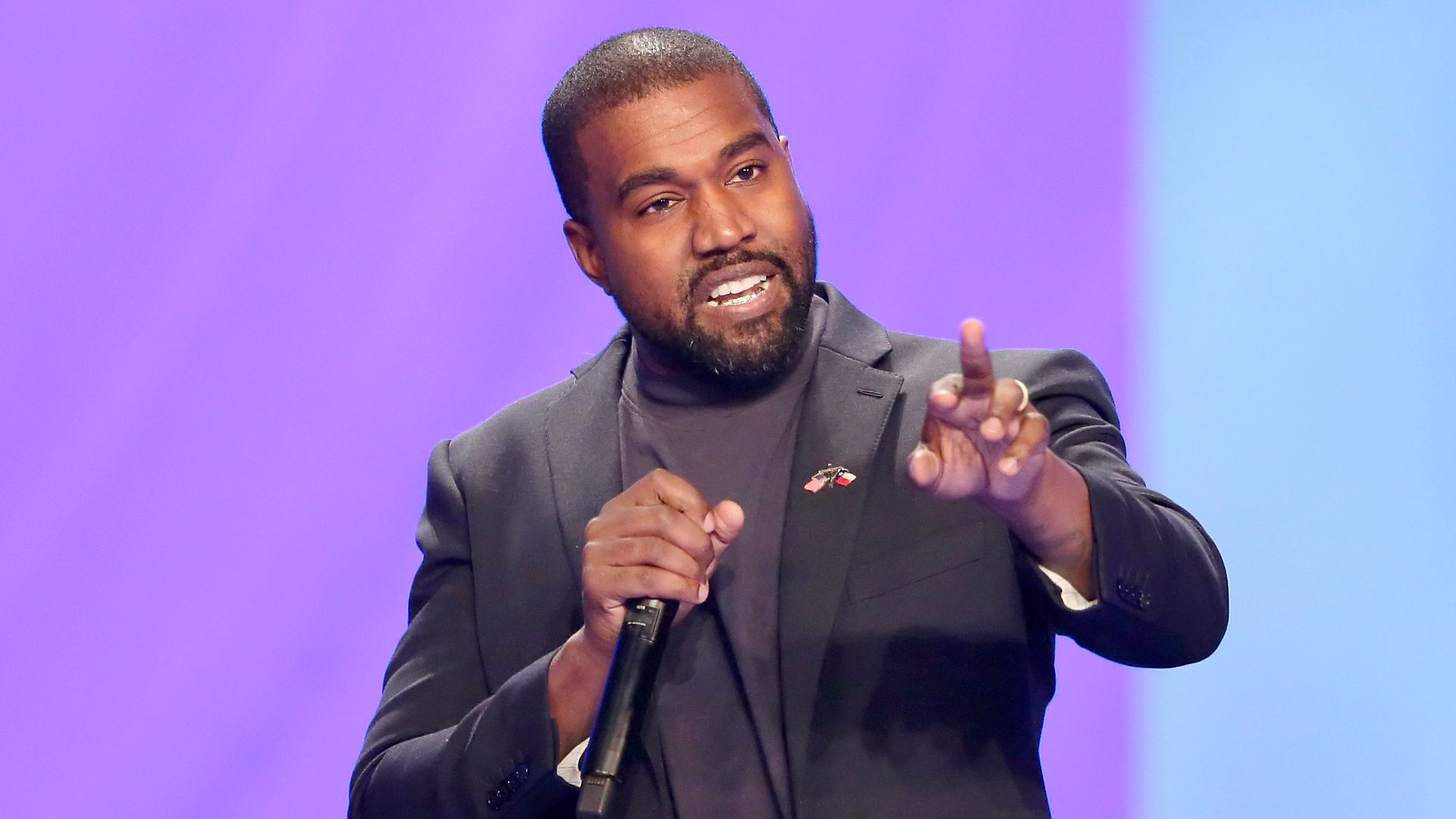
In Poland, a country where history isn’t just a subject in school but a physical weight you feel while walking through the cobblestone streets of Krakow or the reconstructed blocks of Warsaw, certain words carry a specific, lethal gravity. When the news broke that Kanye West—the man now legally known as Ye—was eyeing a massive concert in the heart of Poland, the reaction wasn't the usual frenzy for tickets. Instead, it was a collective intake of breath. A hesitation.
The concert is dead now. It was scrubbed from the calendar before the first stage light could even be bolted into place.
On the surface, this is a story about a musician losing a paycheck. In reality, it is a story about the invisible boundaries of a culture's soul. Poland is a nation that has spent the last eighty years meticulously rebuilding itself from the ashes of a hatred that Ye has, in recent years, flirted with, joked about, and flatly endorsed.
The Weight of a Spoken Word
Imagine a young promoter in Warsaw. Let’s call him Marek. Marek grew up on The College Dropout. He remembers the soul-sampled loops and the chipmunk-soul energy that defined his teenage years. To Marek, Kanye wasn't just an American rapper; he was a symbol of boundless ego and creative freedom.
But Marek also walks past the Umschlagplatz monument every morning on his way to work. He knows that words are the precursors to bricks, and bricks are the precursors to walls.
When Ye sat on a swivel chair in a broadcast studio and spoke favorably of the ideologies that once leveled Marek’s city to dust, he wasn't just "being provocative." He was poking at a wound that is still being stitched shut. The cancellation of the Polish show wasn't a corporate glitch or a scheduling conflict. It was a cultural rejection.
The facts are stark. Following a series of antisemitic outbursts that saw the rapper lose his partnership with Adidas and his standing in the upper echelons of the fashion world, his ability to tour internationally has withered. Poland became the latest "no." Local activists and civic leaders didn't see a genius coming to town; they saw a liability. They saw a man who had used his platform to breathe life into the very ghosts Poland has fought for decades to lay to rest.
The Mechanics of the Ghosting
When a superstar of this magnitude is sidelined, people often look for a "villain" in the form of a shadowy committee or a "cancel culture" mob. The truth is far more bureaucratic and far more devastating.
It starts with the venues.
A stadium manager looks at the insurance premiums. They look at the security requirements. They look at the potential for protests. Then they look at the brand. If the brand is "Ye," they no longer see a sold-out night of hits. They see a logistical nightmare. In Poland, the pushback wasn't just from the government; it was a grassroots refusal to provide a stage for a man who had praised the architect of their national trauma.
Consider the irony of the situation. Ye has spent his career demanding that the world look at him, hear him, and acknowledge his supremacy. Now, when he looks for a place to stand, the world is turning its back. It isn't a loud confrontation. It’s a quiet closing of doors.
The logistical collapse of the Polish date is a microcosm of a larger, global shunning. The "Vultures" listening parties, which served as a stripped-back version of a traditional concert, were an attempt to bypass the traditional machinery of the music industry. No band. No complex sets. Just a man, a mask, and a backing track. But even that requires a floor to stand on.
The Invisible Stakes
Why does it matter if one rapper can't play a show in Eastern Europe?
It matters because of what it says about the value of the "Geniuses' Pass." For twenty years, the public has issued Ye a pass for every erratic outburst, every strange fashion choice, and every public meltdown. We called it "art." We called it "mental health struggles." We called it "transgressive."
But there is a hard ceiling to what art can excuse.
When the rhetoric shifts from personal eccentricity to the dehumanization of an entire people, the pass is revoked. Poland’s refusal to host the show is a signal that the global community is finally drawing a line between the creator and the content of his character.
The human cost here isn't just the fans who won't get to hear "Runaway" live. The cost is the erosion of the bridge between the artist and the audience. There is a profound sadness in watching a man who once told us he could touch the sky become so grounded by his own words that he can’t find a stadium willing to hold him.
A Silence That Echoes
If you go to the site where the concert was rumored to happen, there is nothing but the sound of the wind and the distant hum of traffic. No crews are unloading crates. No fans are camping out in the cold.
This silence is the most honest review Ye has received in years.
It is a reminder that while you can own the masters to your songs, you do not own the right to the public's ears. Respect is a currency that, once spent, is nearly impossible to earn back in the same denominations.
Ye's career was built on the idea that he was a god in a world of mortals. But even gods need a temple. By choosing to align himself with the rhetoric of hate, he burned his own sanctuaries down. Now, he is a wanderer, looking for a city that doesn't remember what he said.
But Poland remembers.
The history of the 20th century is written in the soil of that country, and it is a history that does not tolerate the casual resurrection of monsters. The cancellation wasn't an act of censorship. It was an act of memory.
As the sun sets over Warsaw, the lights stay off at the stadium. The city moves on, undisturbed by the ego that tried to claim its space. There is a lesson in the emptiness of that stage—a lesson about the weight of words and the enduring power of a "no" delivered by a people who know exactly what happens when you let the wrong voice have the microphone.
The music didn't die. It just moved elsewhere, leaving a man alone with his mask in the dark.