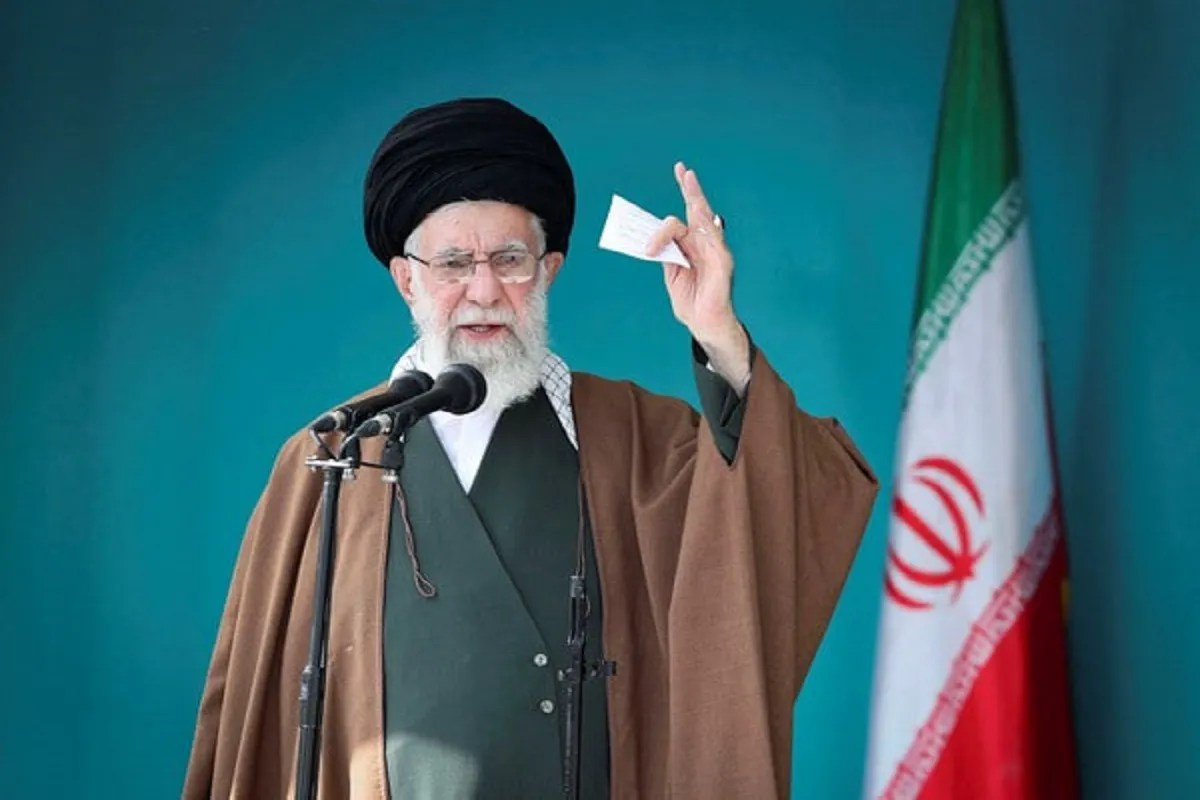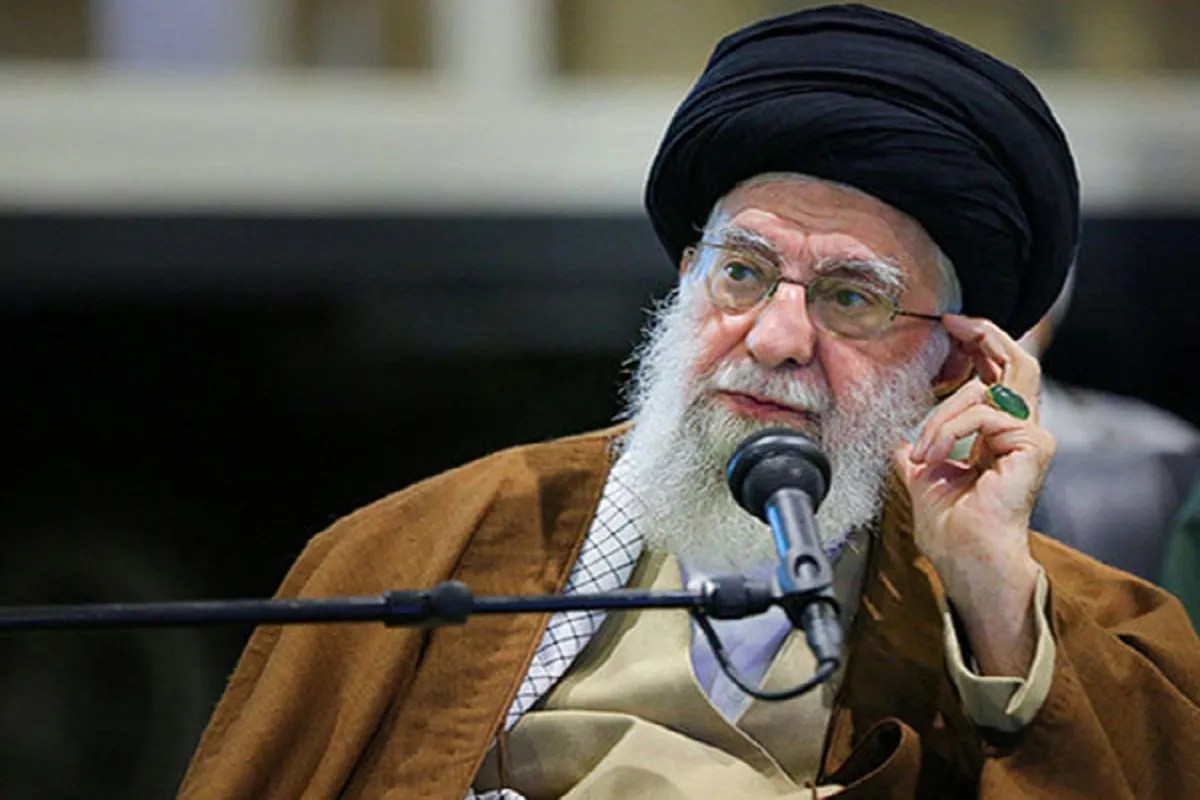
The air in Tehran does not just carry the scent of exhaust and toasted sangak bread anymore. It carries a weight. It is the kind of atmospheric pressure that precedes a massive tectonic shift, the sort of stillness that feels less like peace and more like a held breath. When the news filtered through the encrypted channels and the hushed whispers of the bazaars—the news that Ayatollah Ali Khamenei was gone—the city didn't scream. It shuddered.
For decades, one man's shadow stretched from the turquoise domes of Isfahan to the Mediterranean coast. Now, that shadow has retracted, leaving a vacuum so immense it threatens to pull the entire Middle East into its center. This isn't just a change in administration. It is the end of an era that defined the identity of a nation and the fears of its neighbors.
The Architect of the Long Shadow
To understand why the Iranian military is currently vibrating with a mix of grief and calculated fury, you have to look past the headlines of "war" and "retaliation." You have to look at the structure of power Khamenei built. He wasn't just a political figure. He was the keystone.
Imagine a bridge where every stone is designed to lean against one single, central block. If you remove that block, the bridge doesn't just stop being a bridge; it becomes a pile of lethal debris. The Iranian military, specifically the Islamic Revolutionary Guard Corps (IRGC), has spent forty years operating under the singular spiritual and strategic mandate of the Supreme Leader. Their identity is tethered to his survival. Without him, they are an army of orphans with an arsenal of ballistic missiles.
The rhetoric coming out of the military headquarters in the wake of his death isn't just "saber-rattling." It is the sound of a desperate institution trying to prove it still has a reason to exist. "We will not leave those who took our leader's life," they claim. But behind the iron-fisted declarations is a terrifying realization: the map they have used for forty years has just been burned.
The Invisible Stakes in the Rubble
While the generals shout into microphones, the reality on the ground is far more fragile. Consider a hypothetical family in Haifa, Israel, sitting in a reinforced "safe room" as the red alerts flash on their phones. They don't care about the theological nuances of the Velayat-e Faqih. They care about the fact that a leaderless, wounded Iranian military is more unpredictable than a stable one.
Conflict between Iran and Israel has long been described as a "shadow war." It was a game of chess played with proxies, cyber-attacks, and strategic assassinations. There were rules. There was a rhythm. But when the king is removed from the board mid-game, the remaining pieces don't always follow the rules of movement. They lash out.
The danger now isn't just a coordinated strike. It is the "fragmentation of command." When a central authority vanishes, local commanders—the ones sitting on drone launchpads in Lebanon or missile silos in the Iranian desert—might decide to write their own history.
The Psychology of the Cornered
Humans are wired to seek patterns. When a pattern as dominant as Khamenei’s rule disappears, the brain enters a state of high-arousal distress. For the Iranian hardliners, this distress manifests as aggression. They believe that any sign of hesitation will be interpreted as weakness by Israel and the West.
Israel, conversely, views this moment of transition as a window of extreme vulnerability—or extreme opportunity. The logic of the region is often "hit them while they are reeling." But hitting a reeling giant often ensures that it falls directly on top of you.
The statistics of this rivalry are staggering. We are talking about thousands of precision-guided munitions, sophisticated air defense systems like the Iron Dome and the Arrow-3, and a geographic expanse that ensures any "limited" strike will have "unlimited" consequences for global oil prices and shipping lanes.
Yet, the math of war fails to capture the human cost. It doesn't account for the student in Tehran who wanted to study engineering but now wonders if their university will still be standing in a month. It doesn't account for the reservist in Tel Aviv who just received a call-up notice while putting their toddler to bed. These are the people who actually pay the bill for the "fury" of the generals.
The Fragile Architecture of What Comes Next
History tells us that transitions of power in revolutionary states are rarely linear. They are jagged. They are bloody. The IRGC has stated they will find the "perpetrators," a term that points squarely at Jerusalem. This narrative serves a dual purpose: it provides a target for the public's grief and it justifies a tightening of internal control.
But revenge is a poor substitute for a succession plan.
The world is watching the borders, waiting for the first launch, the first jet to cross into contested airspace. But the real war is happening in the corridors of power in Tehran. It is a quiet, lethal struggle to see who will grab the mantle. Will it be a pragmatist looking to de-escalate and save the economy? Or will it be a true believer who thinks the only way to honor the fallen leader is to set the horizon on fire?
The tragedy of the Iran-Israel conflict is that it has become a self-sustaining engine. It feeds on its own ghosts. Every "martyr" created becomes the justification for the next "preemptive strike." We have reached a point where the machinery of war is so well-oiled that it can run without a driver.
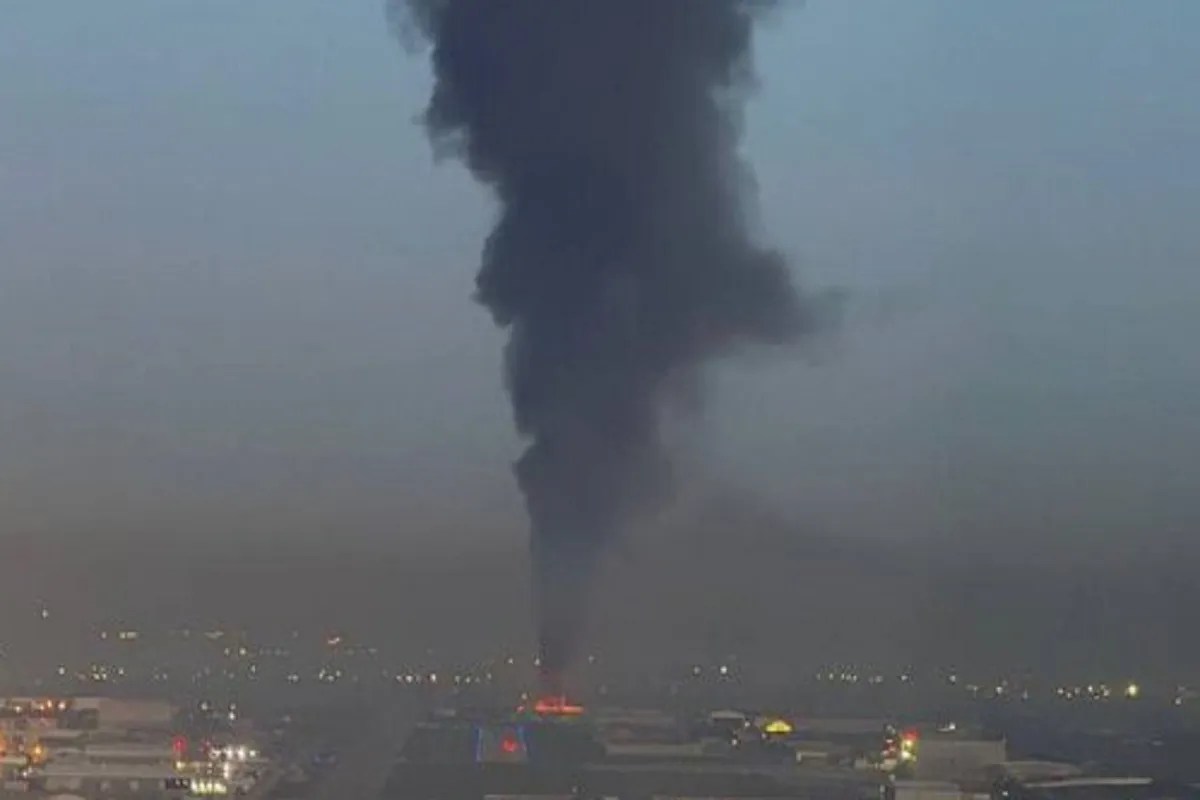
There is a specific kind of silence that follows a massive explosion. It is the sound of dust settling on broken glass. As the world waits for Iran’s next move, we are in that silence. The military’s vow to "not leave" those responsible is more than a threat; it is an admission that they don't know how to move forward without an enemy to blame.
The lights stay on in the situation rooms. The satellites continue their cold, mechanical voyeurism. Somewhere in the dark, a finger hovers over a button, not because of a grand strategy, but because the person behind it is terrified of what happens if they let go.
The sun will rise over the Alborz mountains tomorrow, regardless of who sits in the seat of power. It will shine on a region that has mastered the art of survival but forgotten the language of peace. The shadow is gone, but the darkness it left behind is deeper than anyone expected.