The Weight of an Afternoon
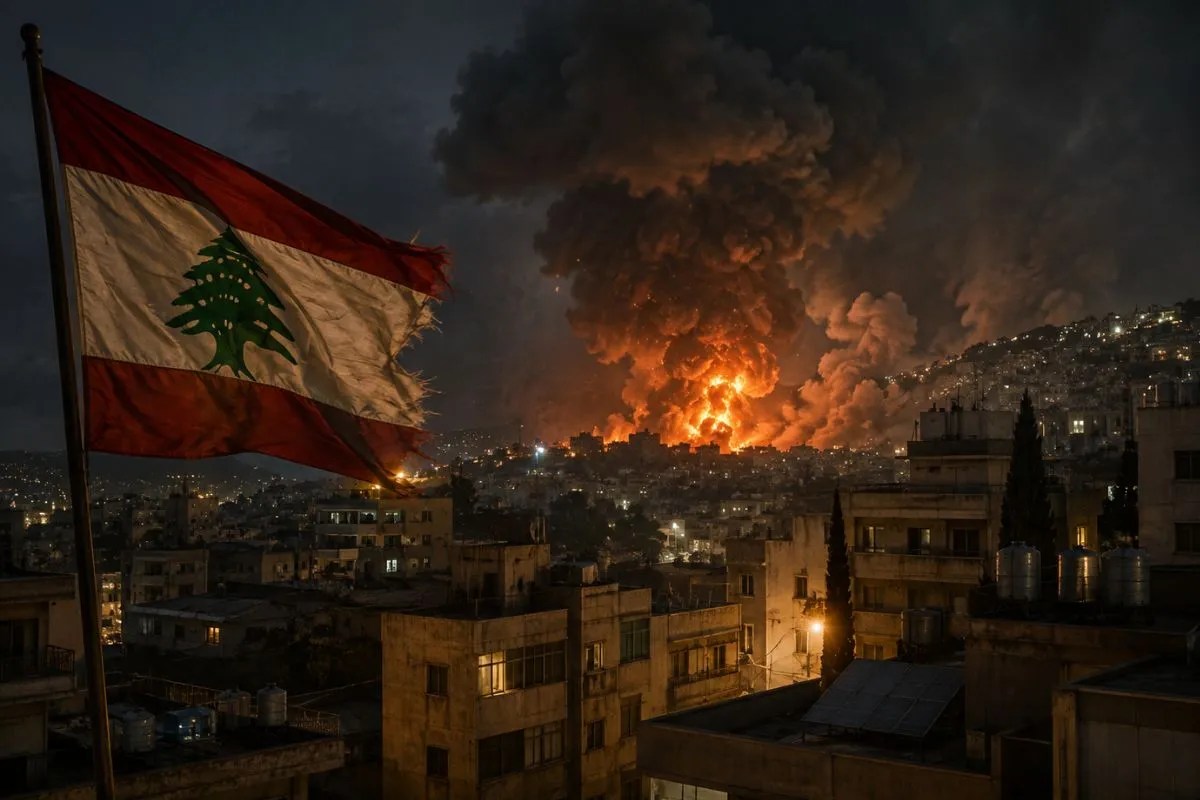
The air in southern Lebanon smells of dust and the bitter tang of crushed olive leaves. It is an ordinary afternoon, or it was, until the sound arrived. That tearing rip through the atmosphere that belongs to nothing natural.
In towns like Nabatieh and the surrounding green valleys, time is measured not by clocks, but by the space between sirens. People know the rhythm. They know the hurried footsteps on concrete steps, the sudden quiet of children pulled away from schoolyards, the heavy wooden doors bolted against a sky that feels increasingly hostile.
Yet, routine is a fragile armor.
Nine lives ended in a single stroke. Nine people who woke up with ordinary schedules, trivial worries, and plans for tomorrow. Bread to buy. Laundry to hang. A cousin to visit down the road.
Statistics are clean. They fit neatly into evening broadcasts. Nine dead. Dozens injured. An Israeli strike.
The reality is messy. It is blood soaked into linoleum. It is a pair of shoes sitting by a doorway, waiting for a wearer who is not coming back.
Anatomy of a Escalation
The map of southern Lebanon is crisscrossed by invisible lines of tension. Every hill holds a memory of past conflicts, every valley bears the scars of artillery shells from decades gone by. For months, the border has thrummed with a low, dangerous frequency. Cross-border fire has become the background music of existence for farmers who refuse to abandon their groves and shopkeepers who keep their shutters half-closed.
Consider what happens when deterrence fails. It does not happen in grand diplomatic chambers. It happens in seconds.
A drone hums high above the cloud cover. A missile leaves a rail miles away, invisible to the eye until the moment of impact. The physics of modern warfare are terrifyingly efficient. They reduce centuries of human history, culture, and daily life into coordinates on a digital display.
The strike in south Lebanon was not an isolated aberration. It is part of an escalating calculus that treats populated valleys as strategic chessboards. When military objectives intersect with civilian homes, the margin for error shrinks to zero. And zero is where people die.
Local hospitals, already strained by economic collapse and chronic shortages of medical supplies, suddenly found themselves overwhelmed. Ambulances navigated cratered roads under the constant threat of a follow-up attack. Doctors and nurses, running on adrenaline and exhaustion, confronted injuries that defy casual description.
This is the hidden cost of geopolitical friction. It is paid in the currency of emergency room waiting rooms and shuttered storefronts.
The Human Cost Behind the Headlines
Meet Fatima. She is a hypothetical composite of the mothers and daughters who populate these border villages, though her story is drawn from dozens of real testimonies gathered over months of conflict. Fatima runs a small bakery in a village just north of the Litani River. Her specialty is flatbread sprinkled with wild thyme, a taste of the earth her grandfather farmed.
Before the strike, Fatima worried about inflation. She worried about the price of flour and whether the electricity would stay on long enough for her ovens to reach baking temperature.
Now, her worries have shifted to the sound of the wind. Every sudden gust rattles the tin roof, and for a split second, her hands freeze over the dough. She knows her village is within range. She knows the evacuation warnings come late, if they come at all.
Why stay? Because leaving means abandoning everything. It means joining the swelling ranks of the displaced, sleeping in crowded school gymnasiums in Beirut, watching your life savings evaporate into rent for a damp basement apartment. Staying is a stubborn act of defiance. It is a refusal to let geography dictate your entire existence.
Yet, stubbornness has a limit. When nine neighbors are killed in a single afternoon, the calculus shifts. Suitcases are pulled down from dusty attics. Pets are gathered. Families look back one last time at the homes their ancestors built stone by stone.
The Broader Horizon
The international community watches through a lens of diplomatic caution. Statements are issued. Urging restraint. Expressing deep concern.
Words do not stop shrapnel.
The cycle of violence in the Levant is notoriously difficult to break because each act of retaliation creates a fresh grievance. Today’s strike becomes tomorrow’s justification for escalation. The logic of war feeds on itself, growing larger and more destructive with every iteration.
Diplomacy requires imagination. It requires leaders on all sides to step back from the precipice of absolute victory and accept the messy, unsatisfying compromises of peace. But while ambassadors argue over phrasing in air-conditioned rooms in New York and Geneva, the olive groves in south Lebanon continue to burn.
The smoke rises slowly over the hills, drifting toward the Mediterranean. Down below, in the quiet rubble of what was once a home, a single canary-yellow curtain flutters through a shattered window frame, caught in the draft of an indifferent breeze.