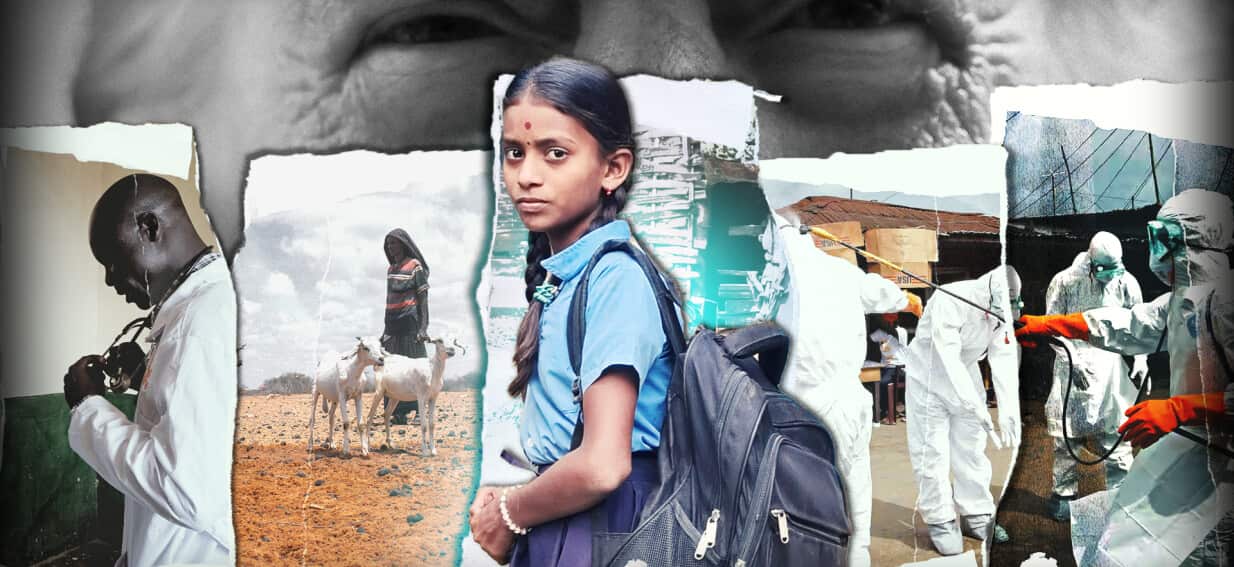
Thirteen-year-old Radhika Yadav had a plan. Living in Nepal, a country burdened with roughly five million child brides, she knew exactly what fate awaited her if she stayed home doing chores. But an intensive 11-month education program called UDAAN, run by CARE International, changed everything. It was a bridge back into formal schooling, a literal shield against early marriage, gender-based violence, and human trafficking.
Then the school doors locked overnight.
Radhika and 307 of her classmates were sent straight back to daily chores and economic vulnerability. This wasn't an isolated local failure. It was the direct fallout of a political earthquake thousands of miles away in Washington, DC. When the United States shuttered its primary foreign aid apparatus, grassroots programs protecting young girls globally evaporated.
The Shuttering of USAID and the Global Ripple Effect
The crisis traces back to early 2025, when United States President Donald Trump issued a sweeping freeze on foreign aid. By July 2025, the United States Agency for International Development (USAID) was officially dismantled. Its remaining pieces got shoved into the State Department, and roughly 83% of its active programs vanished.
For decades, USAID stood as the biggest single donor of humanitarian aid on Earth. When you yank that much capital out of the global humanitarian ecosystem, things break fast.
Organizations like CARE International rely on a complex web of funding where US aid often serves as the bedrock. Without it, targeted regional programs like UDAAN, which means "flight," crash. The immediate consequence is a stark return to traditional survival strategies in impoverished areas. When money dries up, families prioritize their sons' education, while daughters are pulled from classrooms to work or are married off to ease financial strain.
The Massive Scale of Defunding Foreign Education
Vague political slogans about putting America first sound clean in a debate hall, but they look messy on the ground. The Institute of Global Politics reports that about 12 million girls under 18 get married every year. Deep cuts to international aid don't just stall progress on this front, they actively reverse it. UNICEF USA estimates that severe pullbacks in global education funding risk driving an additional six million children completely out of school.
Without the safety net of an active classroom, girls face exponential risks, including:
- Forced early marriage before age 18.
- Increased vulnerability to domestic and gender-based violence.
- Cross-border trafficking into India and the Gulf states for forced domestic servitude.
A major 2025 study published in The Lancet calculated that over the past twenty years, USAID programs saved roughly 91.8 million lives, including 30 million children under five, by fighting malaria, HIV/AIDS, malnutrition, and tuberculosis. That same research warns that the current funding vacuum could trigger over 14 million preventable deaths by 2030.
The Immediate Reality on the Ground
Data lag is a real issue when analyzing global policy shifts. We don't always see the full statistical carnage right away. However, researchers are already tracking the immediate damage. Eeshani Kandpal, a senior fellow at the Center for Global Development (CGD), points out that disease outbreaks are turning far more lethal where US clean water and sanitation funding stopped. A recent cholera outbreak in sub-Saharan Africa proved significantly deadlier than identical outbreaks in previous years purely because the local health infrastructure lacked basic support.
For girls like Radhika, the damage isn't measured in macro-health statistics, but in lost agency. Her mother, Sundar Kala, recalled watching her daughter learn to read, write, and articulate her own future. Now, that confidence is gone, replaced by the looming dread of an early marriage.
If you want to combat this widening gap, direct your attention and capital toward non-governmental organizations that operate independently of federal grant cycles. Support groups like CARE International, regional grassroots literacy funds, and secular girls' education initiatives that don't rely heavily on US state department approval. Direct donor funding is currently the only operational alternative keeping these lights on.