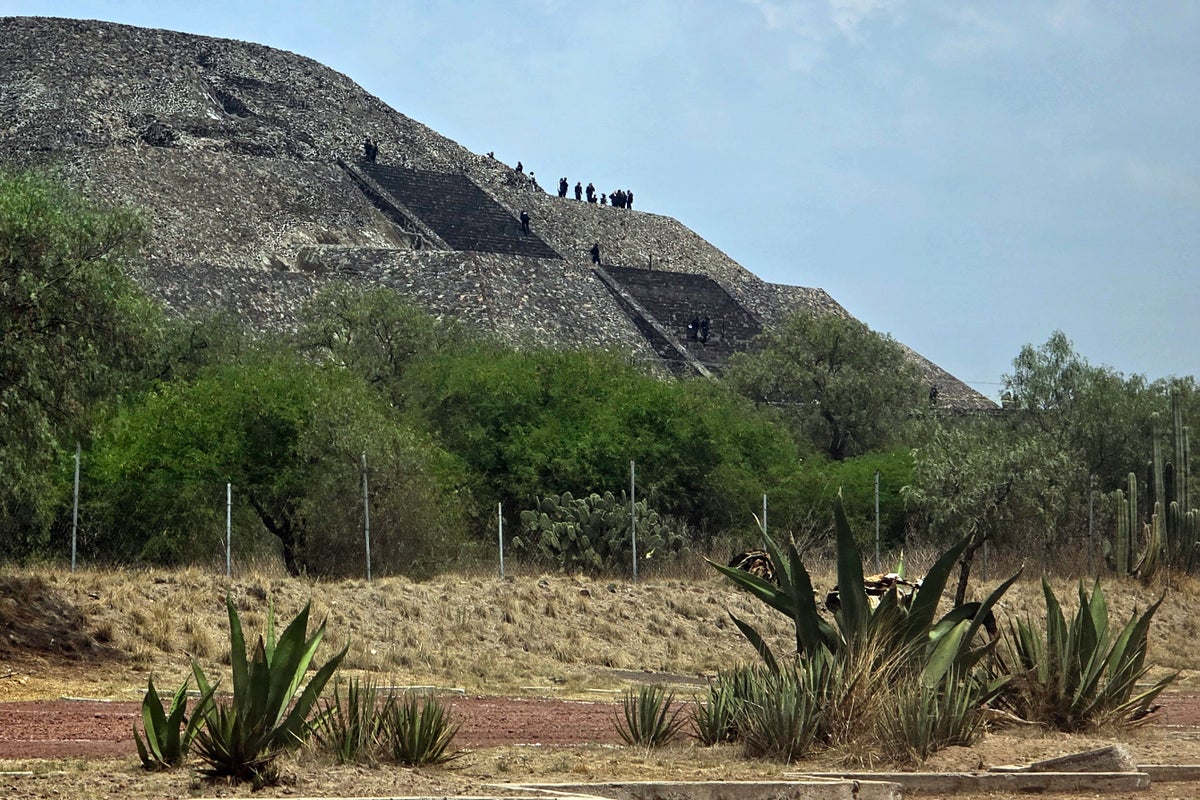
The dust at Teotihuacán has a specific scent. It is the smell of pulverized volcanic rock, baked for two millennia under a high-altitude sun that feels heavy on the shoulders. On a Tuesday afternoon, that dust usually settles on the shoes of thousands of tourists who have come to climb the Pyramid of the Moon, their breaths coming in short, ragged gasps as they fight the thin air of the Mexican highlands.
Then came the cracks.
They weren't the tectonic shifts of the earth. They were sharp. Metallic. The kind of sound that doesn't belong in a place dedicated to the gods of antiquity. When the first shot rang out near the Avenue of the Dead, the collective psyche of the crowd didn't register "gunfire" immediately. In a space so vast, the mind looks for a kinder explanation. A firecracker? A blown tire on a tour bus?
The screaming corrected the record.
The Shattered Silence
Imagine the physical sensation of a peaceful afternoon dissolving into a panicked blur. You are standing where priests once stood to observe the stars, and suddenly, the only thing that matters is the proximity of the nearest stone slab. This was the reality for hundreds of visitors when a gunman opened fire within the archaeological zone.
The statistics are cold: one tourist dead, six people injured. But statistics are a poor container for the terror of a mother shielding her child against a limestone wall that has stood since 100 BCE. The victim, a man who had traveled across borders to stand in the shadow of the Pyramid of the Sun, became a permanent part of the site’s grim history. He wasn't a data point. He was someone who had likely spent the morning complaining about the price of bottled water or marveling at the sheer scale of the Temple of Quetzalcoatl.
Blood on the basalt. It is an image the Mexican Ministry of Tourism spends millions of dollars trying to prevent, yet here it was, pooling in the grooves of a World Heritage site.
The Invisible Stakes of a Sacred Space
Mexico has long wrestled with a dual identity. It is a land of staggering beauty and profound historical depth, yet it is shadowed by a persistent, grinding insecurity. Usually, the violence stays in the periphery—the border towns, the mountain passes, the late-night stretches of highway. Teotihuacán was supposed to be a sanctuary.
When a gunman enters a space like this, the "invisible stakes" aren't just about physical safety. They are about the desecration of the few remaining neutral zones. If you cannot be safe at the feet of the pyramids—monuments designed to connect the human to the divine—then the concept of a "safe zone" has effectively vanished.
Consider the ripple effect. A single act of violence in a global landmark creates a geopolitical tremor. It isn't just about one tragic death; it’s about the sudden, sharp realization that the "tourist bubble" is a myth. For the six injured survivors, the trauma isn't something that ends when the bandages come off. It is the permanent loss of the feeling that the world is a place worth exploring without fear.
The Physics of a Panic
When the shooting began, the geography of Teotihuacán changed. The wide-open plazas, designed to inspire awe, suddenly became "kill zones" with nowhere to hide. The steep stairs of the pyramids, usually a challenge of endurance, became a terrifying obstacle.
Witnesses described a stampede. It is a primal, animalistic response. In that moment, the "traveler" disappears and is replaced by the "survivor."
- The First Phase: Denial. The brain refuses to accept that a vacation has turned into a combat zone.
- The Second Phase: Recognition. The sight of someone falling or the smell of gunpowder breaks the spell.
- The Third Phase: Flight. Logic leaves the building. People run until their lungs burn, often in directions that offer no real protection.
The gunmen—reportedly part of a local dispute that spilled into the park—demonstrated a callousness that is hard to square with the setting. To fire weapons in a place that serves as the literal foundation of a nation’s history suggests a total breakdown of social contract. It’s a reminder that a historical site is only as peaceful as the contemporary world surrounding it.
The Fragility of the Narrative
We tell ourselves stories about travel. We tell ourselves that by visiting the ancient world, we are stepping out of the chaos of the modern one. We go to Teotihuacán to feel small, to feel the weight of centuries, and to gain perspective on our own fleeting lives.
The tragedy of this event is that it forces the modern world back into the frame. You cannot look at the Sun Pyramid and think of the Aztecs or the Teotihuacanos when you are looking for the nearest exit. The narrative of "cultural enrichment" is hijacked by the narrative of "survival."
Local authorities were quick to flood the area with National Guard troops after the incident. They set up perimeters. They checked IDs. They did all the things that make a place feel secure while simultaneously reminding you exactly how insecure it actually is. The presence of camouflage and assault rifles against the backdrop of ancient ruins creates a jarring, dystopian aesthetic. It is the visual representation of a wound that won't heal.
The Long Road Back to the Sun
Security experts often talk about "hardness" versus "softness." A tourist site is a "soft target." You cannot turn Teotihuacán into a fortress without destroying the very reason people visit. You cannot put a metal detector at the base of every staircase or a guard on every terrace of the Avenue of the Dead.
The solution, then, isn't just more boots on the ground. It’s a deeper, more painful reckoning with why the violence reached the gates in the first place. The gunman wasn't a ghost from the past; he was a product of the present.
For the families of the victims, the pyramids will never be a wonder of the world. They will be the place where the world ended. For the rest of us, it is a sobering prompt to look closer at the places we visit. We are guests in these spaces, and sometimes, we are guests in a house that is quietly on fire.
The sun eventually set over the Valley of Mexico that evening, casting long, gold-red shadows across the stone. The site was cleared. The tape was put up. The dust settled. But the silence that followed wasn't the peaceful quiet of a museum after hours. It was the heavy, expectant silence of a place that had seen a new kind of sacrifice, one that no ancient god ever demanded.
The wind still whistles through the cracks in the stone, but now, if you listen closely, it sounds a lot like a warning.

:strip_icc()/pic2513216.jpg)