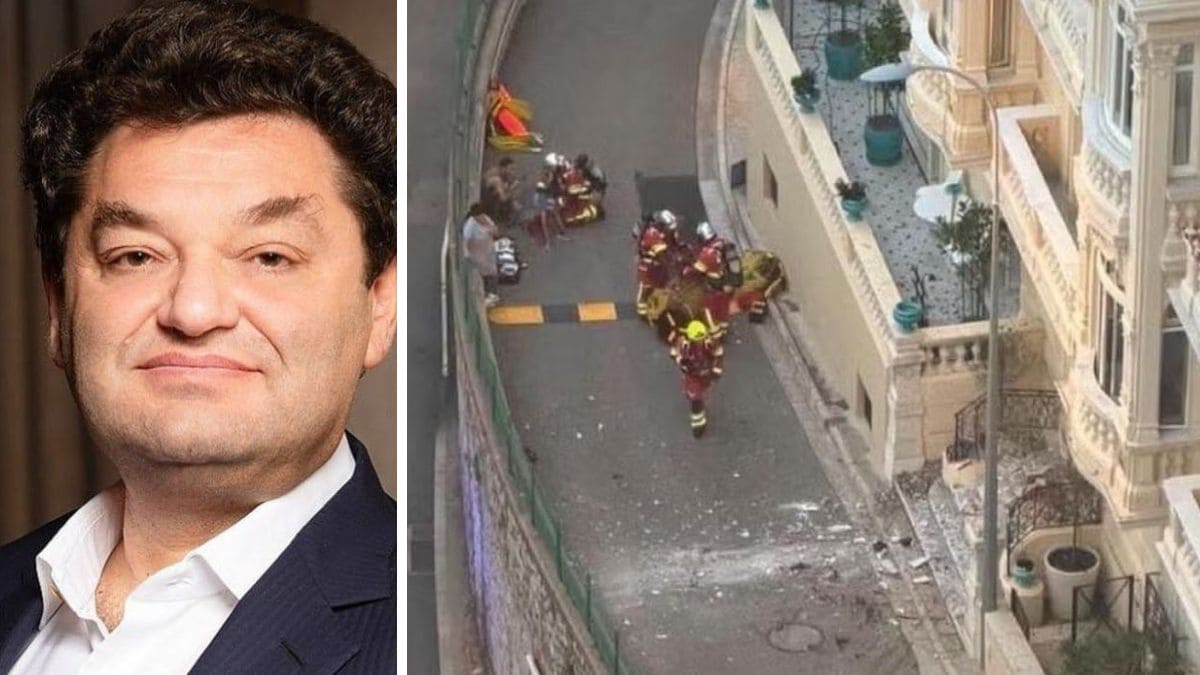
On June 29, 2026, a backpack packed with bolts and metal buckshot detonated outside a residential building on Rue Révérend-Père-Louis-Frolla in Monaco, critically injuring Ukrainian billionaire Vadim Ermolaev and his partner. The blast, which marks the first major suspected terrorist attack in the history of the ultra-secure principality, thrust the complex and dangerous world of exiled Ukrainian oligarchs into the European spotlight. Investigators are hunting for a suspect caught on security footage fleeing toward the French border. The assassination attempt highlights the severe risks faced by expatriate tycoons caught between shifting domestic political dynamics, heavy economic sanctions, and the fallout of geopolitical conflict.
Monaco has long served as a sanctuary for the global elite, a place where immense wealth buys absolute privacy and physical safety. That illusion of safety shattered at 9 p.m. when the shrapnel-loaded explosive device tore through the entrance hall of an upscale apartment complex. The sheer violence of the attack shocked a community accustomed to low crime and heavy police surveillance. Emergency personnel rushed Ermolaev and his partner to the CHU Pasteur hospital in Nice with life-threatening injuries, while a teenage boy, believed to be Ermolaev's son, was treated for less severe wounds. The targeted nature of the bombing indicates a calculated operation rather than a random act of public violence.
The Making of a Dnipro Tycoon
To understand why someone would plant a bomb at Ermolaev’s doorstep, one must trace his rise through the turbulent post-Soviet economic environment of eastern Ukraine. Ermolaev built his massive empire in Dnipro, an industrial powerhouse and critical logistics hub. Operating under his parent company, Alef, he transformed the local skyline through commercial real estate developments, constructing dominant shopping malls, luxury business complexes, and massive residential towers like the iconic Most-City center and the multi-phase Brama complex.
By the mid-2010s, Forbes ranked Ermolaev among the top twenty-five richest people in Ukraine, with a net worth clearing hundreds of millions of dollars. His business operations were not limited to real estate. He expanded into asset management, manufacturing, and consumer goods, establishing a particularly lucrative footprint in the production of alcoholic beverages. In a region where economic power translates directly into political influence, Ermolaev established himself as one of the most powerful power brokers in eastern Ukraine, a position that required constant negotiation with various political factions and cross-border commercial networks.
The Fractured Loyalties of Eastern Elites
The outbreak of hostilities in 2014 exposed the delicate balancing act maintained by wealthy figures in eastern Ukraine. Industrialists in regions like Dnipropetrovsk, Donetsk, and Luhansk frequently straddled the line between Kyiv and Moscow, maintaining deep commercial ties with Russian enterprises while relying on the Ukrainian legal framework to protect their domestic assets. When Russia annexed Crimea in 2014, many businesses faced a stark choice between abandoning their investments or complying with the administrative demands of the occupying authorities.
Ermolaev chose to protect his investments. His alcohol production facilities located in Crimea were re-registered under Russian regulatory authorities to ensure continuous operations and market access. While this move preserved his immediate revenue streams, it created a paper trail that ultimately drew severe scrutiny from Ukrainian intelligence services and nationalist politicians. For years, critics argued that continuing to operate and pay taxes within Russian-controlled territories constituted a form of economic collaboration, a charge that grew increasingly dangerous as geopolitical tensions escalated toward full-scale war.
The Monaco Battalion Backlash
The full-scale invasion of Ukraine in 2022 drastically altered the domestic tolerance for oligarchic maneuvers. As millions of citizens faced mobilization and devastating bombardment, a significant contingent of the country's ultra-wealthy relocated to luxurious enclaves in Western Europe. This phenomenon was thoroughly documented by Ukrainian investigative journalists, who coined the term "Monaco Battalion" to describe the politicians, tycoons, and influential figures living lavishly on the French Riviera while their home country fought for survival.
+--------------------------------------------------------------+
|                THE EXILE OF VADIM ERMOLAEV                   |
+--------------------------------------------------------------+
| 2019: Renounces Ukrainian citizenship for Cypriot passport.  |
| 2022: Relocates to Monaco following full-scale invasion.      |
| 2023: Targeted with official asset sanctions by Kyiv.       |
| 2025: Son Artur detained in Cyprus via Interpol request.    |
| 2026: Critically injured in Monaco backpack bombing.         |
+--------------------------------------------------------------+
Ermolaev was prominently featured in these investigations. Having left Ukraine for Monaco in the opening phase of the 2022 invasion, he attempted to counter the negative publicity by highlighting the severe financial damage his empire had sustained, including the destruction of his private aircraft and the systematic looting of his commercial properties in Russian-occupied zones. He further claimed to have channeled significant financial resources into humanitarian initiatives and defensive procurement programs supporting the Ukrainian war effort. These defensive public relations efforts did little to soften his reputation among domestic critics who viewed his physical absence and immense comfort abroad as a betrayal of civic duty.
Capital Flight and Citizenship Maneuvers
Long before the current conflict brought intense public scrutiny, Ermolaev sought to insulate himself from the volatile Ukrainian legal and political system. In 2019, he officially renounced his Ukrainian citizenship, obtaining a passport from Cyprus through an investment program. He later justified this decision by citing a profound lack of faith in the objectivity of the Ukrainian judiciary and tax collection apparatus, arguing that international status offered a necessary layer of protection against state-sponsored asset grabs and corporate raiding.
This citizenship transition did not insulate him from the shifting political realities in Kyiv. In December 2023, President Volodymyr Zelensky signed a decree imposing sweeping sanctions against Ermolaev, freezing his domestic corporate assets, blocking financial transactions, and revoking his remaining business licenses inside Ukraine. The justification for these measures centered directly on the ongoing operations of his Crimean corporate entities. By penalizing figures who maintained any form of economic ties to Russian-administered territories, the Ukrainian government sent a clear signal that the era of political neutrality and dual-loyalty business models was over.
The Multiple Tracks of Investigation
Monaco authorities, collaborating closely with French counter-terrorism units and intelligence agencies, are exploring several distinct motives for the bombing. The sophistication of the device and the precise execution of the attack suggest an operation planned by experienced actors rather than an uncoordinated individual.
Domestic Retribution and State-Sanctioned Targeting
One line of inquiry focuses on the potential involvement of radical domestic actors or state-aligned operatives from Ukraine. The public anger surrounding the "Monaco Battalion" has created an environment where expatriate tycoons are increasingly viewed as legitimate targets for direct action. Given that Ermolaev was officially sanctioned and viewed by many as an economic collaborator due to his Crimean businesses, investigators must consider whether the hit was intended as a permanent solution to an perceived traitor, or a warning to other wealthy exiles who believe their fortunes shield them from the consequences of domestic conflict.
Russian Operational Interference
Conversely, Russian intelligence services possess a well-documented history of executing high-profile liquidations and sabotage operations across Western Europe. Oligarchs who attempt to cross the divide by funding Ukrainian defense initiatives or attempting to salvage their Western reputations frequently find themselves targeted by Kremlin-aligned networks. If Ermolaev’s financial contributions to Ukrainian defense forces were deemed substantial enough to interfere with Russian objectives, or if he possessed sensitive logistical intelligence regarding Eastern European industrial networks, he would easily fit the profile of an individual marked for elimination by external operatives.
Corporate Settlement and Financial Extortion
Beyond the broader geopolitical conflict, the attack may stem from intense, localized corporate warfare. The business environment in eastern Ukraine has historically been characterized by aggressive hostile takeovers, violent enforcement of debt collections, and deep-seated rivalries among competing industrial groups. The pressure cooker of the current war has exacerbated these tensions, as corporate assets are seized, destroyed, or redistributed under martial law. A financial dispute originating in the redistribution of Dnipro real estate or the disruption of international supply chains could easily escalate to physical violence.
This corporate angle is further complicated by recent legal pressures facing Ermolaev's immediate family. In late 2025, his son Artur was detained in Cyprus following an Interpol red notice issued at the request of international investigators. The detention was reportedly connected to the operation of unauthorized financial centers and illicit digital entities, with extradition proceedings initiated by authorities in Estonia. The intersection of international law enforcement actions, massive family fortunes, and shadow financial networks creates an environment ripe for extortion, betrayal, and violent score-settling among criminal syndicates or aggrieved business partners.
The Cracking Shield of Western Europe
The Monaco bombing demonstrates that the geographical boundaries that once separated the zone of conflict from the playgrounds of the global financial elite are rapidly dissolving. For decades, European capitals and luxury coastal resorts operated under the assumption that capital flight brought only economic benefits, ignoring the complex political baggage and security vulnerabilities that accompany exiled billionaires. The presence of heavily sanctioned individuals living openly in neutral European territories creates a major security dilemma for local governments tasked with maintaining public order.
Monaco’s Minister of State, Christophe Mirmand, and Prince Albert II have both emphasized that the security of the principality remains an absolute priority, mobilizing extensive state resources to track the suspect who fled across the French border. Yet, the physical reality of European border integration makes containing this brand of imported violence exceptionally difficult. A operative can place an explosive device, walk across an open border checkpoint into a neighboring jurisdiction, and disappear into a major transport hub within a matter of hours.
The attack on Vadim Ermolaev will likely force a major reassessment of how Western European jurisdictions monitor, protect, and regulate wealthy exiles from conflict zones. As domestic pressures inside Ukraine intensify and international intelligence operations become more aggressive, the luxury villas and secure apartment buildings of the Mediterranean coast are no longer guaranteed sanctuaries. The war has shown that it can expand its perimeter, transforming the quiet streets of Monaco into the latest arena for a brutal, undeclared conflict.