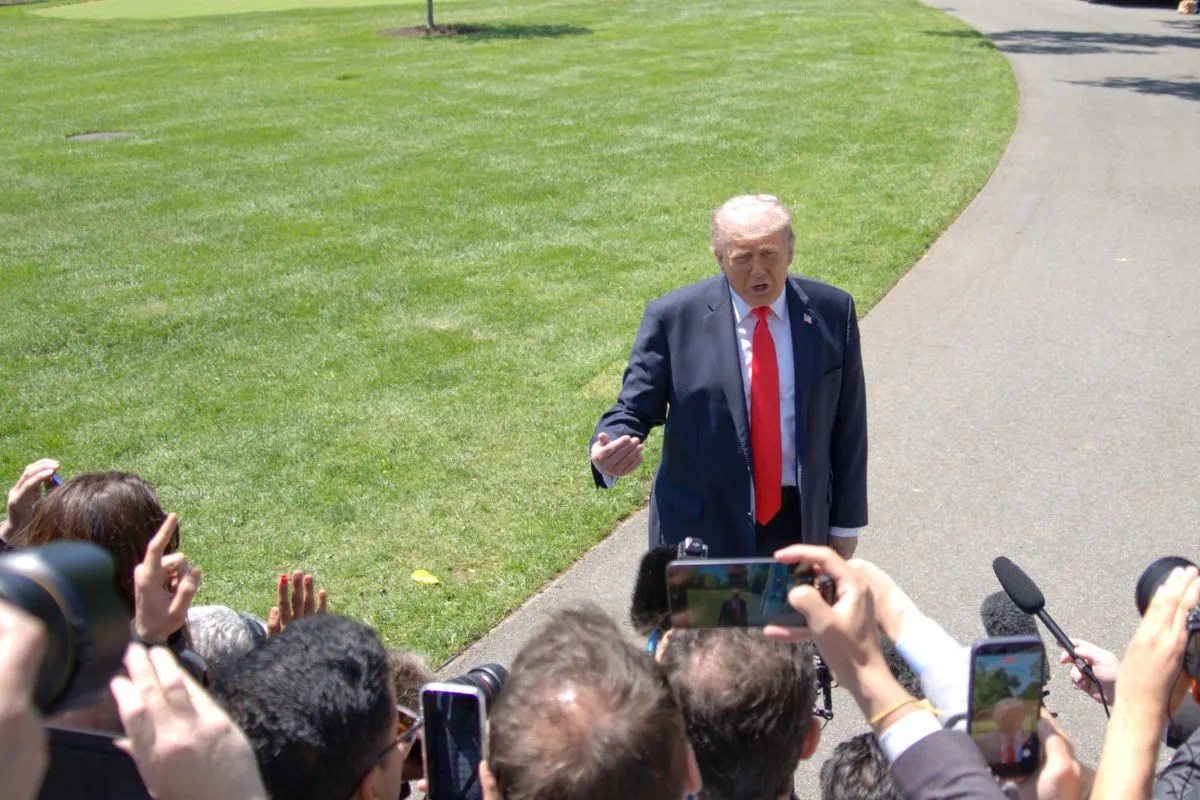
The air outside the venue smelled of hot asphalt, diesel exhaust, and the unmistakable electricity of a crowd waiting to be electrified. Thousands of supporters had gathered under a harsh afternoon sun, their pockets heavy with campaign buttons, their minds fixed on the speeches to come. They stood shoulder to shoulder, a shifting organism of red hats and raised banners, moving as one cohesive mass toward the security checkpoints.
Security lines are strange spaces. They compress diverse human lives into a single, anxious queue. You empty your pockets into plastic bins. You take off your belt. You trust that the strangers standing beside you have shared your desire for peace, for order, for a safe exchange of ideas.
Then, the rhythm stutters.
A face changes behind a metal detector. A hand twitches on a radio. In a matter of seconds, the invisible architecture of protection snaps into high-alert focus.
This was not a movie scene. This was Coachella, California, right outside a high-profile fundraising event featuring Donald Trump. And the man pulled from the line that afternoon was carrying more than just tickets and a political opinion.
His name was Vem Miller. He drove a black SUV, sleek and unassuming, into a checkpoint where law enforcement officers were doing the quiet, exhausting work of guarding public safety. What they found inside that vehicle turned a routine security check into a chilling national headline. A loaded shotgun, a loaded handgun, and a cache of ammunition. More than that, authorities later revealed a trove of unregistered firearms and forged documents recovered from his home.
Consider what happens next in the quiet rooms of federal and local investigators. The flashing lights fade, the media vans scatter, but the questions linger like smoke in an empty room. How close did we come to a catastrophe? How porous is the line between political passion and lethal violence?
We live in an era where political friction feels less like a disagreement and more like a fracture. Every rally, every fundraiser, every public gathering carries a hidden weight. The people who stand in these crowds are mothers, fathers, retirees, students—ordinary citizens looking for a voice that speaks to their grievances. They do not think about ballistics. They think about belonging.
Yet, beneath that search for community runs an underground current of paranoia.
When officers in Riverside County detained Miller, they weren't just stopping an armed individual; they were interrupting a trajectory. Local Sheriff Chad Bianco later spoke to reporters, noting that deputies likely prevented a third assassination attempt against the former president within a turbulent election cycle. Think about the sheer weight of that statement. Three attempts. A target etched onto the back of a public figure, turning everyday security into a high-stakes chess match where failure means a funeral.
I remember standing in a crowded press pen years ago, watching the Secret Service sweep a venue long before the doors opened. The public sees the handshakes, the roaring applause, the confetti falling from the ceiling. They rarely see the bomb-sniffing dogs pacing the perimeter or the sniper silhouettes etched against the skyline. They do not see the invisible barrier of sweat and caffeine that law enforcement maintains every single hour of the day.
Miller’s background adds a dizzying layer to an already unsettling puzzle. He was a registered Republican, a local figure, someone who moved through certain circles with apparent ease. He was not an outsider wearing a neon sign of malice. He was part of the landscape. And that is precisely what keeps security details awake at night. The threat is no longer a distant shadow hiding in a foreign capital. The threat is a neighbor driving a standard SUV through a public checkpoint.
When the news broke, the initial reaction across social media was predictable. Outrage, partisan point-scoring, conspiracy theories blooming overnight like toxic weeds after a summer rain. One side pointed fingers; the other retreated into defensive skepticism.
But beneath the partisan noise lies a deeper human tragedy.
We are failing to process the normalization of political rage. When a man packs high-capacity weaponry and drives toward a crowd of thousands, he is no longer participating in a democratic exercise. He is operating in a state of ideological rupture. Something inside his worldview broke, snapping the tether that ties individuals to a shared social contract.
Law enforcement moved swiftly. That is the comforting part of the story. The system worked. The checkpoint held. The weapon never cleared the threshold.
Yet comfort feels fragile when you look at the broader picture. How many more checkpoints are out there? How many individuals are sitting in suburban living rooms right now, cleaning a firearm while nursing a grievance fed to them by 24-hour algorithms and partisan echo chambers?
The fundraising event in Coachella went on. Speeches were delivered. Applause echoed across the desert floor. The crowd dispersed into the cool evening air, most of them entirely unaware of how close the afternoon came to tearing open the national consciousness once again.
We walk through these public spaces trusting in invisible shields. We trust the badge, the metal detector, the alert eye of a deputy scanning a license plate. But shields can only do so much when the rot is cultural rather than structural.
The SUV is parked in an impound lot now. The weapons are cataloged in an evidence locker. The suspect faces federal and local scrutiny. But the shadow he cast over that California desert remains, stretching long and dark across a nation trying desperately to remember how to disagree without destroying itself.