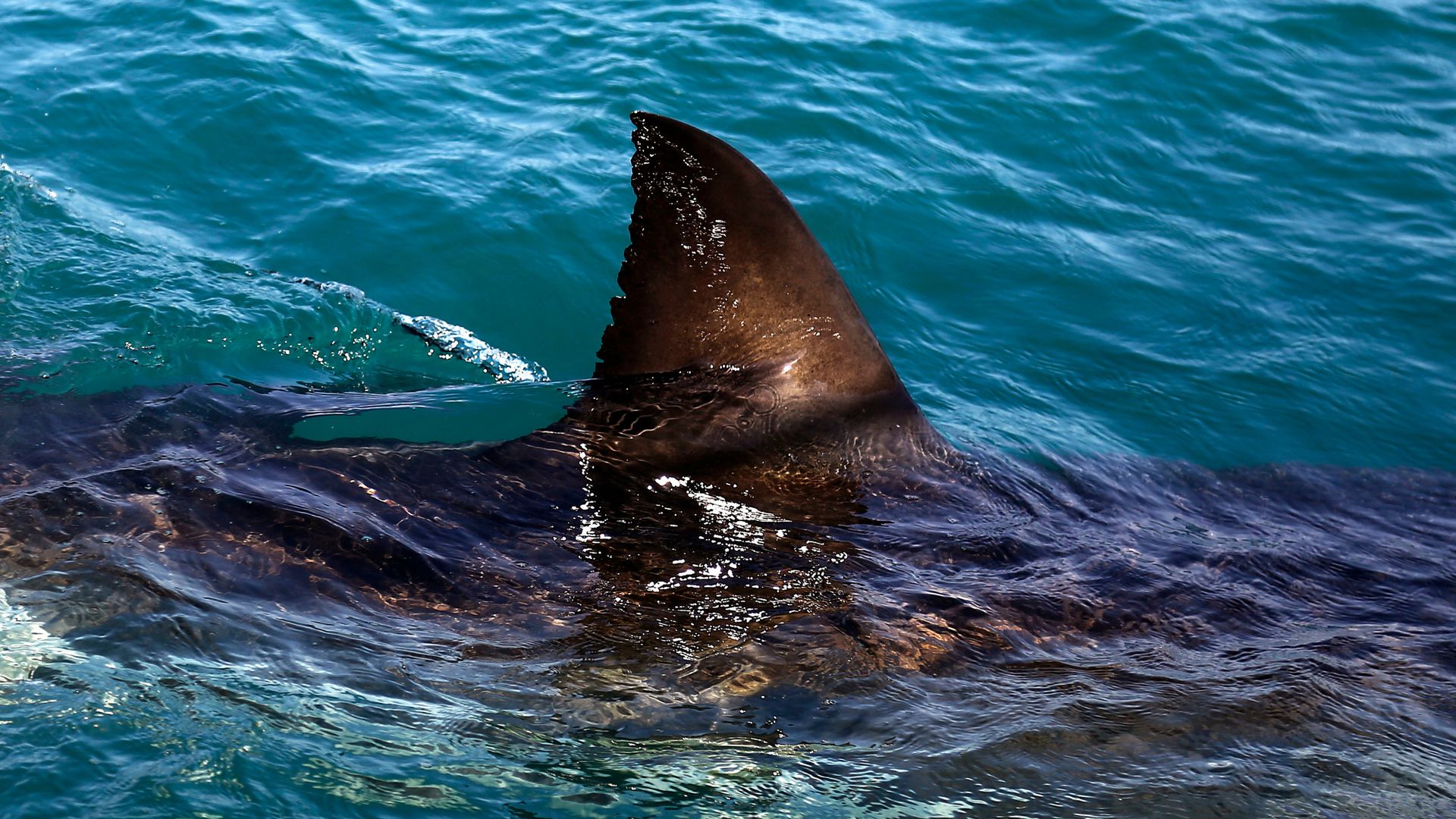
Picture an eighty-foot greyhound of the ocean lunging straight out of a choppy swell off Pembrokeshire while dolphins surf its bow wave.
That isn't a scene from a high-budget nature documentary filmed in the subarctic. It's real drone footage captured off the Welsh coast by local videographer Rhys Morgan during a boat outing, showing a giant fin whale expanding its throat pleats to gulp down massive mouthfuls of water and prey. Just weeks earlier, Sea Trust Wales volunteers aboard the Cartlet Lady out of Milford Haven reported seeing up to a dozen fin whales offshore alongside dolphins and a feeding frenzy of tuna.
Whenever clips like this go viral, people ask the same two questions. Are fin whales actually supposed to be hanging around Wales? And how do you tell a fin whale apart from a humpback or a minke when a dark back breaches for three seconds?
What Makes Fin Whale Sightings Off Wales Such a Big Deal
Fin whales are the second-largest animals on Earth, trailing only blue whales. Adults routinely stretch past 75 to 80 feet and weigh up to roughly 77 short tons. Yet unlike humpbacks, which put on acrobatic tail slaps and pectoral fin shows near shore, fin whales are built for speed and open-water stamina. Marine biologists often call them the greyhounds of the sea because they can cruise steadily and sprint hard when chasing schooling fish or krill.
Seeing one feeding off Wales matters for a couple of reasons. First, sightings in British waters are still uncommon compared to places like Iceland or the deep North Atlantic. Second, timing and location raise interesting ecological questions. As Bangor University marine ecologist Dr. Marianna Chimenti noted regarding Morgan's footage, catching a fin whale surface-feeding near coastal waters is a rare stroke of luck, especially at a time of year when many whales might be expected to be on the move.
Honestly, viral clips can make rare marine encounters look like a routine weekend attraction. They aren't. The Celtic Sea and Pembrokeshire waters host rich seasonal food webs, including dolphins, seabirds, and large pelagic fish, so big predators do follow prey into productive waters. Still, spotting an endangered giant expanding its pleated throat in clear aerial video gives anyone watching a rare window into how these animals hunt.
How Lunge Feeding Works When a Giant Opens Wide
Watch closely when a fin whale feeds. It doesn't lazily skim plankton like a right whale. It accelerates into a dense patch of prey, drops its lower jaw at a steep angle, and lets water pressure balloon the grooves running down its throat.
Those ventral pleats can allow a fin whale to take in up to around 18,000 gallons of water in a single gulp. Once its mouth is full, the whale closes its jaws and pushes that water back out through hundreds of baleen plates, trapping small fish, krill, or other marine organisms inside.
It's brutal physics on a massive scale. Drag spikes the moment the mouth opens wide, so the whale has to burn serious energy on every lunge. That's why dense aggregations of food matter so much. If the prey patch isn't thick enough, lunge feeding costs more energy than it returns.
Spotting a Fin Whale Without Getting Fooled by Lookalikes
If you ever scan the horizon off West Wales or another coastal spot, it's easy to misidentify a whale. A quick glance at a grey-brown back doesn't tell you much. Look for a few telltale details instead.
- Body length and profile: Fin whales are long, sleek, and torpedo-shaped rather than bulky or barrel-chested. At roughly 60 to over 78 feet depending on age and population, they dwarf minkes.
- Dorsal fin: You'll see a distinct curved fin set well back toward the tail, appearing a beat or two after the blow when the whale rolls through the surface.
- Asymmetric head coloring: One of the coolest quirks in cetacean biology is that fin whales often have a dark lower jaw on the left side and a pale or white lower jaw on the right. You won't always catch that from a cliff or boat deck, though aerial and close-up angles sometimes reveal it.
- No giant flippers: Humpbacks advertise themselves with massive white-edged pectoral fins. Fin whales keep things much sleeker.
One mistake people make is assuming every big splash or distant spout is a fin whale. Minkes are far more common around the UK, and dolphins frequently travel in big pods that stir up whitewater. Take a breath, watch the sequence of the blow and dorsal fin, and don't guess off a single frame.
Why These Giants Still Face Real Threats
Even with protection in place, fin whales aren't out of the woods. Commercial whaling hammered their numbers in the twentieth century, and the species remains listed as endangered globally by the International Union for Conservation of Nature.
According to NOAA Fisheries, vessel strikes are one of the biggest dangers to fin whales today, right alongside entanglement in fishing gear and rising ocean noise. Because fin whales move fast and spend plenty of time near the surface feeding or breathing, ships can hit them before crews even spot them. Ghost gear and active lines can also wrap around flukes or bodies, dragging whales down over months and draining their energy reserves.
Scientists are still piecing together exact movement patterns in many regions because tracking a fast, wide-ranging ocean giant isn't cheap or simple. That uncertainty is worth saying out loud. We know enough to see how human traffic and gear affect them, yet there's still plenty we don't know about every seasonal route they take.
What You Can Actually Do If You Head Out on the Water
If watching footage off Wales makes you want to get out to the coast, keep it responsible. Wildlife is wild, unpredictable, and protected for a reason.
- Book with reputable local operators or conservation surveys: Look for boat trips that follow marine wildlife codes of conduct and support real monitoring, such as groups like Sea Trust Wales.
- Give whales space if you're on your own boat: Keep a respectful distance, avoid cutting across an animal's path, slow down in areas where marine mammals are reported, and never chase or herd them.
- Check drone rules and disturbance risks: Flying a camera over marine wildlife isn't just a gadget test. Flying too low or hovering right over a surfacing whale can stress the animal or violate local guidelines, so stay high, keep your distance, and put safety first.
- Log sightings properly: If you spot cetaceans, note the location, time, approximate number, behavior, and weather, and report it to a recognized local recording scheme or marine charity so researchers get usable data rather than just a social media post.
A single clip can spark wonder in seconds. Protecting the waters those whales swim through takes patience, restraint, and paying attention long after the video stops looping.