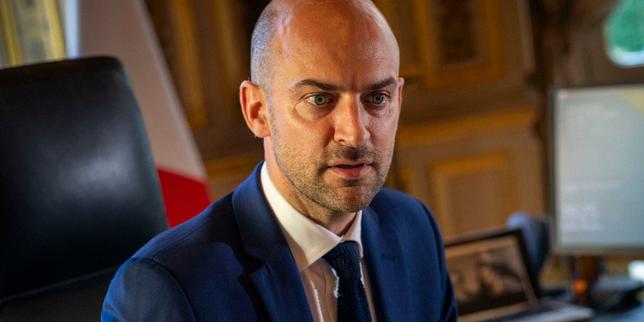
Russia’s push into Africa isn’t the grand victory Moscow wants you to believe it is. While the headlines often focus on Wagner Group movements or anti-French protests in the Sahel, the underlying reality is much grimmer for the Kremlin. Jean-Noël Barrot, the French Minister for Europe and Foreign Affairs, recently put it bluntly: "In Africa, as elsewhere in the world, Russia has been very largely defeated."
It’s easy to get distracted by the noise, but if you look at the actual data and the deteriorating security in countries where Russia has stepped in, the narrative of a "Russian pivot" starts to crumble. I've been watching these geopolitical shifts closely, and it’s clear that Moscow is offering a hollow product that African nations are starting to see through.
The Security Illusion and the Sahel Reality
The biggest selling point for Russian involvement in Africa has always been security. When military juntas in Mali, Burkina Faso, and Niger pushed French forces out, they turned to Russia for a "no-strings-attached" solution to the jihadist insurgency.
But has the situation improved? Honestly, no. It’s actually gotten worse.
- Mali's Downward Spiral: Since the arrival of Russian mercenaries, terrorist groups like the JNIM (linked to Al-Qaeda) have actually expanded their reach. We’re now seeing energy blockades around Bamako and a level of violence that makes the previous decade look stable.
- The Wagner Price Tag: Russia doesn't provide security out of the goodness of its heart. They want minerals—gold, diamonds, and lithium. In places like the Central African Republic (CAR), the "security" provided by Russian groups often looks more like a protection racket designed to secure mining sites rather than protecting civilians.
Barrot pointed out that when he visited the CAR recently, the Russian contribution to the country’s actual development was essentially zero. You don't build a nation on mercenaries and mining concessions.
The Massive Economic Disparity
One of the biggest misconceptions is that Russia is replacing the West as a primary economic partner. The numbers tell a completely different story.
If you compare the European Union's engagement with Russia’s, there’s no contest. EU investments in Africa are roughly 200 times higher than Russia’s. When it comes to trade, the EU’s volume is 20 times greater. Even in education—a key long-term influence metric—the EU welcomes 10 times more African students than Russia does.
Russia is a "security" provider for regimes, not a partner for people. They aren't building schools, they aren't investing in local manufacturing, and they certainly aren't providing the level of humanitarian aid required to stabilize the region. Vladimir Putin’s strategy is a short-term play for diplomatic votes at the UN and access to raw materials to fund his war in Ukraine. It’s a parasitic relationship that lacks any long-term sustainability.
Why the Russian Narrative is Stalling
Russia’s strategy relies heavily on disinformation and anti-colonial rhetoric. It’s a powerful tool, but it has a shelf life. You can only blame "Western imperialists" for so long before the local population starts asking why the electricity is still off and why the terrorists are still at the gate.
The Kremlin is currently spending 40% of its national budget on its war of aggression in Ukraine. That doesn't leave much for African infrastructure. Russia is "draining and discrediting" itself, as Barrot noted. They are overextended. While they might be able to help a junta stay in power for another year, they cannot provide the economic growth or the regional stability that these nations desperately need.
What This Means for the Future
We need to stop overthinking the "Russian threat" in Africa and start focusing on the tangible failures of their model. France and its European partners are shifting their approach, moving away from the old paternalistic "Françafrique" model toward more balanced, investment-heavy partnerships.
The real win won't come from a better propaganda machine. It’ll come from proving that the European model actually delivers results—jobs, safety, and infrastructure—while the Russian model delivers nothing but "political bankruptcy" and hired guns.
If you’re following this space, keep an eye on these three metrics:
- Insurgency Data: Watch for the expansion of JNIM and ISGS in the Sahel; it’s the clearest indicator of Russian security failure.
- BRICS Alignment: See if countries like Madagascar, which showed interest in BRICS, actually see any economic benefit from those ties.
- EU Investment Gates: The "Global Gateway" initiative is Europe's answer to Chinese and Russian influence. Its success in the next two years will be the true "game-ender" for Moscow's ambitions.
Russia is playing a high-stakes game with limited chips. They’ve managed to create some chaos and grab a few headlines, but they’re losing the long game.
French FM Jean-Noël Barrot on Russia’s Strategic Failure
This video provides the full context of Jean-Noël Barrot's assessment regarding the military and political setbacks Russia is facing on the global stage.