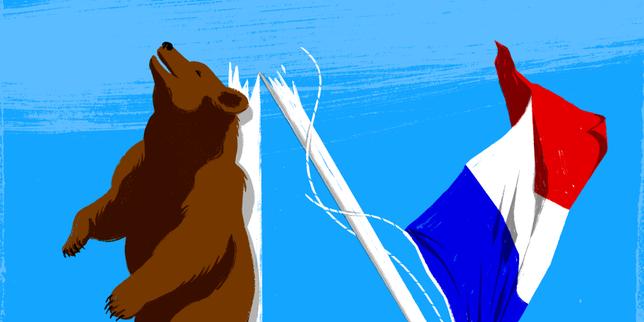
French security agencies aren’t just fighting hackers anymore. They are fighting an invisible army of digital ghosts, trolls, and coordinated campaigns designed to make people hate their neighbors. If you think state-sponsored propaganda is just about fake news websites, you are missing the bigger picture. The strategy has shifted from online manipulation to physical, real-world provocations.
Russian interference operations in France have entered a dangerous new phase. The goal isn't necessarily to make people love Moscow. It’s simpler than that. The objective is to fracture French society by exploiting existing religious, political, and cultural fault lines.
Understanding how these networks operate is the only way to avoid falling for their traps. Let's look behind the curtain at what French intelligence calls hybrid warfare.
The Shift From Digital Lies To Real World Provocations
For years, foreign propaganda relied on fake social media accounts and biased state media. Today, operations are physical. Operatives hire local actors, vandals, or petty criminals to commit symbolic acts of hatred, document them, and then amplify them globally via digital networks.
Look at the bizarre incidents that hit Paris over the last few years. In late 2023, hundreds of Stars of David were spray-painted on walls across the French capital. The timing coincided with heightened global tensions over the Middle East. Security services quickly traced the funding back to a Moldovan couple allegedly paid by Russian handlers.
A few months later, in May 2024, coffins wrapped in French flags with the inscription "French soldiers of Ukraine" were dumped near the Eiffel Tower. Three individuals—a Bulgarian, a German, and a Ukrainian—were arrested.
Then came the pig heads. In different parts of the country, severed pig heads were left near mosques and community centers.
These acts share a common blueprint. They are cheap to execute, highly provocative, and custom-made to go viral. The physical act is merely the raw material. The real weapon is the digital echo chamber that follows.
How The Doppelganger Network Hijacks Trusted Media
You cannot understand modern Russian operations without analyzing the Doppelganger network. First identified by the French digital watchdog Viginum, this campaign specializes in cloning legitimate news websites and government portals.
The mechanism is sophisticated yet deceptively simple.
- Operatives register domain names that look nearly identical to respected French newspapers like Le Monde or Le Figaro.
- They copy the exact layout, typography, and visual branding of the target media.
- They inject fabricated articles containing alarmist headlines about inflation, imminent military conscription, or social unrest.
- They use thousands of automated bots to share these cloned links across X (formerly Twitter) and Facebook.
To the average user scrolling quickly on a smartphone, the article looks completely authentic. The URL might have a slight variation—like a .ltd or .net extension instead of .fr—but the visual deception is flawless.
Viginum tracked dozens of these mirror sites targeting French infrastructure. The network didn't just stop at news outlets; they cloned the official website of the French Ministry of Armed Forces, posting a fake announcement that France was recruiting volunteers to fight in Ukraine. It took immediate government intervention to debunk the forge before it caused widespread panic.
Exploiting The French Concept Of Laicite
France has a unique relationship with secularism, known as laïcité. It's a foundational pillar of the republic, but it's also a frequent source of intense national debate. Foreign disinformation operations view this cultural sensitivity as an open wound ready for salt.
By introducing highly offensive symbols like pig heads near Islamic sites or spray-painting religious icons in Jewish neighborhoods, foreign actors trigger immediate, emotional reactions from political leaders and the public. The goal is to create a media frenzy.
When the public spends weeks arguing over simulated hate crimes, the democratic process stalls. Polarization wins. Trust in public institutions erodes.
The strategy counts on the fact that the initial shock of an event travels faster than the subsequent police investigation. By the time intelligence agencies reveal that a vandalism spree was funded by a shell company in Eastern Europe, the political damage is already done. The anger has taken root.
Spotting The Digital Footprint Of Coordinated Campaigns
You don't need an intelligence degree to recognize the telltale signs of a coordinated manipulation campaign. These networks leave distinct digital breadcrumbs.
True grassroots outrage happens organically over time. It features diverse language, varying viewpoints, and human inconsistency. State-sponsored campaigns, however, are industrial.
Watch out for sudden, massive spikes in engagement on niche topics. If an obscure incident in a small French town suddenly gets shared by five thousand accounts within ten minutes, be suspicious.
Look at the account profiles doing the sharing. Often, these bots have no real profile pictures, alphanumeric usernames, and histories of tweeting exclusively about divisive political topics across different countries. They will tweet about US elections in English, then switch to French pension reforms an hour later, always pushing the most extreme narrative possible.
Another giveaway is the use of identical phrasing. When hundreds of accounts copy and paste the exact same text, including the same typos, it’s a clear sign of automated distribution software at work.
Steps To Protect Your Digital Feast
Ignoring the problem won't make it go away. Media literacy is no longer an academic concept; it's a matter of national security.
Stop sharing breaking news based purely on screenshots or emotional headlines. Before hitting the retweet or share button on a shocking story, look at the actual source URL. Check if mainstream, established news organizations are reporting the same facts. If a massive, scandalous event is only being covered by an obscure blog or an unverified social media account, treat it with extreme skepticism.
Report suspicious bot networks when you encounter them. Platforms are slow to react, but flagging coordinated behavior helps train detection algorithms. Most importantly, recognize when an online story is intentionally trying to make you furious. Anger clouds judgment, and that's exactly what the architects of these operations want.