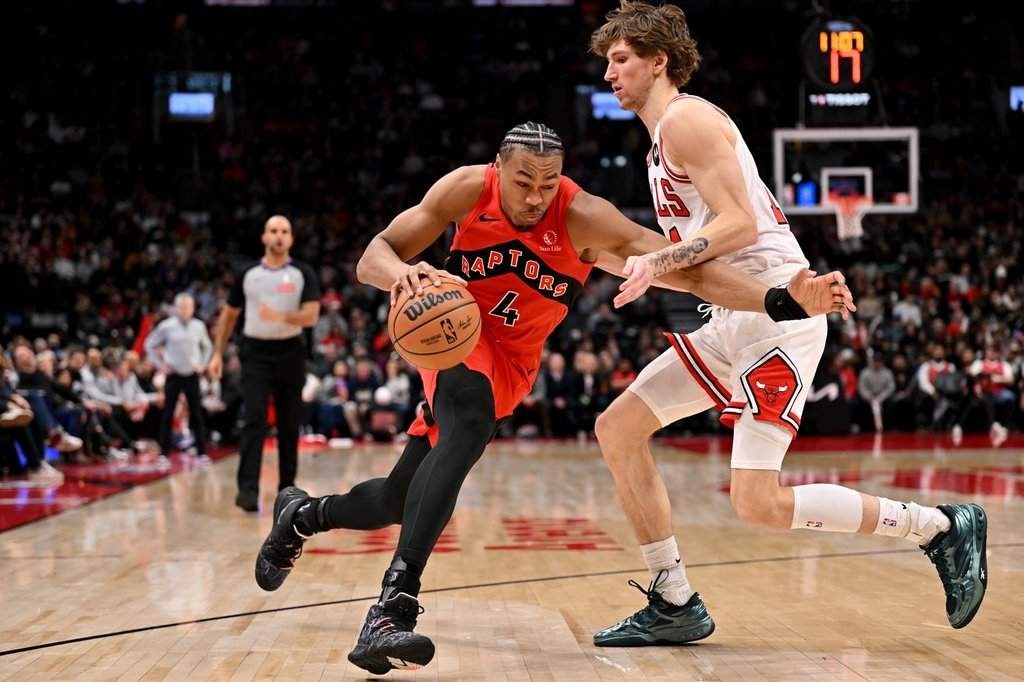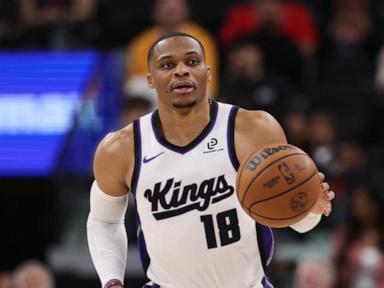
Russell Westbrook has officially announced his retirement from the National Basketball Association, closing the book on one of the most polarizing and fiercely kinetic careers in modern sports history. For nearly two decades, the explosive guard operated at a physical velocity that defied standard human limits, turning transition offense into a terrifying spectacle and rewriting the league record books along the way. Yet his exit prompts a deeper investigation into how the NBA treats its most relentless competitors when their primary asset—unfiltered, terrifying speed—inevitably begins to fade.
To understand Westbrook requires confronting the precise mechanism of his dominance. For most of his career, he did not merely play basketball; he attacked it. He weaponized geometry, acceleration, and sheer willpower to bend defenses to his breaking point. Every drive to the rim was a calculated risk against physics, a high-octane collision where he usually emerged victorious.
But kinetic energy has an expiration date.
When the first step slows by even a fraction of a millisecond, the margin for error in the paint shrinks to zero. A player who relies entirely on raw burst cannot easily transition into a quiet, spot-up floor spacer when his jumper has always been the weakest part of his operational arsenal. This was the central tragedy of Westbrook's later years. As he bounced from Oklahoma City to Houston, Washington, Los Angeles, and Denver, the league watched a historic engine struggle to find a chassis that fit its declining horsepower.
Critics often reduced his struggles to stubbornness. They pointed to contested mid-range jumpers, defensive lapses born of over-pursuit, and high turnover rates as evidence of a player unwilling to adapt. That critique misses the core truth of how elite athletes are wired. The very traits that made Westbrook an MVP—unshakable self-belief, hyper-aggressive intent, and an utter refusal to back down from contact—are the exact traits that make graceful aging nearly impossible. You cannot ask a supernova to simply dim its light and glow like a standard bulb.
The Cost of Uncompromising Intensity
In the locker room, Westbrook was never just another roster piece. He was an economic force. Teams built entire offensive schemes around his gravity, clearing out the paint so he could collapse defenses and spray passes to open shooters. This strategy won him an MVP award in 2017 during a historic triple-double season that felt like a statistical anomaly torn from a video game.
However, that style demands total capitulation from everyone else on the floor. When his shooting percentages dipped, defenses stopped respecting his perimeter threat, sagging deep into the lane to clog his driving lanes. The spacing collapsed. The offense stalled. And the blame inevitably fell entirely on his shoulders, ignoring the front offices that signed him without a coherent plan to manage his evolution.
This is the hidden tax of extreme athleticism in the modern NBA. Organizations love the ticket sales and the highlight reels generated by hyper-explosive guards, but few know how to manage the back nine of their careers. Front offices want the box-office draw of a superstar without the messy, public friction of a player coming to terms with his own mortality on the hardwood.
Rewriting the Triple-Double Narrative
History will remember Westbrook through the lens of numbers, specifically his record 199 career triple-doubles. For years, purists argued that these numbers were empty calories, the product of stat-padding and compliant teammates stepping aside to let him grab rebounds.
That narrative is both lazy and historically illiterate.
Grabbing a defensive rebound and instantly pushing the ball coast-to-coast at top speed was a foundational offensive weapon for his teams for over a decade. It forced opponents to sprint back on defense in total disarray, generating easy points before the half-court defense could set up. The triple-double wasn't a vanity project; it was the engine of an entire tactical system.
Even as his efficiency waned in his final seasons, his competitive fire never flickered. In Los Angeles, playing under the suffocating microscope of the Laker fanbase, he endured vitriol that would have broken a lesser competitor. In Utah, Chicago, and Denver, he accepted bench roles, veteran minimum contracts, and altered minutes distributions—concessions that many former MVPs would flatly reject out of pride.
The Broader Lesson for the Next Generation
Westbrook's exit serves as a cautionary tale for the incoming wave of hyper-athletic guards entering the league today. The NBA is increasingly unforgiving to players who cannot shoot from distance or defend multiple positions at an elite level. Skill redundancy is fatal. If an aging star cannot adapt their game to rely on timing, screen navigation, and high-IQ passing once the physical gifts recede, the league will chew them up and spit them out with clinical efficiency.
Yet, despite the turbulent final chapter, his legacy remains secure. He played every single minute of his career with an intensity that made taking possessions off feel like a personal insult.
The floor is quiet now. The baseline is empty. The dust kicked up by his relentless drives has finally settled, leaving behind the statistical monuments he built through sheer, unadulterated force of will.