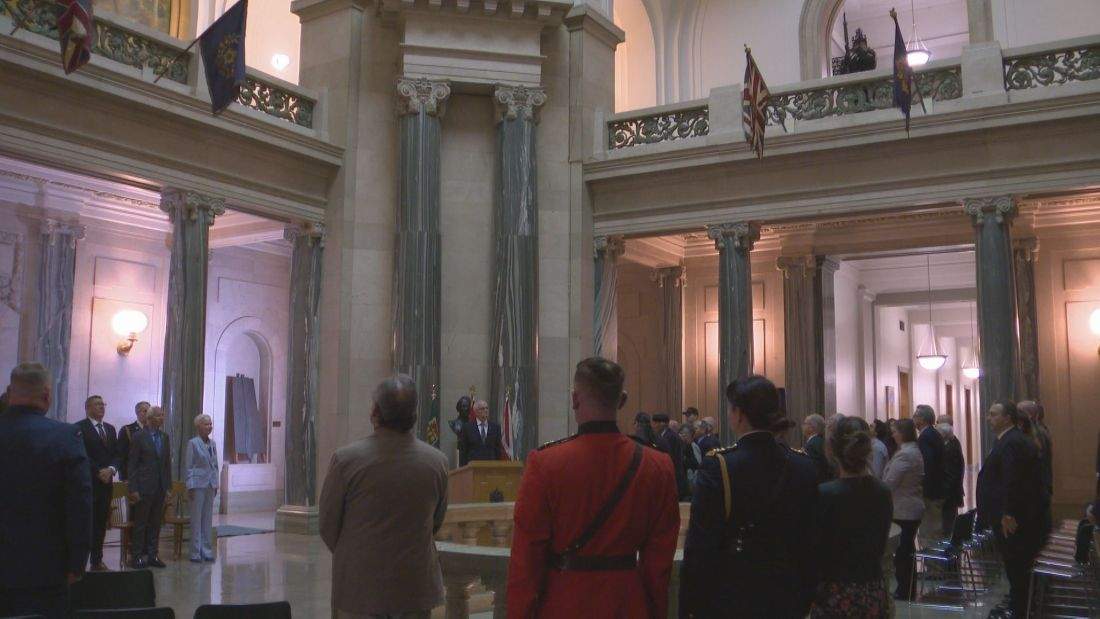
In October 2026, historic flags tied to the Royal Regina Rifles came back to the rotunda of the Saskatchewan Legislative Building in Regina after nearly five decades away. If you walk past them expecting a simple ribbon-cutting or a routine museum swap, you miss the real story. These banners spent decades at St. Paul's Anglican Cathedral, were pulled down when renovations started in 2024, and have now returned to the seat of provincial democracy where early flags were first placed generations ago.
Put simply, the return puts historic regimental flags back in front of the public inside Saskatchewan's legislature—including banners carried in the First World War—so visitors can see tangible proof of prairie military sacrifice up close.
Let's be honest: most people glance at military banners in a government rotunda, nod politely, and keep walking toward the committee rooms or the exit. That's a shame. A piece of woven cloth that survived mud, artillery, and a century of shifting storage rooms carries a weight no plaque can quite match.
Why the Royal Regina Rifles Colours Returned to the Legislature
Moving historic flags isn't just about wall space. It's about where a community chooses to hold its memory.
For decades, starting in 1977, the colours hung at St. Paul's Anglican Cathedral in Regina, the regiment's church. Churches make natural homes for regimental memory because they've long been places of mourning and remembrance. Then renovations at the cathedral in 2024 required taking them down, forcing a bigger question about where fragile, century-old textiles belonged next.
Returning them to the Legislative Building puts them in the province's civic heart. Premier Scott Moe pointed to the connection between military service and democratic institutions, while speakers at the October 2026 ceremony—joined by Lieutenant Governor Bernadette McIntyre, Provincial Military Liaison Blaine McLeod, and members of the regiment—stressed that these banners were originally tied to gifts from the people of Saskatchewan.
I think there's real value in that shift. A church quiet is one thing. A busy legislative rotunda is another. School groups, tourists, lobbyists, and everyday citizens pass through the legislature, which means the flags aren't tucked behind a Sunday pew—they're sitting in the middle of public life.
A Detail Most Headlines Gloss Over About Rifle Regiments
Here's a neat piece of military tradition that trips people up all the time. Strictly speaking, traditional rifle regiments in Commonwealth armies don't carry "colours" into battle the way line infantry regiments do.
Instead, rifle units historically worked as skirmishers and sharpshooters, relying on stealth, dark rifle green uniforms, and quick movement rather than bright flags that drew enemy fire. Under official Canadian Army lineage records for The Royal Regina Rifles, rifle regiments don't carry colours, choosing instead to emblazon battle honours on regimental appointments like cap badges.
So when news reports talk about the Royal Regina Rifles colours returning to the legislature, you're looking at historic banners and antecedent regimental or unit colours tied to the regiment's lineage and predecessor bodies—including flags carried on First World War battlefields—rather than a modern rifle regiment parading a standard battle flag in the field.
That distinction matters. Not to pedantically correct anyone at a ceremony, mind you, but because it explains why these pieces of cloth are treated like fragile historical artefacts rather than everyday parade gear. Some of them are more than 120 years old, shaped by war, time, and decades of indoor exposure.
From Prairie Roots to European Battlefields
To understand why Regina cares so deeply about these banners, you have to look at how old the regiment's roots actually are.
The Royal Regina Rifles traces its origins back to July 3, 1905, in Regina—the very year Saskatchewan became a province—beginning as a regiment of infantry in the districts of Assiniboia and Saskatchewan before going through reorganizations, amalgamations, and name changes over the next century. Prior to becoming The Royal Regina Rifles in the 1980s, it was known for decades as The Regina Rifle Regiment.
Along the way, soldiers serving in its lineage fought through brutal campaigns. First World War battle honours include Vimy in 1917, Hill 70, Passchendaele, the Somme, and Amiens. Second World War honours include the Normandy landing, Bretteville-l'Orgeuilleuse, Caen, the Falaise pocket, the Scheldt, and the Rhine. Later service also includes Afghanistan.
Those aren't abstract names on a map for families in southern Saskatchewan. Small towns across the prairies lost young men in those fights. When a flag comes back to the rotunda, it isn't just military history—it's local family history hanging in plain sight.
What Visitors Actually Get Wrong When Viewing Historic Flags
Whenever historic textiles go back on public display, people tend to make the same three mistakes.
First, they expect vibrant, crisp colours like a brand-new flag off a shelf. Real historical banners that have seen wartime service or sat for generations are often faded, delicate, or darkened by age and environment. Looking closely takes patience.
Second, visitors often treat a display as a finished chapter rather than an ongoing preservation challenge. Fabric is unforgiving. Light, humidity, and air movement slowly stress old fibres, which is why conservation and careful mounting are a big deal whenever historic banners are moved or re-installed.
Third, people rush past without checking the lineage behind the display. One flag might connect to an earlier unit or First World War service, while another ties into a broader chapter of Saskatchewan's military story. Without reading the context, all the cloth can blur together.
Honestly, the best way to view them is slow. Stand still for two minutes. Look at the stitching, the lettering, and the setting around you.
How to Make a Visit to the Rotunda Worth Your Time
If you're planning to see the returned colours in person or help someone else get more out of a trip to Regina, keep things practical and grounded.
- Check public access and hours first. Legislative buildings have security protocols, event schedules, and seasonal or daily visiting hours, so verify access with the Legislative Assembly of Saskatchewan before you go.
- Look up the regiment's official lineage beforehand. Reading the official Canadian Army lineage and battle honours for The Royal Regina Rifles gives you real context before you stand in front of the display.
- Pair the stop with nearby military landmarks. If you're tracing Saskatchewan's military heritage, combine a rotunda visit with St. Paul's Anglican Cathedral in Regina—long tied to the regiment's church history—or check other provincial memorial spaces.
- Bring kids with a clear question. Instead of saying "look at those old flags," ask younger visitors what they think a soldier in 1916 felt like carrying something like that, or how a flag survives over a hundred years.
A piece of cloth can't speak on its own. Having it back inside the Legislative Building gives Saskatchewan residents and visitors a chance to ask the right questions—and keep the memory sharp.