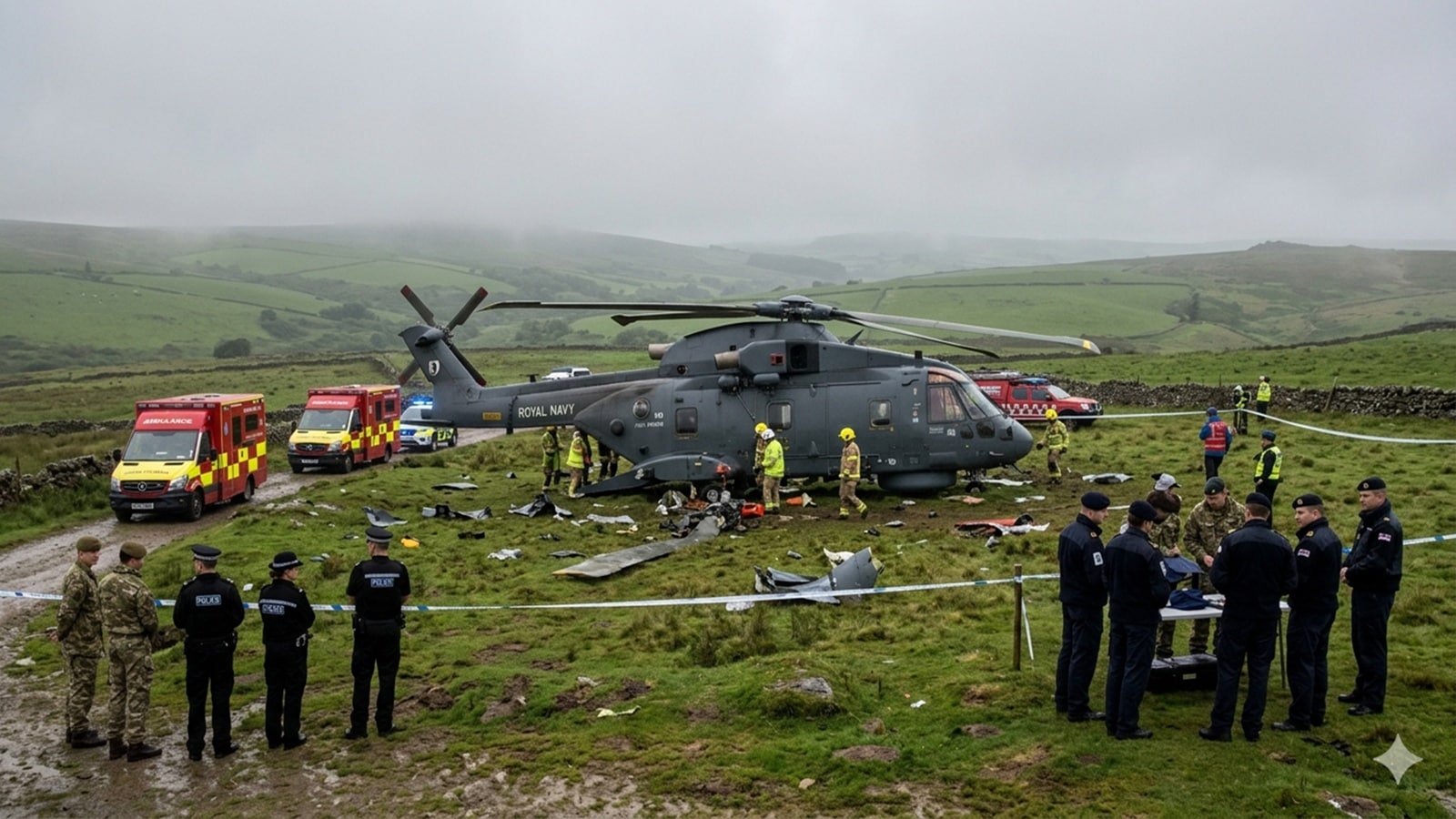
A British Royal Navy helicopter crashed during a night-time training exercise over the English Channel off the coast of Devon, resulting in the tragic deaths of three crew members. The incident involved a Merlin Mk4 helicopter operating from the aircraft carrier HMS Queen Elizabeth. Emergency services, including the Coastguard and RNLI lifeboats, launched a massive search and rescue operation immediately after the aircraft went down. Despite their swift efforts, recovery teams confirmed that all three personnel on board died in the line of duty.
Military training carries inherent risks. We often forget that. When a multi-million-pound aircraft goes down during a routine exercise, it shakes the entire defence community. It leaves families shattered. It raises immediate, uncomfortable questions about safety protocols, fleet maintenance, and the intense pressure placed on our armed forces during high-readiness preparation.
Understanding the Merlin Mk4 and the Risks of Night Maritime Training
The Merlin Mk4 is a workhorse. It is the backbone of the Commando Helicopter Force, designed to move Royal Marines from ship to shore in hostile environments. It is large, complex, and heavily upgraded. Flying these machines in pitch-black conditions over open water is one of the most demanding tasks a pilot can face.
Night flying relies completely on instruments and night-vision technology. Spatial disorientation is a real danger. When you fly over a featureless sea at night, telling up from down gets tricky fast. The Ministry of Defence maintains strict protocols for these exercises, but the margin for error is razor-thin.
The Royal Navy relies on these realistic scenarios to keep crews sharp. You cannot simulate the pitch and roll of an aircraft carrier deck in a classroom. You cannot mimic the unpredictable coastal weather of Devon in a flight simulator. True readiness requires live flying. Sadly, that reality comes with a cost.
Air Accident Investigation and the Search for Answers
The Defence Accident Investigation Branch went straight to work. Their job is brutal but vital. They have to piece together what went wrong from wreckage scattered across the seabed. Investigators look at three main areas: mechanical failure, human factors, and environmental conditions.
Mechanical failure is always a possibility. Did a rotor component fail? Did the engines lose power simultaneously? The Merlin fleet has a solid safety record, but no aircraft is immune to sudden technical failure. Investigators will recover the flight data recorder—the black box—to analyze system inputs and engine telemetry right up to the moment of impact.
Human factors do not just mean pilot error. It means looking at fatigue, training schedules, and situational awareness. Fleet Air Arm crews are elite. They train constantly. But fatigue builds up during prolonged carrier deployments. The investigation must look at the crew's rest cycles before the flight.
The weather off the Devon coast can change in minutes. Low cloud ceilings, sudden fog, or shifting winds disrupt even the best-laid flight plans. The investigation team will cross-reference radar data with local meteorological reports to see if sudden weather shifts played a role in the crash.
The Broader Impact on Royal Navy Carrier Operations
This crash halts momentum. HMS Queen Elizabeth was conducting intensive preparation work. When a fatal accident occurs, operations pivot instantly to recovery and safety reviews. The entire Merlin fleet faces scrutiny. If investigators suspect a systemic mechanical issue, the Ministry of Defence might ground the aircraft.
Grounding the Merlin Mk4 would cripple the Royal Navy's amphibious capabilities temporarily. The timing is terrible. The UK military faces growing commitments globally. Our carriers cannot deploy effectively without their rotary-wing sub-hunters and troop carriers. It creates a massive operational headache for naval commanders.
The human toll matters most. The Fleet Air Arm is a small, tight-knit community. Everyone knows everyone. Losing three colleagues in a single night devastates morale. Grief counsellors deploy to the ship immediately, but the emotional scars take years to heal. The Navy must balance honoring the fallen with continuing the mission.
What Happens Next for Military Aviation Safety
Independent watchdogs will watch the Defence Accident Investigation Branch closely. The military cannot grade its own homework in secret anymore. Families demand transparency. The public expects accountability.
A preliminary report usually drops within a few weeks. It provides the basic facts: time, location, radar track, and initial wreckage assessment. The full investigation takes a year or more. It digs into maintenance logs, manufacturing defects, and training syllabi.
If you are following this story, do not look for quick answers. Speculation on social media helps no one. It hurts the families left behind. Wait for the hard data from the investigators.
The immediate step for the Ministry of Defence is clear. Review the flight safety data for all active Merlin airframes. Inspect the maintenance records at Royal Naval Air Station Yeovilton, the home of the Commando Helicopter Force. Ensure no lingering technical faults exist in the remaining fleet. Check the crews. Give them the time to process this loss before forcing them back into the cockpit for high-intensity night operations.