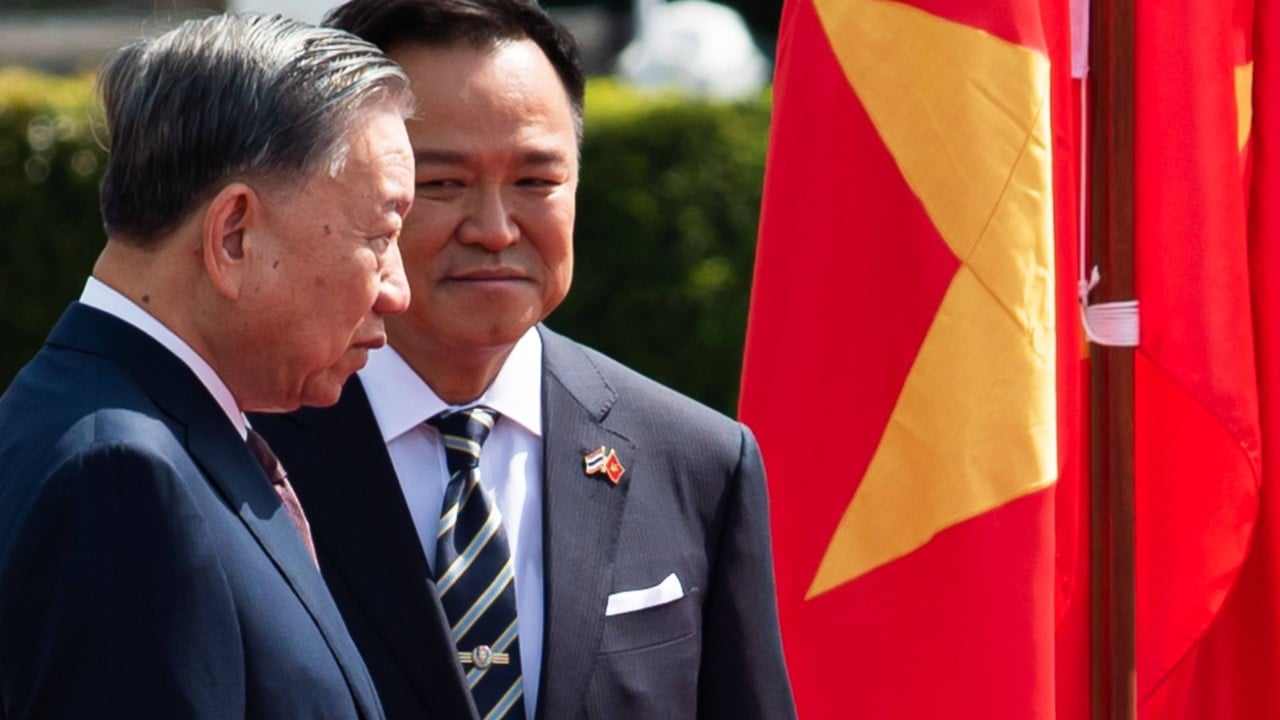
The humidity in Bangkok during the late afternoon does not just sit in the air. It wraps around your throat like a wet wool blanket. Inside the air-conditioned sanctuary of a high-rise luxury hotel, a handful of civil servants from Thailand and Vietnam sat around a mahogany table that felt entirely too large for the room. On the table were not weapons or tech blueprints, but simple, translucent bowls of white grain.
Jasmine. Basmati. White long-grain.
To an outsider, it looked like a mundane agricultural convention. To the men and women in that room, it was a high-stakes poker game where the chips were the daily meals of billions of people. For decades, these two nations had slashed prices behind each other’s backs, desperate to undercut one another to win massive export contracts from Africa to the Middle East. They were trapped in a classic race to the bottom.
Then, someone broke the silence. The proposition was simple, radical, and incredibly dangerous: What if we stop fighting each other and start dictating the price to the rest of the world?
This is the origin of the Association of Southeast Asian Nations (ASEAN) "plus or minus" strategy. It is an economic gamble disguised as a diplomatic partnership. Thailand and Vietnam, the second and third-largest rice exporters on the planet, decided to form an informal cartel. It was a direct attempt to mimic OPEC’s control over oil, but with a commodity far more volatile, emotional, and vital to human survival. Rice is not fuel for cars. It is the fundamental baseline of human existence across the Global South.
To understand why this matters, you have to leave the glass towers of Bangkok and travel three hundred miles northeast into the Isan region of Thailand.
Consider a hypothetical farmer named Somchai. He is fifty-four years old, his skin is the color of cured leather from a lifetime under the tropical sun, and his hands are permanently stained with the dark mud of his paddies. For thirty years, Somchai has watched the cost of everything else go up. The chemical fertilizers he buys from multinational corporations double in price every few years. The diesel for his small, sputtering tractor demands more of his meager profits each season.
Yet, the price he receives for his rice has remained stubbornly, agonizingly flat.
When Thailand and Vietnam undercut each other on the global market, global trading firms celebrate. Margins stay high for international distributors. But back in Isan, Somchai has to tell his daughter that they cannot afford the tuition for her university semester in Chiang Mai. The macroeconomics of global trade translate directly into empty bank accounts and broken dreams at the kitchen table.
When the Thai and Vietnamese governments announced they would collaborate to push global rice prices up by at least twenty percent, it sounded like a victory for Somchai. It felt like the little guy finally striking back against a global system that demanded cheap food at the expense of human dignity.
But monopolies are terrifyingly complex beasts.
The strategy is called "plus or minus" because it relies on a delicate, terrifying balancing act. If Thailand and Vietnam raise their prices too high, they risk triggering a massive geopolitical backlash. The largest buyer of their rice is India, a subcontinent that produces staggering amounts of grain but possesses a government fiercely protective of its domestic food security. The moment ASEAN prices climb too high, India can simply flood the market with its own heavily subsidized stockpiles, utterly crushing the Thai-Vietnamese alliance overnight.
Worse, the strategy risks starving the very people it purports to protect.
Take a look at the crowded, narrow alleys of Manila or Jakarta. Millions of families spend upwards of fifty percent of their daily income purely on rice. If the price of grain spikes by twenty percent, a mother in a Manila slum does not cut back on luxury items. She does not skip a movie or delay buying a new phone. She simply feeds her children smaller portions.
The ministers in the air-conditioned rooms spoke of "market stabilization" and "fair returns for agrarian workers." They used clean, sterile graphs showing upward price trajectories. But they intentionally ignored the human cost on the other side of the ledger. One man's fair wage is another man's starvation.
The alliance is also built on a foundation of profound mutual distrust.
Historically, Thailand and Vietnam have viewed each other with geopolitical suspicion. They possess different political systems, different economic models, and a long history of competing for dominance in the Mekong sub-region. For this cartel to work, both nations must voluntarily agree not to cheat.
Imagine a scenario where global demand suddenly dips. Vietnam, facing a domestic cash crunch, receives a secret offer from a massive African importing consortium to buy millions of tons of rice at a five percent discount under the agreed cartel price. Does Hanoi honor the pact with Bangkok, or do they take the money to secure their own domestic stability?
History tells us that when the pressure mounts, cartels crumble from within. The temptation to cheat is an intoxicating drug.
During a journey through the Mekong Delta in Vietnam, the sheer scale of this economic machinery becomes overwhelming. The river is a massive, brown artery pumping life into millions of acres of bright green fields. Barges piled so high with rice that they sit mere inches above the waterline slowly chug toward the shipping ports of Ho Chi Minh City.
Speaking with local mill operators reveals the anxiety bubbling beneath the surface of the government's bold rhetoric. They know that artificial price hikes do not always trick the market. Instead, they often invite competitors into the arena. Countries like Cambodia and Myanmar are watching this ASEAN gamble with hungry eyes. The moment Thailand and Vietnam price themselves out of the budget market, these smaller nations stand ready to clear their own forests, plant their own fields, and steal the market share that took generations to build.
The entire strategy is a desperate play for relevance in a world where power is rapidly consolidating into fewer hands. It is an admission of vulnerability. Separately, Thailand and Vietnam are at the mercy of global market fluctuations, changing weather patterns caused by El Niño, and the geopolitical whims of superpowers like China and the United States. Together, they hope to carve out a fortress of predictability.
But the climate is a chaotic partner that refuses to negotiate.
Even if the cartel succeeds in fixing prices, they cannot fix the weather. The Mekong River is drying up. Salinity intrusion from the South China Sea is creeping further inland every year, poisoning the very soil that makes Vietnam an agricultural powerhouse. Thailand faces historic droughts that leave reservoirs looking like cracked desert landscapes. You can mandate whatever price you want in a boardroom, but if the skies refuse to rain, the bowls on the mahogany table remain empty.
The sun finally dipped below the Bangkok skyline, casting long, crimson shadows across the hotel conference room. The diplomats packed their leather briefcases, shook hands with polite, practiced smiles, and stepped out into the humid night. They had agreed on a framework. They had drawn a line in the sand against the global markets.
Back in Isan, Somchai walked the perimeter of his field in the fading light. He checked the irrigation ditches, brushed a swarm of mosquitoes away from his face, and looked down at the young green shoots pushing through the mud. He had no idea what had been decided in the high-rise tower. He only knew that tomorrow, the sun would rise hot and uncompromising, and he would step back into the water, hoping that whatever happened in the world beyond his village, it would finally be enough to let his daughter finish school.