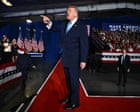
Political discourse has long relied on hyperbole, but when rhetoric targets major civilian centers, the shock value moves past standard partisan bickering into the realm of reckless escalation. The recent uproar surrounding reported remarks by Donald Trump regarding Iran and major American cities reveals a deepening fracture in how political figures deploy aggressive imagery during campaign rallies and media appearances. Rather than viewing these statements as isolated anomalies, analysts must examine them through the lens of modern strategic communication, where extreme language functions as a blunt instrument to dominate news cycles.
The mechanism of modern outrage relies heavily on compression and amplification. In the contemporary media ecosystem, nuance is a liability. When a prominent political figure invokes scenarios involving major metropolitan areas like Los Angeles or San Diego in the context of foreign conflict, the statement immediately outpaces its context. Observers are left parsing whether the comment was a poorly phrased warning about deterrence, a rhetorical flourish designed to criticize current administration policies, or an accidental echo of hostile propaganda.
Foreign policy veterans understand that deterrence requires clarity, not confusion. During decades of geopolitical standoff between Washington and Tehran, military doctrine has balanced massive retaliatory capability with carefully calibrated diplomatic messaging. When political figures introduce erratic scenarios into the public square, adversary capitals take notice. Iranian state media frequently seizes upon provocative American statements to validate its own narrative of existential threat, using domestic political rhetoric from Western democracies to mobilize hardliners at home.
The domestic fallout carries its own distinct set of hazards. Major urban centers function as economic engines and cultural hubs, making them potent symbols in national debates. Dragging cities like Los Angeles and San Diego into foreign policy disputes shifts the focus away from diplomatic strategy and toward visceral fear. Voters are forced to process abstract geopolitical tensions through the immediate, localized lens of national security at home. This creates a psychological wedge, deepening urban-rural divides and complicating federal-local cooperation on security matters.
Historical precedent offers sobering lessons on the drift from rhetoric to reality. Throughout the twentieth century, political posturing during intense diplomatic crises occasionally crossed into dangerous territory, forcing diplomats to scramble behind the scenes to reassure foreign counterparts that public statements did not reflect operational intent. Today, the speed of digital communication means that a single inflammatory phrase reaches foreign capitals in milliseconds, bypassing traditional diplomatic channels and leaving little room for misinterpretation to be corrected quietly.
Media outlets bear a significant share of responsibility in how these stories are framed and consumed. The temptation to treat political rhetoric as entertainment rather than potential policy indicator leads to wall-to-wall coverage that amplifies the very extremism it purports to critique. By dissecting every provocative phrase without grounding it in the broader reality of defense capabilities and actual geopolitical positioning, reporting risks normalizing language that undermines the stability of international norms.
The core challenge facing political observers is separating performance from genuine intent. Modern political campaigns operate on the premise that conventional rules of diplomatic decorum no longer apply. Shock and disruption are treated as valid tools for commanding attention in an overcrowded information environment. Yet this strategy carries an inherent cost. Every time a major political figure invokes the destruction of domestic cities, even hypothetically or rhetorically, the threshold for acceptable discourse shifts slightly further toward the edge.
Addressing this trend requires a deliberate recalibration from both journalists and the electorate. Observers must demand substance over spectacle, refusing to let extreme linguistic flourishes substitute for coherent foreign policy platforms. Until public pressure forces a return to disciplined discourse, the political arena will remain vulnerable to inflammatory outbursts that generate headlines today while eroding the foundations of strategic stability tomorrow.