Scaling a food rescue operation from localized van pickups to 10 million distributed meals requires solving an asymmetric supply chain problem where inventory arrives unscheduled, shelf-life is measured in hours, and customer demand is fragmented across hundreds of independent charities. Standard logistics networks optimize for predictability, standardized palletization, and long-term warehousing. Food rescue operates under the exact opposite conditions: erratic supply spikes, mixed-SKU crates, and immediate perishability. UKHarvest reached the 10-million-meal threshold not through simple charitable goodwill, but by engineering a high-velocity reverse logistics network that converts negative-value agricultural and retail liabilities into caloric assets before biological decay renders them worthless.
To understand how an organization moves roughly 4,200 tonnes of surplus food without collapsing under the weight of its own sorting and refrigeration overhead, one must strip away the philanthropic narrative and examine the underlying operational mechanics. Based on standard UK food redistribution conversions (typically calculated at 420 grams per meal equivalent), 10 million meals represents a massive physical throughput problem. Solving it requires mastery over four distinct operational bottlenecks: upstream capture, cold-chain velocity, dynamic routing, and downstream demand absorption.
The Economics of Negative-Value Inventory
In conventional retail supply chains, food moves linearly from producer to processor, distributor, retailer, and consumer. At every node, friction creates leakage. A supermarket distribution center rejects a pallet of strawberries because the pulp temperature is two degrees above specification. A grower overproduces cabbages to fulfill a supermarket contract buffer, leaving twenty tonnes unharvested in the field. A manufacturer misprints an allergen label on ten thousand tins of soup.
For the commercial entity holding these goods, the food has transitioned from an asset to a negative-value liability. Retaining it consumes cold-storage square footage; disposing of it incurs landfill taxes, anaerobic digestion gate fees, and haulage costs.
UKHarvest's primary strategic lever is positioning itself as a zero-cost, friction-free disposal mechanism for commercial suppliers. However, this creates an immediate structural hazard for the rescue organization: adverse selection. If a charity accepts every pallet offered by a retailer to maintain corporate relationships, it quickly becomes an unpaid waste-management contractor, burning fuel and volunteer hours to haul rotting produce to its own dumpsters.
To prevent this, high-performing food rescue operations enforce strict upstream triage protocols:
- Biological Viability Thresholds: Produce must possess sufficient remaining shelf life to survive transit, sorting, and secondary distribution. Anything requiring immediate consumption within less than 12 hours is rejected unless a direct, high-volume institutional kitchen is already on the route.
- Caloric Density vs. Handling Cost: Moving ten pallets of bottled water or low-calorie carbonated drinks consumes the exact same diesel, driver hours, and warehouse floor space as moving ten pallets of canned proteins, grains, or dairy. Operations must balance volume metrics against nutritional utility.
- Packaging Integrity: Damaged secondary packaging (crushed outer cardboard) is acceptable; compromised primary packaging (dented seams on cans, punctured vacuum seals) introduces liability and contamination risks that outweigh the salvage value.
The Three Pillars of High-Velocity Redistribution
Once surplus food is cleared for collection, the operational challenge shifts to speed. In standard logistics, inventory sits in a warehouse waiting for an order. In food rescue, the arrival of inventory triggers an immediate outbound push. The architecture supporting this push rests on three interdependent pillars.
1. Decentralized Hub-and-Spoke Triage
A single centralized mega-warehouse fails in regional food rescue because deadhead mileage—driving empty or half-full refrigerated vans across county lines—destroys the unit economics of the rescue. Operating primarily across the South of England, UKHarvest utilizes a regional hub model combined with direct point-to-point transfers.
When a refrigerated vehicle collects a mixed load from a supermarket depot or farm, the cargo undergoes rapid categorization upon arrival at a regional hub, or directly on the loading bay. Goods are separated into three velocity tiers:
- Tier 1 (Ultra-Perishables): Leafy greens, soft fruits, fresh bakery items, and short-dated dairy. These bypass long-term storage entirely, moving from inbound vans to outbound community routes within a four-to-six-hour window.
- Tier 2 (Chilled/Hardy Produce): Root vegetables, apples, cured meats, and sealed ready-meals with three to seven days of remaining code life. These enter short-term temperature-controlled staging to buffer daily supply fluctuations.
- Tier 3 (Ambient Staples): Tinned goods, dried pasta, oils, and UHT milk. These act as the ballast of the supply chain, allowing the organization to smooth out weeks when fresh agricultural surplus drops due to seasonal shifts.
2. Dynamic Fleet Routing and Cold-Chain Integrity
Temperature abuse is the silent killer of redistributed food. Every time a refrigerated van door opens at a collection point, ambient air rushes in, forcing the compressor to work harder and accelerating microbial growth on the cargo inside.
Optimizing a fleet of temperature-controlled vehicles for surplus collection requires solving a variant of the Vehicle Routing Problem with Time Windows (VRPTW), complicated by dynamic, last-minute pickup alerts. A retail partner might notify the dispatch team at 08:00 that three pallets of chilled proteins need clearing by 11:00. Dispatchers must dynamically insert this node into an active route without causing cascading delays that force downstream charity partners to miss their distribution windows.
[Supplier Alert: 08:00]
       │
       ▼
[Triage Check: Shelf-life > 24h? Cold-chain intact?] ──(No)──► [Reject / Divert to AD]
       │ (Yes)
       ▼
[Dynamic Route Insertion: Nearest Refrigerated Van]
       │
       ▼
[Hub Cross-Docking vs. Direct Drop-Off Decision]
       ├──(High Volume / Single SKU)──► [Regional Hub for Splitting]
       └──(Mixed Crate / Ready to Eat)─► [Direct to Community Pantry]
Maintaining the cold chain across these handoffs requires strict adherence to Hazard Analysis and Critical Control Points (HACCP) standards. Unlike informal mutual-aid groups, institutional food rescue at the 10-million-meal scale requires calibrated digital temperature logging, allergen traceability matrices, and audited hygiene protocols. Without this regulatory compliance, Tier-1 corporate food manufacturers will not release surplus stock due to brand-protection and liability fears.
3. Downstream Demand Diversification
Supply in food rescue is push-based, not pull-based. You cannot tell a farm to produce five hundred kilograms of carrots on a Tuesday because a local shelter needs them. You get two tonnes of cabbages on a Thursday and must find homes for them by Friday afternoon.
If a rescue organization relies solely on traditional food banks—which typically distribute dry goods parcels once a week—fresh produce will rot in the warehouse. Reaching ten million meals requires building a diversified portfolio of downstream recipients capable of absorbing erratic supply surges:
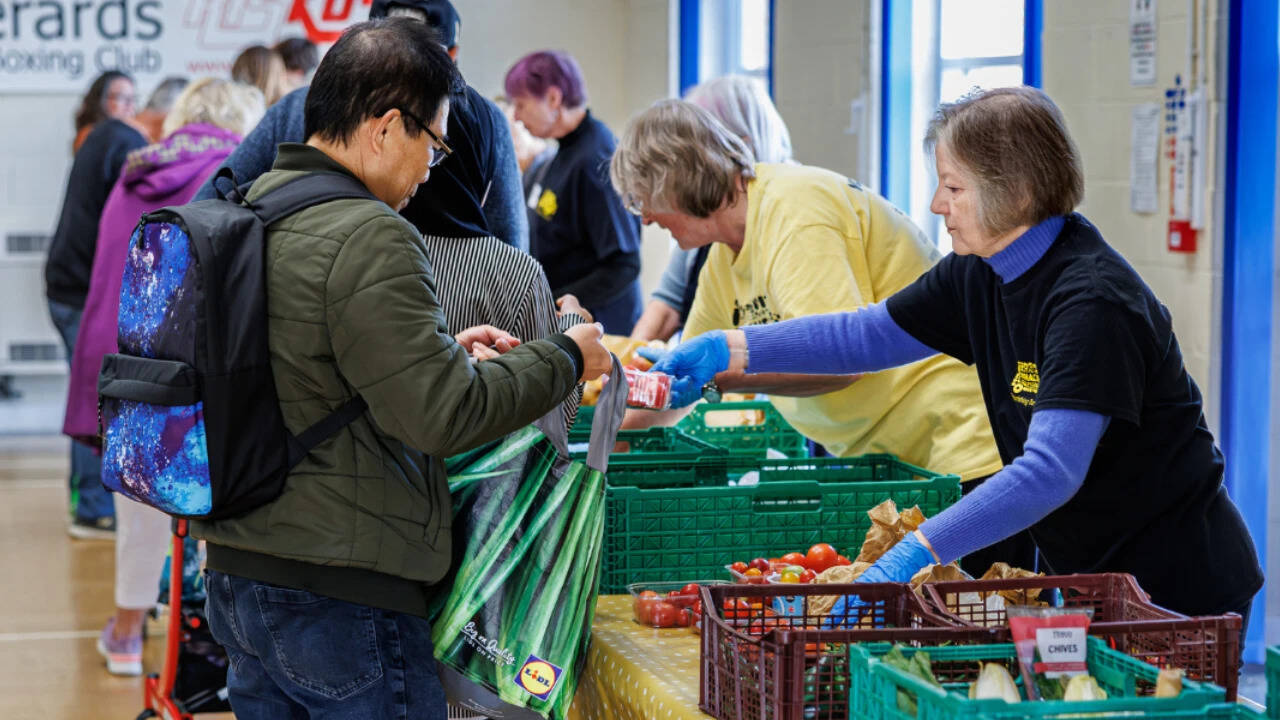
- Community Food Hubs and Pantries: Membership-based models where residents pay a nominal fee (often £3 to £5) to select a basket of fresh and ambient goods. This introduces market-like choice, reduces stigma, and moves high volumes of fresh produce rapidly.
- Institutional Kitchens and Shelters: Homeless shelters, domestic abuse refuges, and community cafes equipped with commercial kitchens. These nodes can take bulk, oddly shaped, or near-expiry ingredients and immediately cook them into stable, frozen, or hot meals, resetting the biological clock on the food.
- Schools and Holiday Clubs: Targeted distribution channels that absorb child-friendly snacks, fruit, and breakfast items during term times and school breaks.
The Structural Limitations of the Rescue Model
While scaling to 10 million meals demonstrates exceptional operational execution, treating food rescue as a permanent solution to either food poverty or agricultural waste is an analytical error. Practitioners operating inside these systems confront four hard structural constraints.
The Supply-Demand Mismatch: Surplus food is dictated by commercial market failures, not nutritional necessity. A glut of high-sugar bakery items or seasonal berries does not construct a balanced diet for a low-income household. Rescue organizations must frequently spend donated cash to purchase missing staple proteins and fats to make their free surplus produce usable for recipients.
The Volunteer Labor Bottleneck: Commercial logistics relies on predictable, salaried labor shifts. Charitable logistics relies heavily on volunteer labor for sorting, packing, and co-driving. Volunteer attendance fluctuates with weather, holidays, and macroeconomic shifts. When a sudden two-tonne donation of loose apples arrives on a rainy Tuesday afternoon, a shortage of sorting hands creates an immediate processing bottleneck, forcing viable food into waste streams.
Upstream Cannibalization: As commercial retailers optimize their own inventory management using algorithmic demand forecasting, automated markdowns, and dynamic pricing, the volume of predictable retail surplus shrinks. Ironically, as supermarkets become more efficient, food rescue charities are pushed further upstream toward farms, processors, and importers—where surplus occurs in massive, unwashed, bulk quantities (e.g., 20-tonne bins of potatoes) that require entirely different heavy-lifting equipment and packaging lines than retail-ready crates.
The Subsidization of Inefficiency: When charities absorb the disposal costs of overproduction for free, they inadvertently remove the financial penalty that would otherwise force producers to tighten their supply chains. Without systemic policy interventions—such as mandatory food waste reporting and extended producer responsibility fees—rescue networks risk functioning as an externalized cost-sink for corporate overproduction.
The Next Operational Frontier Upstream Integration and Processing
To scale beyond the 10-million-meal mark in an environment where retail-level surplus is tightening, organizations like UKHarvest cannot simply add more vans to existing supermarket routes. The marginal return on retail collection is declining.
The definitive strategic play for mature food rescue operations is vertical integration into upstream agricultural capture and light industrial processing. This requires shifting capital expenditure away from standard delivery vans and toward three specific capabilities:
- Mobile Gleaning and Field-Level Logistics: Deploying portable cold-storage trailers and harvesting teams directly to farms to capture unharvested crops left behind due to cosmetic grading standards or labor shortages.
- Commercial Flash-Freezing and Prep Kitchens: Establishing regional processing facilities equipped with industrial blanchers, blast chillers, and vacuum sealers. Converting volatile, 48-hour shelf-life produce into frozen, 12-month shelf-life ingredients breaks the tyranny of the biological clock and allows charities to bank summer agricultural gluts for winter demand peaks.
- API-Driven Surplus Marketplaces: Replacing manual phone and email dispatch with automated digital platforms that integrate directly into supplier Enterprise Resource Planning (ERP) systems, triggering automated collection bids the moment an inventory anomaly occurs in a manufacturer's warehouse.
Executing this transition transforms a food rescue charity from a reactive scavenger of retail leftovers into a resilient, shock-absorbing parallel food system capable of converting systemic agricultural inefficiency into long-term community food security.